
Introduction
Basic information
Developer Name: EXOR Studios
Full Name: The Riftbreaker
Release Date: 2021
Released on: PC, PlayStation 5, Xbox Series X|S
Cross Play: No
Initial thoughts
I normally do not play games like this, so going into The Riftbreaker already felt a bit risky. The developer offered the review opportunity, the game looked like a lot of fun, and on the surface it seemed like something I could probably figure out quickly enough. That assumption did not last very long. Very early on, it became clear that this game is a lot more layered, technical, and system heavy than it first appears.
I started with the prologue, then moved into the main campaign soon after, and the first major impression was not confusion in a bad way, but confusion in the sense of realizing just how much there is to learn. There is base building, power generation, resource extraction, research, weapon loadouts, gear setups, tower defense, expansion, irrigation, biomass systems, and all kinds of infrastructure management that the game expects you to gradually understand. That is a lot to absorb under normal circumstances. Under a strict review deadline, it becomes even more overwhelming.
That said, once things start clicking, The Riftbreaker becomes genuinely addictive. The problem is not that the game lacks depth. The problem is that it has so much depth that it can feel like a slog in the beginning, especially if you are not already familiar with this genre. It asks for patience, and if you give it that patience, it starts giving a lot back.
Story and setting
Plot overview
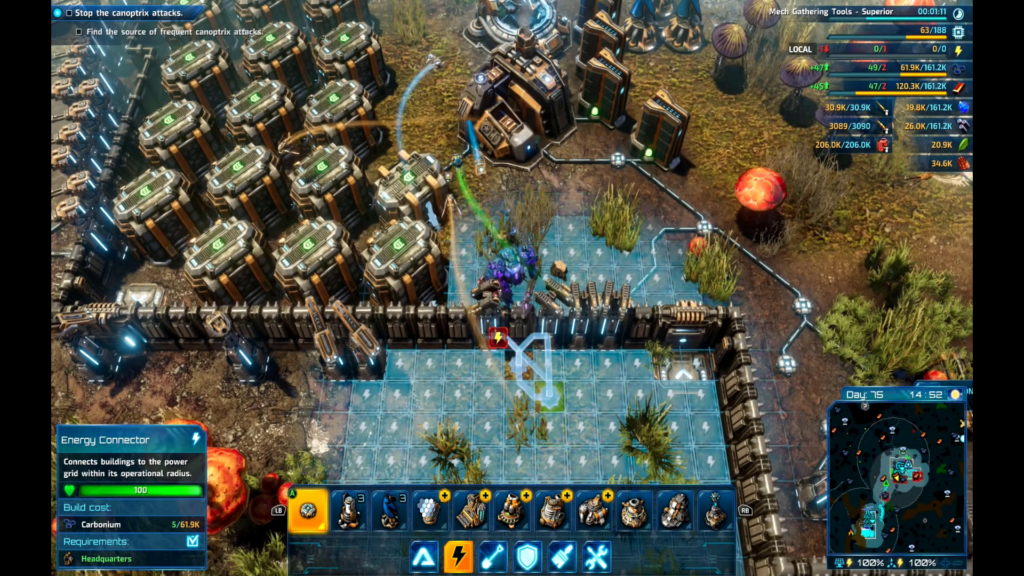
You play as the sole human sent to an alien planet to prepare it for colonization. That premise is simple enough, but the way the game presents it briefly becomes both fascinating and slightly absurd. You are not just placing a few outposts and calling it a day. You are effectively turning yourself into a one person industrial empire, plopping down wind turbines, refineries, defensive walls, artillery networks, and enough firepower to make the local ecosystem regret ever noticing you.
There is something very funny about the contrast between the game’s serious colonization premise and the actual reality of play. One minute you are analyzing alien environments and establishing new footholds, and the next you are covering a volcanic biome in towers, power lines, and resource pipelines while giant monsters rush toward your base in waves. It is ridiculous, but in a good way. The game commits fully to that blend of sci-fi survival and industrial overkill.
World building and immersion
The different biomes help the world feel like more than just a backdrop for building. Forests, deserts, swamps, volcanic zones, and other regions each carry different challenges, visual identities, and resource pressures. The alien planet does not feel passive. It feels hostile, reactive, and unpredictable. Environmental hazards like eruptions reinforce the idea that you are not taming a peaceful place but forcing your presence onto a world that constantly pushes back.
Immersion is strongest when the systems begin to interlock. Expanding your grid, defending supply lines, understanding why one resource chain is failing. And then adapting to the surrounding environment all help sell the fantasy of being a lone operative trying to hold back total chaos with engineering and overwhelming force. It is not subtle world-building, but it is effective.
Character development
Character development is fairly limited because the focus is more on the mission and the mechanics than on deep personal storytelling. Still, the protagonist’s experience gradually becomes more compelling simply because the player’s own mastery increases. In that sense, the character arc is almost tied to your growth as a commander and builder. At first you are overwhelmed. By the end, you are more like a walking war factory.
Emotional impact
The game is not especially emotional in a character driven way, but it creates strong emotional responses through pressure and payoff. Panic when a swarm breaks through one side of your defenses. Relief when a line of towers barely holds. Satisfaction when a clumsy, inefficient early setup evolves into a brutal machine of destruction. Those emotions come from systems and survival rather than story beats, but they are still real and memorable.
Rating for story and setting
I have visited multiple aspects of the story, and after some thought and objective thinking, I rated the story and setting with a 7.5.
Gameplay and mechanics
Core gameplay mechanics
This is where The Riftbreaker truly lives or dies, and thankfully it lives very well once the systems start making sense. You are building a sprawling base network while also directly controlling your mech in combat, exploring hostile environments, gathering resources, researching new technologies, and constantly expanding your reach. It is not just a base builder, not just an action game, and not just a tower defense title. It is a combination of all of those things at once.
That hybrid design is what makes it so interesting, but also what makes the opening hours intimidating. There is a lot to learn. Resource loops are not always obvious immediately. Some tools seem optional at first until you realize they are absolutely essential. I definitely should have understood the bioscanner turret and cultivator much earlier, because they are incredibly important for stabilizing resource generation properly. By the time I fully appreciated how valuable they were, I had already spent a lot of time doing things the hard way.
The same applies to support systems like irrigation and filtering. It is not enough to simply place buildings and hope for the best. You need to understand how pumps, filtering plants, and upgrades interact, or entire chains can shut down. That makes the game richer but also more exhausting when you are still learning. It rewards planning, but it absolutely punishes sloppy expansion.
Difficulty and balance
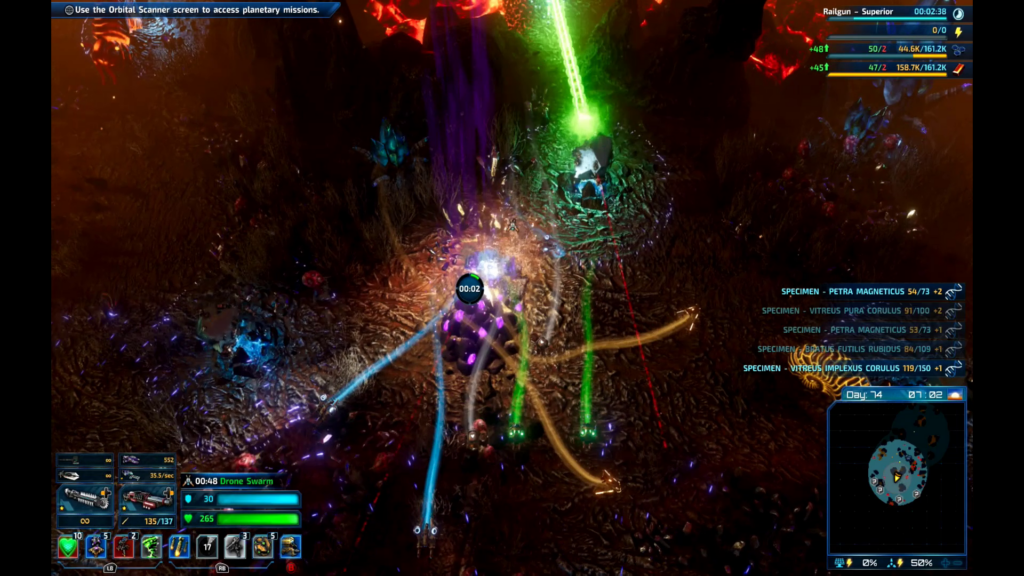
The game can be punishing, especially if you do not understand its infrastructure priorities early. Enemy waves are not just minor interruptions. They are genuine threats, and if your towers are underfed, underpowered, or badly positioned, your beautifully planned base can turn into a disaster very quickly. The difficulty often comes less from raw combat skill and more from whether your systems are prepared to survive what is coming.
There is also a very practical layer to difficulty that depends on time investment. A more adjusted or customized difficulty run might have made certain parts less frustrating and more manageable under deadline. That is not necessarily a flaw in the game itself, but it is a good reminder that The Riftbreaker is the kind of game where difficulty settings matter a lot depending on your goals. If you are experimenting, learning, or reviewing under time pressure, a smoother setup may actually let you appreciate the systems more clearly.
Pacing of the game
The pacing is one of the game’s trickiest aspects. On one hand, there is always something to do: build, research, defend, expand, optimize, scan, plant, or upgrade. On the other hand, the sheer number of systems means that progress can sometimes feel uneven. There are bursts of excitement followed by long stretches of setup, resource gathering, and waiting for things to mature or unlock.
That rhythm can be satisfying once you understand what the game wants from you, but early on it can feel like a slog. Some resources also feel more annoying to access than they should, particularly when progress depends on campaign mission advancement before certain systems become efficient. It is not that the pacing is bad; it is that it asks the player to trust a lot of future payoff before all the current friction has fully become rewarding.
Innovation and uniqueness
This is one of the strongest things about The Riftbreaker. Plenty of games do base building. Plenty of games do resource management. Plenty of games do action combat, tower defense, or research trees. Very few combine them this fluidly while still making the player feel like an active, physical part of the battlefield. You are not some distant commander clicking menus from orbit. You are on the ground, running around, blasting enemies, fixing problems, and watching your industrial empire either thrive or collapse in real time.
That alone gives the game a strong identity. It feels bigger than a simple survival game and more energetic than many management sims. Even when it frustrates, it still feels distinct.
Controls and user interface
The controls are mostly solid considering how many systems the game asks you to manage. Combat feels satisfying enough, and navigating between building, equipment, and research systems becomes easier over time. That said, the user interface can feel dense at first, especially for someone not already fluent in this style of game. There is a lot of information, a lot of tabs, and countless dependencies to understand.
Once it clicks, the UI becomes more manageable than it first appears, but the learning curve is absolutely real. This is not one of those games where you can casually skim the menus and improvise your way to mastery.
Microtransactions
None. Thankfully, this is a game full of systems and expansions in the proper sense, not one trying to nickel and dime you through piecemeal nonsense. There is DLC, yes, but it exists as meaningful content rather than a monetization trap.
Rating
After combing through many of the mechanics, the pacing, and other factors of this game, I rated the gameplay and mechanics with a 8.
Graphics and art style
Quality of graphics and art direction
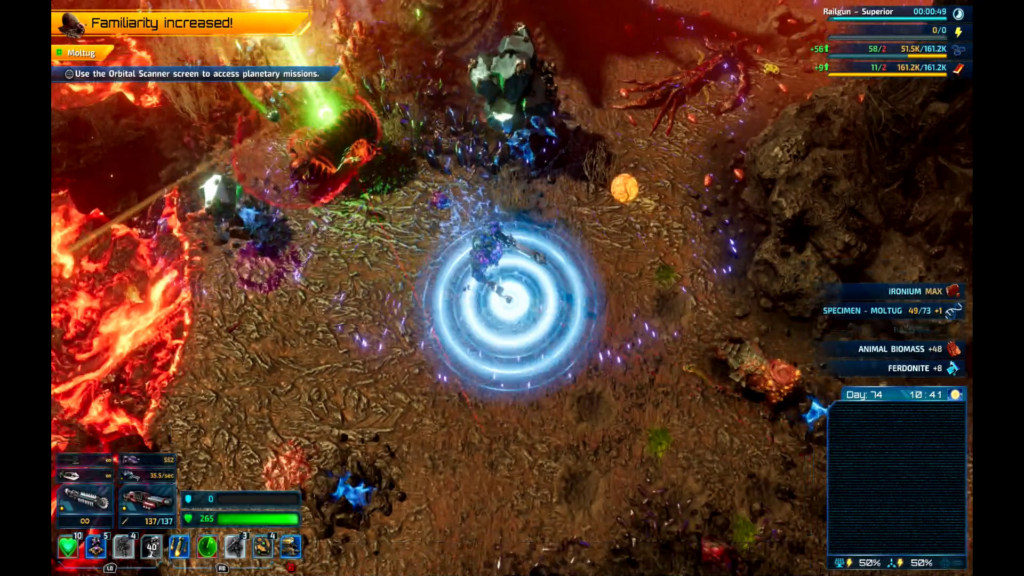
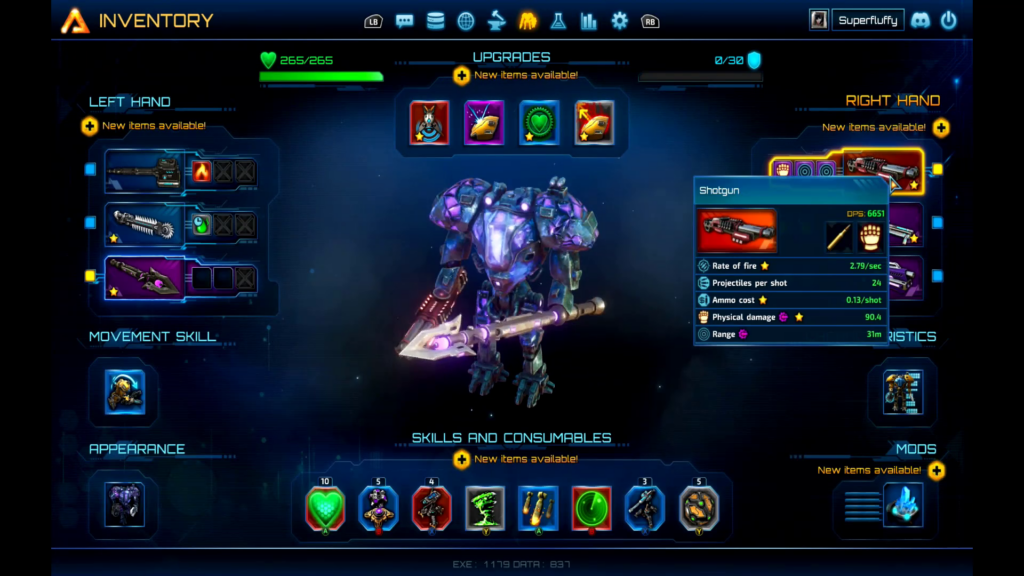
Visually, The Riftbreaker has a lot going for it. The alien environments are colorful, aggressive, and often quite striking, especially when the battlefield becomes a mess of explosions, energy fire, swarming creatures, and absurdly overbuilt infrastructure. There is something deeply satisfying about seeing a huge defensive network light up while enemies flood into a kill zone. The visual language of destruction is strong.
The art direction also does a good job making the different regions feel distinct. Forests feel lush, volcanic zones feel dangerous, and resource-heavy areas have a clear industrial logic once you start covering them in your machinery. It is not a subtle looking game, but subtlety is not really the point. This is a game about building huge, loud, heavily armed colonies on an alien planet, and it looks the part.
Technical performances
Performance was mixed on our Lenovo Go. There were stretches where it ran fine and other stretches where it felt sluggish, which is honestly not shocking once the scale of your operations starts getting ridiculous. When you have an absurd number of buildings, waves of hundreds of enemies, projectiles flying everywhere, and all sorts of systems running at once, strain is inevitable.
That does not excuse every slowdown, but it does at least make the cause understandable. This is a game that escalates hard. The more successful you are, the more likely the machine is to be stressed. It is one of those titles where performance and ambition are in constant tension.
Environment and design uniqueness
The environments do a lot of heavy lifting in keeping the campaign interesting. If the game only had one biome or one set of conditions, the complexity might become exhausting without enough reward. But because the different regions introduce different kinds of pressures, there is always a sense that you are adapting to a new problem rather than repeating the exact same one forever.
The design also encourages infrastructure sprawl in a way that looks visually chaotic but mechanically meaningful. A base in one region can feel very different from a base in another, not just in appearance but in function. That helps the world avoid sameness.
Rating
It took me some time to give the graphics and art style an objective rating. There are many things to consider, but ultimately, I rated this section with a 8.0.
Sound and music
Music score and how it contributed to the game
The soundtrack is a lot of fun. It fits the escalating action perfectly and gives different areas a stronger identity than they would otherwise have. I especially liked that the music changes depending on where you are, because it helps the game’s many environments feel more distinct instead of blending into one long blur of building and combat.
The score understands when to stay in the background and when to kick in harder. During calmer setup periods it helps maintain momentum, and during larger attacks it reinforces the sense that your base is under siege and your planning is about to be tested.
Sound effects quality
This game is gloriously noisy. Weapons sound aggressive, towers feel impactful, and the entire battlefield becomes a wall of mechanical and explosive feedback once a major wave begins. Pew pew pew pew pew is honestly not a bad summary. There is a very satisfying brutality to the soundscape, especially when an optimized defense line starts doing exactly what it is supposed to do.
The audio also helps communicate scale. Big attacks sound big. Resource systems hum and click with enough presence to make the base feel active. It all contributes to the feeling that your colony is a living machine.
Voice Acting
Voice work does the job well enough and helps keep the campaign from feeling too sterile. The dialogue is not the centerpiece of the game, but it adds enough personality and context to keep the science fiction framing from disappearing under the mountain of systems. The performances are serviceable and fit the tone without becoming distracting.
Rating
After a lot of consideration, I rated the sound and music section with a 8.
Replayability
Game Length and content volume
The content volume is huge. Between the campaign, research tree, side objectives, resources, optional experimentation, DLC, and the broader structure of building across multiple areas, there is a lot here. Honestly, this is one of the clearest cases where the review deadline itself shaped the experience. I really needed more time with this game.
I got very far. Furthermore, I collected the highest-tier Extreme gear, pushed deeply into the research tree, and still had more quests and systems left to explore properly. That says a lot. This is not a short or disposable game. It has enough material to support a long form investment, and reviewing it quickly almost feels like reviewing only part of what it really is.
Extra Content
The DLC and broader content support add even more weight to the package. There are additional modes, more things to optimize, and more reasons to return beyond the core campaign. Even without fully exhausting everything, it was obvious that the game is built to support long-term engagement.
This is both a strength and a weakness, depending on context. As a player, it is great. As a reviewer on a deadline, it can feel like you are racing a machine bigger than your available time.
Replay value
The replay value is excellent because so much of the experience is tied to system mastery. You do not just replay it to see cutscenes again. You replay it because you now understand how much better you could do. That kind of replay value is usually a very good sign in a strategy heavy game.
Replayability is very high, maybe even one of the strongest aspects of the entire package. This is the kind of game where one campaign can leave you with a dozen ideas for how to approach the next one differently. You can optimize better, specialize earlier, build more efficiently, choose other priorities, experiment with equipment, or simply play with more confidence now that you understand the underlying logic.
There is also something very replayable about the fantasy itself. If you enjoy building absurd alien fortresses with ridiculous layers of defense, then the game has the kind of sandbox appeal that can keep pulling you back.
Rating
After thoughtful consideration, I decided to rate the replayability and game length with an 8.5.
Suggestions and comparisons
Suggestions and feedback
A slightly gentler onboarding would help a lot for players who are not already comfortable with this genre. The game does explain things, but the sheer amount of interdependent systems means some of the most important mechanics can still take too long to appreciate fully. Better early emphasis on tools like bioscanners, cultivators, irrigation flow, and long term planting efficiency would make the first big wall of complexity less intimidating.
Local couch co-op could also have been fantastic, even if I know that kind of addition is easier to wish for than to implement. A smoother performance profile on portable hardware would help too, especially during truly absurd late game assaults.
And yes, I honestly do feel like this is a game that deserves a second review someday, one written after even more time, more mastery, and a more complete understanding of everything the game is trying to do.
Comparisons
The Riftbreaker feels like a fusion of base building strategy, action combat, and wave defense in a way that makes it more hands on than many traditional strategy titles. It has the infrastructure obsession of a builder, the grind and optimization of a resource management game, and the battlefield pressure of something much more action-heavy.
It is not really best judged by comparing it to only one thing. The strength of the game is that it combines multiple genres into a package that feels busy, demanding, and unique.
Personal experiences and anecdotes
One of the most satisfying parts of the experience was finally building a ridiculous defense setup with artillery, portal bombs, repair towers, acid, flames, and everything else I could reasonably throw at the problem. The first time, it did not go nearly well enough because my towers did not have enough ammo, and I had to step in personally to save the situation. That was chaotic, stressful, and a very clear lesson.
The second time, though, everything clicked much better. The towers were stocked, the defenses were layered properly, and the entire setup absolutely shredded the omega creatures. Watching that happen felt amazing, especially because those enemies drop useful special items like tornadoes, chainsaws, and other fun tools that make the game even more chaotic in the best way.
And yes: scan them. Drop bioscanner turrets everywhere. I learned that lesson later than I should have, and it made a huge difference. On the other hand, some of the resource requirements for the cultivator side of things were annoying as hell, especially when the campaign progression gating made proper large scale use feel slower than I wanted. That is part of why I genuinely think a future second review would be worthwhile, maybe something more purely mechanical and in depth once even more of the game has been pushed to its limit.
Rating
Taking in all the personal experiences with the Riftbreaker, I give it a personal rating of 8.
Last words
Pros
- Excellent genre blending between action, building, and defense
- Very strong long term depth
- Huge amount of content
- Genuinely satisfying base building payoff
- Distinct alien biomes
- Strong soundtrack across different regions
- Great battlefield sound design
- Research progression is rewarding
- Weapons and gear add variety
- Enemy waves feel threatening
- Defensive planning is deeply satisfying
- Strong replayability
- DLC adds further value
- The game has a clear identity
- Bioscanner and cultivator systems become very rewarding once understood
- Extreme tier progression feels meaningful
Cons
- Steep learning curve
- Some important systems are not intuitive enough early on
- Resource progression can feel annoyingly gated by quests
- Performance can get sluggish on portable hardware
- Reviewing it under a short deadline does not feel ideal because there is so much to properly learn
The Riftbreaker is a very ambitious, very layered game that asks a lot from the player and often rewards that investment generously. It can be overwhelming, it can be messy, and it absolutely has moments where the learning curve feels like a wall. But beneath that wall is a deep and genuinely impressive hybrid of strategy, action, defense, and progression systems.
I do not think I gave this game as much time as it truly deserves, and that says something important in itself. This is not a small experience you can fully digest in a weekend. It is the kind of game that grows larger the more you understand it. Even with some frustration, some performance issues, and some awkward progression gating, I came away impressed.
FINAL RATING

8.1
Please let me know what you think of The Riftbreaker in the comments!
I hope you enjoyed reading this review. I hope to see you in the next review!
If you liked reading this review, maybe you would like to share this review with your friends.
I’ve only read/seen positive things about the game since its release, glad that you enjoyed it. I’d say it is better for games to have more depth than less.
More depth is indeed good.
Looks like an interesting game for people who like the base building, action, defense sort of games. It looks like there’s enough mechanics and system that you can really get into it and come up with some fun and creative builds.
You can indeed make all kinds of fun builds!
You have peaked my intersting in this one. Might have to breakdown and get this.
It is a good idea!
Loved this, it made The Riftbreaker sound intense but really fun, even for someone who hasn’t played.
It is intense indeed. Glad you liked the review.
It’s one of the games sitting unused in my library, and it’s also one I really want to play.
After reading the reviews, I felt even more compelled to give it a try.
I hope you will enjoy the game when you finally get to play it.
Seems like fun, very pretty environment, base building and huge progression, if anything overwhelming, but definitely something for the lovers of the genre
Even for people who don’t like the genre, it is fun.
So basically, either have played some of this genre, or be ready for some tough initial hours.
Sounds like fun to me tbh. Might give it a try.
The learning curve is indeed steep.
Well, like you, it’s not the kind of game I would have picked up, but it looks really good.
It does look good, and I am usually not into these games either.
I played one of the first demos back in the day. Already enjoyed it a lot. Now we just got two copies and Hobbes and I started a coop playthrough. It is so much fun, but yeah, it is really challenging. Also it’s a bit sad that on the one hand coop is really well implemented with shared progression etc and yet the story just ignores that there are two people instead of one. But other than that it’s great.
I wish you a lot of fun playing the game!
I played the demo, and put it right on my wishlist 😀
and now that we have it we’ll going to coop it ^^
A lot of fun in co-op, to be honest. Until you mentioned it, I did not know it had co-op.
This game looked pretty interesting, but I never thought it would be this complex!
Still, with the right expectations, this game sounds like a great time! Thank you for showcasing this one! 😃
It is very complex.
I like the tech tree upgrades and building management aspects of this, but the combat part is too chaotic and the visuals are not my cup of tea because they seem too stylish but overall distracting from the focus. thanks for the good review
There is a lot to distract you while playing this game.
Learned about the game through the screenshot of the week and watched some videos on it and have walked away with hearing much positivity 🙂
I hope you will get this game one day and enjoy it!
I think that perhaps good that many different zones and not bad graphics. However that sounds like game not for me, these building towers, strategic, just not my genre.
So many damn towers!
That sounds like Factorio combined with Diablo. Some people are motivated by a hard start into a game … but me not soo much
I don’t mind if it does have some kind of tutorial.
Seems a solid game of the genre
It indeed is!
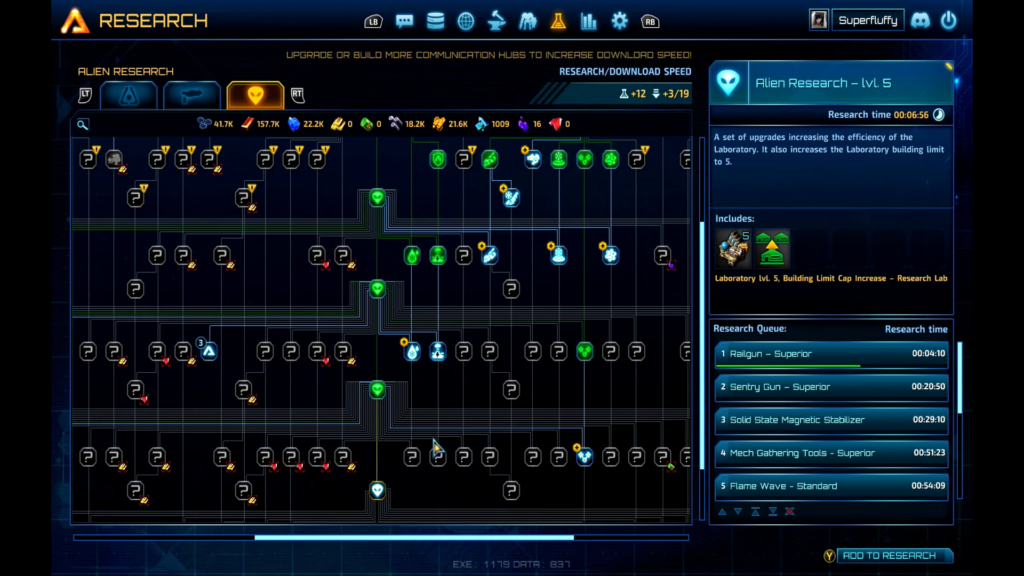
This is a pretty good score, as the game seems refreshing. I first watched the video, and when I saw the skill tree, I was perplexed by it’s complexity, lol. Can definitely feel when you said it has a steep learning curve.
I’d give this one a try.
I hope you do try it; the skill trees make a lot of sense when the game clicks into place.
Reminds me of games with such vast trees like some FF games, or even Path of Exile. I’d spend loads of time planning which path to take, but in the end, it didn’t matter much (except for PoE, that’s where I’d always fail XD ).
Hi great review. Although i had this title already in my steam wishlist i was thinking about it as mostly another tower defense with waves title which are in general not my favorite genres. But after reading your review im more inclined to try it, i think i could really like it. This depth and mix of genres and its execution seems very nice.Thanks for review.
I am glad you like the review and that it nudged you to maybe try it one game.