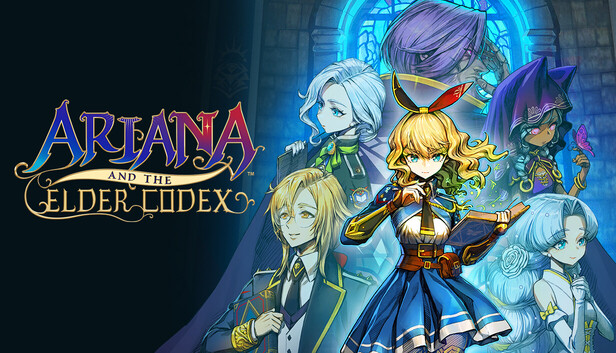

Introduction
Basic information
Developer Name: Idea Factory, Compile Heart, HYDE, Inc.
Full Name: Ariana and the Elder Codex
Release Date: April 29, 2026
Released on: PC
Cross Play: No
Initial thoughts
The idea alone already had me interested. A Metroidvania with clear Castlevania style DNA, mixed with the concept of jumping into books (codexes), is exactly the sort of setup that can either become something charming and memorable or collapse under its own gimmick. Thankfully, this one lands much better than I expected.
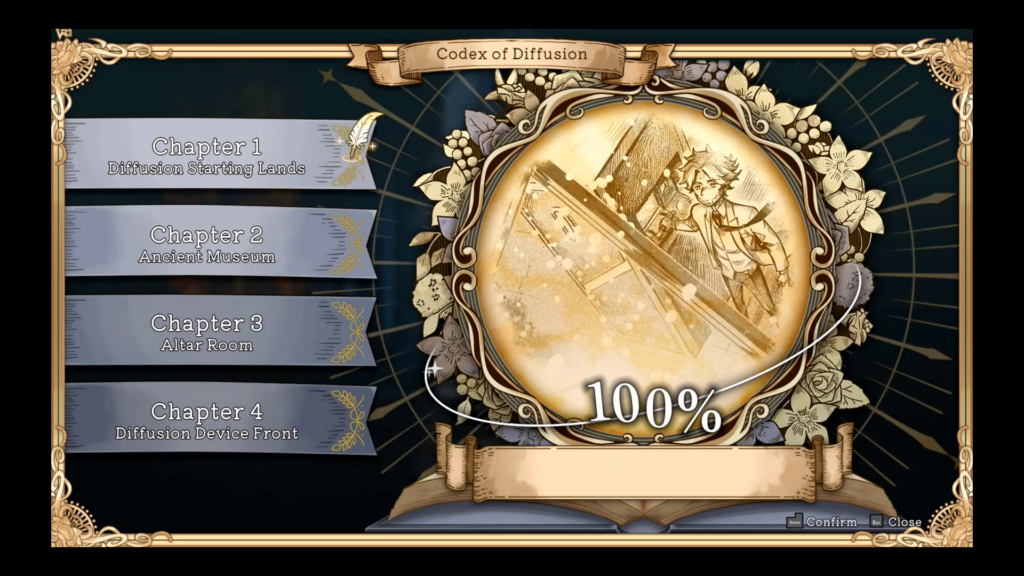
What immediately helped was that the game does not lock itself into a single narrow progression flow. Being able to pick the order of chapters gives the adventure a more flexible structure, and it even seems like enemies and bosses scale accordingly. That gives the game a nice sense of agency early on, because instead of simply being pushed from one area to the next, it feels like you are making choices about how to approach the library and its worlds.
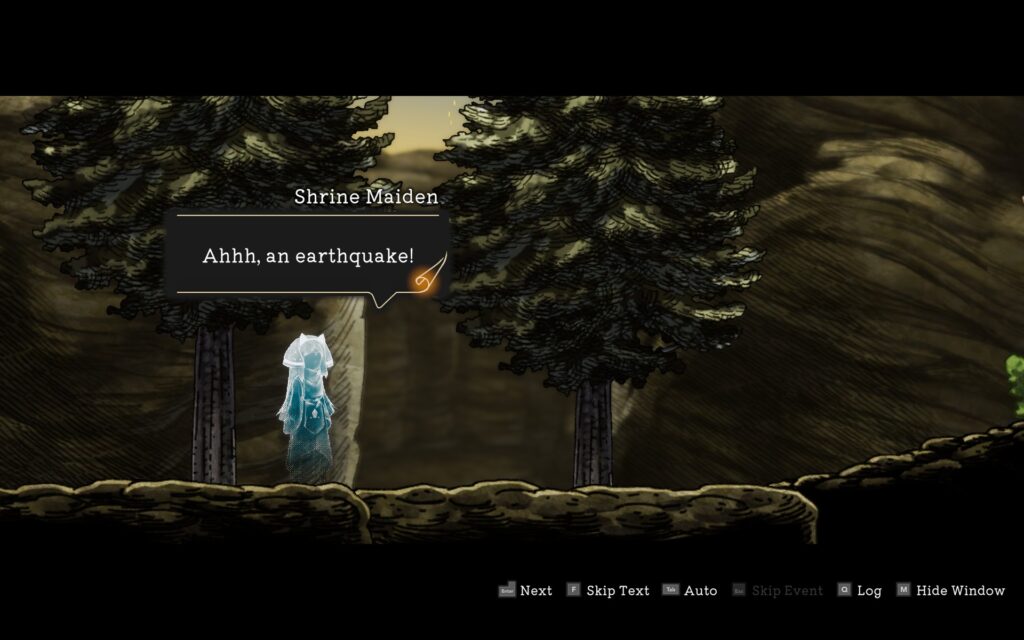
I also appreciated how much presentation effort went into it. Most scenes are voice acted, which gives the game far more personality than a lot of similarly sized projects. The only real silent parts are the story sprites inside the books themselves, which is honestly a little funny in its own way. Even before the mechanics had fully opened up, the game already felt like something made with more care than I first expected.
And the biggest surprise of all was simple: I had more fun with it than I thought I would. By the time I hit 100%, roughly nine or ten hours in, I was actually a bit disappointed that it was over. That is usually a very good sign.
Story and setting
Plot overview
The game does a strong job building its central mystery and moving the player through its world with enough intrigue to keep things engaging. The basic setup is compelling from the start, and the book jumping premise gives the adventure a nice thematic identity instead of making it feel like just another generic action platformer with fantasy dressing.
That said, I did see the plot twist coming very early. Within the first ten minutes or so, I already had a strong feeling about who the real bad guy would turn out to be. Fortunately, that did not ruin the story. If anything, it became satisfying differently, because watching the game gradually confirm what I suspected made me feel more engaged rather than less. Occasionally a predictable twist hurts a story. Here, it still worked because the build up around it was handled well enough.
The narrative also understands pacing reasonably well. It gives enough context to keep you moving, but it does not drown the player in endless exposition every few minutes. That balance matters a lot in a game where movement and exploration are such big parts of the appeal.
World building and immersion
The strongest element of the setting is the book concept itself. Every world tied to a different element helps the game avoid feeling visually and thematically repetitive. Instead of one long castle, cave, or ruin, you are moving through magical spaces that each have their own flavor and identity. That does a lot for immersion, because it gives every new chapter a sense of anticipation.
The library framework also works nicely as a hub like structure for everything else. It creates a believable enough logic for why the game can jump between themes, mechanics, and elemental ideas without feeling random. The whole thing has a neat magical vibe to it that supports the metroidvania structure well.
I would not say the world building is overwhelmingly deep, but it is definitely effective. It gives enough lore and structure to make the journey feel cohesive, which is more important here than having hundreds of pages of background detail. However, if that is your jam, it is a library, and yes, there are over twenty books of lore to read f you so wish.
Character development
The cast is handled well enough to support the story without overstretching what the game is trying to do. Ariana is easy to follow as a lead, and the game gives her enough presence to make the adventure feel centered instead of purely system driven. The supporting roles are not all equally deep, but they serve the world and plot effectively.
This is not a giant, sprawling RPG with twenty layered party members, but it does not need to be. What is here works, and it works with confidence.
Emotional impact
The emotional impact is stronger than I expected from a game of this size. Part of that comes from the presentation, especially the voiced scenes, which help the characters feel more present. Part of it also comes from the game simply doing a good job making progress feel rewarding. When the world opens further, when more of the mystery is revealed, and when the final pieces fall into place, the game earns a decent amount of emotional goodwill.
Even with the predictable twist, the execution still matters, and here it works. The game has enough heart that it never feels like a mechanical exercise only.
Rating for story and setting
I have visited multiple aspects of the story, and after some thought and objective thinking, I rated the story and setting with a 7.8.
Gameplay and mechanics
Core gameplay mechanics
This is where the game really won me over. The structure is familiar in a good way: explore, unlock abilities, revisit earlier paths, collect drops, improve your build, and gradually push further into increasingly dangerous areas. That framework is already strong, but the game adds enough of its own ideas to avoid feeling like a bland imitation.
Enemy drops matter because they feed directly into progression. You use them to craft equipment, which helps repair books through challenge rifts and get better rankings, which gives even more loot. It is an extra loop beyond simple combat and platforming. That kind of system can become annoying if poorly balanced, but here it mostly works because it gives enemies and repeated encounters a real purpose.
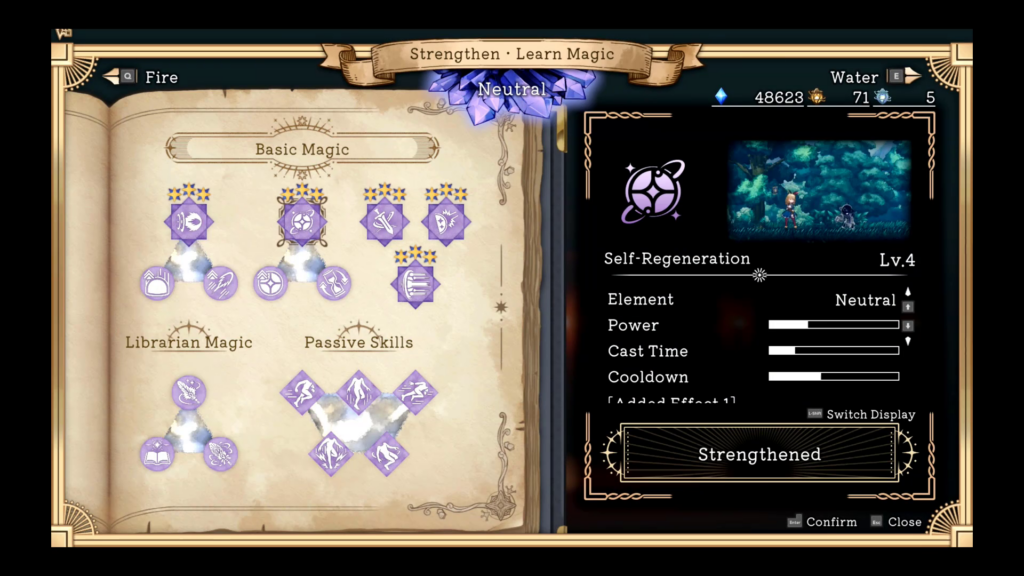
The magic system is also more fun than I expected. There are multiple elements, including some more unusual ones like transmission and convergence, which immediately help the spell system feel less generic. Combined with the standard progression abilities such as double jump and mid air dash, the game steadily builds that satisfying Metroidvania feeling of I can finally do more than I could before, now it is time for me to explore.
Difficulty and balance
The difficulty curve is one of the game’s stronger areas. Enemies and bosses scale along with your level. This helps preserve challenge while still allowing flexibility. That is not always easy to pull off in a more open progression structure, but here it generally keeps things engaging rather than trivial.
Boss fights are flashy and readable enough to stay fun without turning into nonsense, and the general combat balance encourages experimentation rather than locking you into one obvious dominant tactic too early. It feels like the game wants the player to engage with its systems, not just brute force through them.
There is also a nice sense of progression in how ability unlocks and magic knowledge gradually reshape movement and combat. That makes the challenge feel fair, because the player is not just getting stronger numerically. You are also gaining more options. Think of being able to summon tornadoes or laser beams and more flashy options like a super gravity cannon.
Pacing of the game
The pacing is very good for most of the runtime. Because you can choose chapter order and because the worlds feel distinct, the game keeps momentum without becoming stale too quickly. There is always a reason to keep poking around, checking if an old path can now be opened, or testing a new spell or upgrade.
The only real downside is that the game ends a little sooner than I wanted it to. Reaching 100% after around nine or ten hours is not bad for a game like this, but I was honestly having enough fun that I would have gladly taken more. That is a compliment, but it is also part of the pacing discussion: the game knows how to stay welcome, yet maybe leaves the stage a little too soon.
Innovation and uniqueness
The core innovation is the chapter and book setup combined with elemental worlds and flexible progression. Steam’s store description also highlights the game’s 30+ unlockable magic spells and abilities, chapter based structure, and boss encounters built around repairing altered codices (the books.) And I was a bit amazed to see the game actually does what it advertises.
This is not a game that reinvents the Metroidvania genre entirely, but it does have enough identity to avoid fading into the crowd. The blend of magical book worlds, chapter order choice, crafting, and spell progression makes it memorable.
Controls and user interface
The main issue I ran into here was controller support. I could not get the controller connected properly, which is obviously frustrating in a game that would feel right at home with a pad. I suspect this will be patched or improved, and I would honestly expect that to be one of the first things cleaned up around launch or soon after.
Outside of that, the interface is mostly readable. Managing spells, upgrades, and crafting is not overly cumbersome, and the game generally communicates enough for progress to feel understandable. It is not the most elegant UI I have ever seen, but it works.
Microtransactions
Rating
None. The game is a proper contained experience, and that is always good to see.
After combing through many of the mechanics, the pacing, and other factors of this game, I rated the gameplay and mechanics with an 8.
Graphics and art style
Quality of graphics and art direction
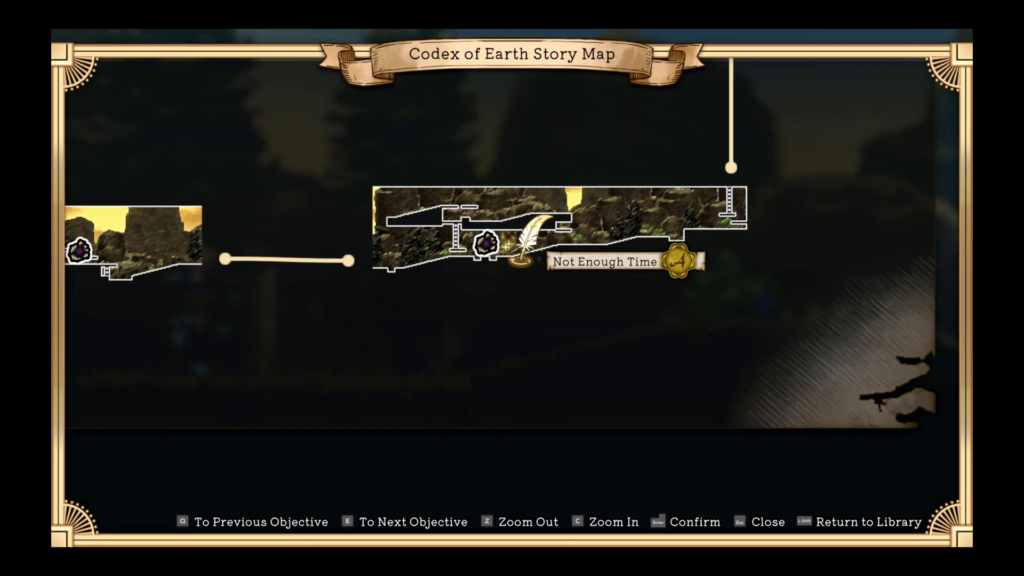
Visually, the game is very neat. The elemental worlds do a lot of heavy lifting here, because they keep the journey feeling varied and colorful rather than repetitive. Each world having its own identity gives the game a lot of charm.
The visual style suits the game’s tone well. It has enough fantasy style to feel magical, enough clarity to support action and platforming, and enough variation to make each book feel like a place worth entering rather than just another reskinned stage.
Technical performances
Performance seemed decent overall, though the controller issue is the biggest technical note from my time with the game. That is not the same as poor rendering performance, of course, but it does affect how polished the package feels. Assuming support and compatibility improve with patches, this is an area that could easily look better over time.
Environment and design uniqueness
The elemental world structure is the game’s biggest environmental strength. It means the journey is not locked into one repeated visual language, and that helps both exploration and mood. You keep getting reasons to stay curious, and that matters a lot in a Metroidvania.
Rating
It took me some time to give the graphics and art style an objective rating. There are many things to consider, but ultimately, I rated this section with an 8.0.
Sound and music
Music score and how it contributed to the game
The soundtrack is good. At its best, it helps each world carry its own flavor and gives the game that extra bit of adventure energy it needs. There were moments where it became a little repetitive, but it never reached the point where it became actively annoying.
Overall, it supports the atmosphere well enough and gives the game a stronger sense of identity than silence or generic background music would have.
Sound effects quality
Combat and magic effects are satisfying enough, and the sound feedback helps sell the impact of bosses and spell use. The game does not feel empty acoustically, which is important in a title where movement and magical attacks are central to the experience.
Voice Acting
Not everything is voice acted, but what is voice acted is good. That matters a lot, because partial voice acting can sometimes make a game feel more awkward if the quality is weak. Here, it works in the game’s favor. The voiced scenes help carry personality, and they make the story feel more polished than it might otherwise.
Rating
After a lot of consideration, I rated the sound and music section with a 7.7.
Replayability
Game Length and content volume
For a first full playthrough with a heavy completion focus, the game took me around nine or ten hours to hit 100%, which is a respectable runtime for a smaller Metroidvania but also just short enough to leave me wanting more. That is both a compliment and a mild criticism. The game stays engaging enough that I genuinely wished there were a little extra meat on the bone.
At the same time, I do not want to punish a game too much just because it knew when to stop. Better a short game that is enjoyable all the way through than a longer one padded with junk.
Extra Content
The challenge rifts, ranking rewards, spell collection, repairs, and achievement hunting all help round things out. It is not a giant postgame monster, but it does have enough optional hooks to make completionist play satisfying.
One thing I especially appreciated is that after the ending, the game actually lets you continue properly. That is a pet peeve of mine in other games, when they dump you awkwardly before the finale or pretend the ending never happened. Here, it actually picks up afterward and lets you keep repairing, exploring, and cleaning up. That is a small thing, but it genuinely matters.
Replay value
Currently, replayability feels a little uncertain to me. After getting almost everything, unlocking the spells, and pushing through a near complete run, I did not immediately feel a strong need to jump back in. That is not because the game is bad. It is more because I felt reasonably satisfied by what I had already done.
There are still a few achievements I missed, and part of that is because there is no guide sitting there to hand everything over cleanly. In a weird way, I actually like that. It made the hunt feel more personal. I had to really search, test, and pay attention rather than simply reading a checklist and sleepwalking through the cleanup.
The replay value feels moderate rather than huge. I could imagine future updates, balance changes, or added content helping this a lot. Right now I mostly see it as a very enjoyable one and done adventure with some cleanup appeal rather than a game begging for immediate repeated runs.
Rating
After thoughtful consideration, I decided to rate the replayability and game length with a 7.2.
Suggestions and comparisons
Suggestions and feedback
The biggest practical suggestion is improving controller support and making sure that side of the technical experience is clean, because this is exactly the kind of game people will want to play with a controller. A bit more achievement guidance or clearer in game breadcrumbs for certain hidden goals would also help without fully killing the joy of discovery.
Beyond that, I honestly would have liked just a little more of everything. A few more hours, a bit more postgame pull, maybe another layer of secrets or progression. That reaction is mostly positive, because it means the game earned my desire for more.
Comparisons
The game clearly lives in the Metroidvania space with some Castlevania flavor, but the book jumping structure and chapter choice help it stand apart enough to have its own identity. It does not feel like a clone. It feels like a game that knows its influences and uses them well.
Personal experiences and anecdotes
One of my favorite things about the game is also one of my weirdest pet peeves in other games: after the final boss, it actually continues from there properly. That was awesome to see. So many games handle this terribly, tossing you back before the ending or freezing the world in an awkward state. Here, I could actually keep going, keep repairing, and keep tidying things up, and that made completion feel much more satisfying.
And honestly, I am still pretty pleased with myself for hunting so much down without a guide. Missing a few achievements stings a little, but there is also something fun about knowing I actually had to search for things properly instead of just copying someone else’s route.
Rating
Taking in all the personal experiences with Arianna and the Elder Codex, I give it a personal rating of 8.
Last words
Pros
- Strong central concept with the book worlds
- Fun metroidvania progression
- Flexible chapter order is a great idea
- Boss and enemy scaling helps the structure work
- Good voice acting in the scenes that have it
- Distinct elemental worlds
- Satisfying spell and ability unlocking
- Crafting and drop systems add purpose to combat
- Good completion flow overall
- Post final boss continuation is handled well
- The game stays enjoyable enough to make its shortness feel bittersweet
- Bosses are flashy and fun
- Good completion flow overall
Cons
- Controller support needs work
- The plot twist is fairly easy to predict
- Replay value is only moderate right now
- Some music gets a bit repetitive
- The game ends just a little sooner than I wanted
Ariana and the Elder Codex surprised me in a very good way. It has a strong concept, good pacing, satisfying progression, and enough personality to stand out in a crowded genre. It is not flawless, and I can already see a few areas where patches or future updates could make it even better, but the important part is that I genuinely had a lot of fun with it.
FINAL RATING

7.9
Please let me know what you think of Arianna and the Elder Codex in the comments!
I hope you enjoyed reading this review. I hope to see you in the next review!
If you liked reading this review, maybe you would like to share this review with your friends.
This game goes directly into my Wishlist!
Not only was i instantly charmed by the visuals, having voice acting makes it so much better, can’t go wrong with a well made metroidvania, and a story that isn’t unpredictable but still manages to hook us up, just shows that made like that intentionally.
I always prefer to end a game wishing it was longer, than the game dragging on too long until it stops being as fun.
Yes! Straight to my wishlist as well! 😀
This game sounds like it has more to offer, and isn’t done just yet. It’s not even out yet (or is it now?), but there are always options to do expansions and make it even grander.
I liked how you highlighted what makes Ariana stand out
Nice review but don’t think this is for me. These ar not the droids I’m looking for.
That looks like a good game! I’ve added it to my wish list!
I am not a fan of Metroidvania becasue of I am not good at timing thing and dodge but the game graphic look nice and game music is good.
The setup of the game seems interesting… unfortunately, Metroidvania is not really for me…
Those graphics style reminds me of gachas.
The concept of this game does truly sound intriguing. Thanks for highlighting a game I might have missed.
getting some screenshots of the week vibes 😀
sounds interesting! Thanks for review
From what I’ve seen, the combat system feels fast-paced and technical, and seems to deliver instant enjoyment.
Wait a sec, the game isnt out yet? April 29th Did you manage to get early access or something?
Also wasnt there a screenshot of the week same as the last one used in the review in which case no one have been able to get it?
Good review though seems like a nice above average Metroidvania which i shall gobble up in due time im sure :O
Looks like a decent metroidvania that might have a little bit of trouble standing out in that crowded genre.
that one i guessed game for true. 7.9 good point.
Good review. And a nice game from what i see in review. I didnt had in wishlist and it wasnt released yet (it will be in 3 days). You said controller support need improvement, what is exactly wrong? And do game let playing on keyboard?
I’m always up for more original metroidvanias! Thank you for showcasing this game! 😃
The graphics in this game are beautiful. Thanks for introducing me to it. I’m looking forward to reading more reviews of the final version.
Seems an interesting game
This seems like a really well made metroidvania! Everything sounds like it works together perfectly to make a fun, non-frustrating but still challenging experience! I love the sound of the abilities and book worlds, very unique!
I like metroidvanias even though I am no good at them. Seems like a solid game to pick up eventually. The scaling difficulty is actually not a positive for a min-maxer like me.
A game ending sooner that expected is a very good sign and I hope the upcoming additions only add to that feeling 🙂
Don’t tell my girlfriend that jumping into books is possible … she would never come out ^^. / Often a classic structure and some new ideas is all it needs to create a good game!