
Introduction
Basic information
- Developer Name: Infuse Studio
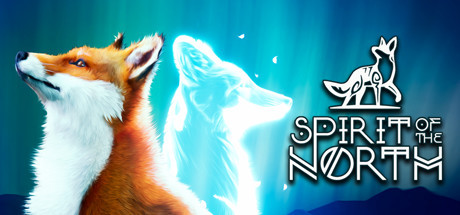
Full Name: Spirit of the North
Release Date: November 1, 2019
Released on: PlayStation 4, PC, Nintendo Switch, PlayStation 5, Xbox Series X|S
Cross Play: No
Initial thoughts
The beginning seemed promising. There is something immediately appealing about controlling a fox in a quiet, mystical world with no traditional dialogue, no combat focus, and an atmosphere that clearly wants to lean on tone, movement, and visual storytelling instead of noise. Early on, that works. The opening has enough mystery and enough visual strength to make it feel like the game might become one of those small but memorable atmospheric adventures.
The problem is that the longer it went on, the weaker it became. Rather than building naturally toward something more rewarding, the game started feeling more confused, more vague, and more frustrating. What first seemed elegant gradually started feeling underexplained. What first seemed mysterious started feeling unclear. And what first felt atmospheric eventually became a bit tiring.
That shift is what defines the whole experience. The game is not terrible across the board, because there are still elements worth appreciating. But it absolutely peaks early, and the further in we got, the more the whole thing started to fall apart.
Story and setting
Plot overview
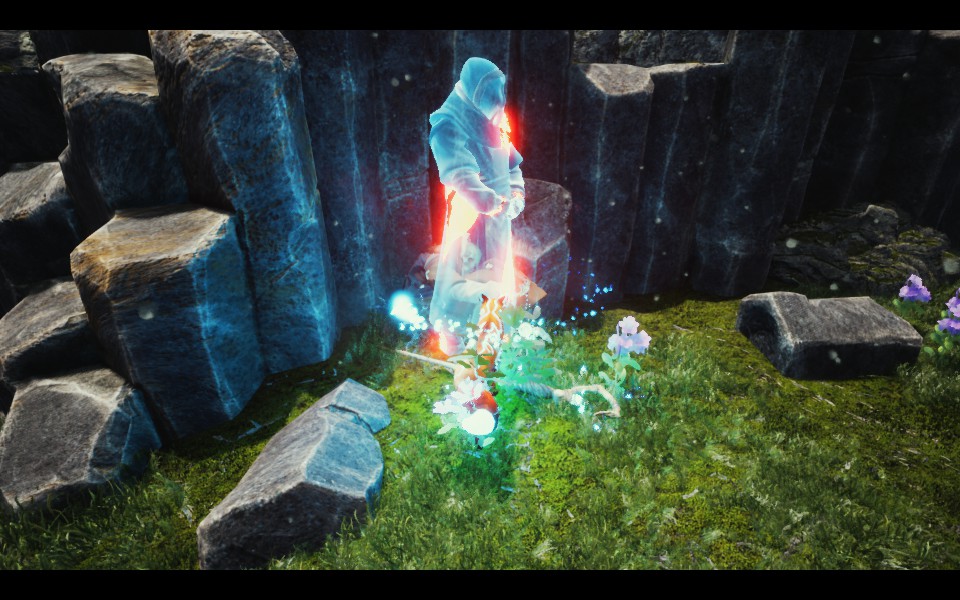
The broad story is more symbolic than direct, and that is both part of the appeal and part of the problem. You play as a fox whose journey becomes tied to a spirit fox linked to the Northern Lights and a ruined world. Official descriptions emphasize that the game is intentionally light on direct storytelling and uses the environment, ruins, and visual symbolism to communicate the collapse of an ancient civilization.
In practice, though, the narrative can become confusing rather than intriguing. There is some kind of corruption, death, rebirth, spiritual guidance, and eventually a more distorted turn involving the spirit itself and what seems like a need to heal or restore what has been broken. The game clearly wants the player to interpret rather than simply consume, but that ambition only works when the imagery and structure remain readable enough to be satisfying. Here, they do not always stay on that side of the line.
World building and immersion
The world is one of the stronger parts of the game for a while. The ruined landscapes, red-stained skies, snowy spaces, and quiet sense of decay all support the mood very effectively. Official descriptions lean heavily on the Icelandic inspiration and Nordic folklore roots, and that definitely comes through in the game’s best moments.
But immersion weakens when the game stops communicating clearly. A world can be mysterious and still feel coherent. Later on, Spirit of the North often feels like it wants the player to accept vagueness as depth. That can work for some players, but for us it often made the journey feel less meaningful instead of more profound.
Character development
This is not a character heavy game in the traditional sense, so development comes mostly through symbolism and the player’s relationship to the spirit companion. That can be effective in a short atmospheric game, but again, clarity matters. When the spirit’s role becomes more unstable and the game’s intentions become murkier, the emotional connection weakens rather than deepens.
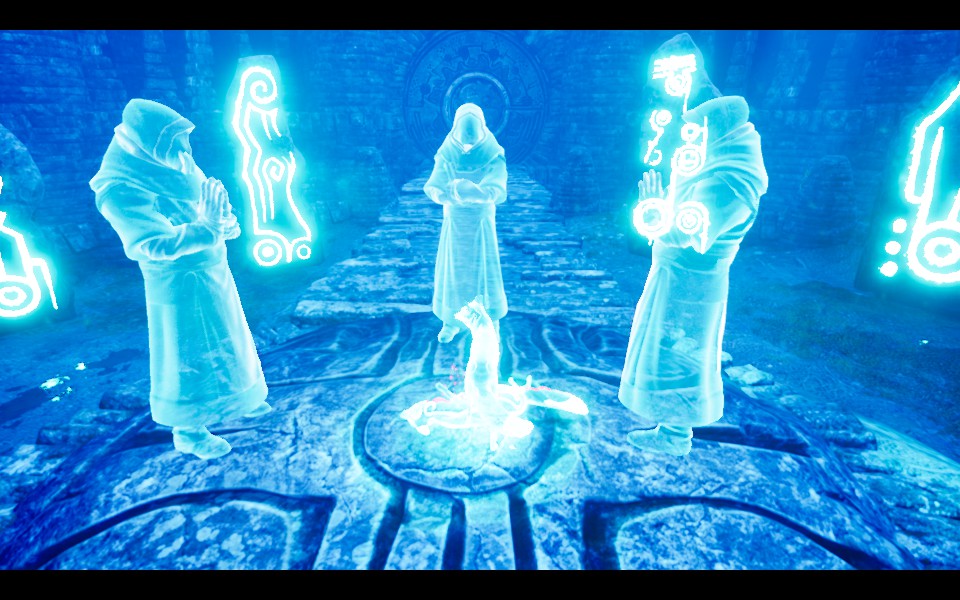
My wife was especially annoyed with how the shamans were handled, which did not help. They feel like they should mean more than they ultimately do, and that makes parts of the journey feel less earned.
Emotional impact
There are emotional moments in the atmosphere itself. The loneliness, the ruined world, the companionship between the fox and the spirit, and the quiet melancholy all create a certain mood that the game handles fairly well. Early on, that tone carries a lot.
Later chapters, however, undercut that emotional weight by becoming too frustrating and too unclear. It is hard to stay emotionally invested when the main feeling shifts from curiosity to irritation.
Rating for story and setting
I have visited multiple aspects of the story, and after some thought and objective thinking, I rated the story and setting with a 5.5.
Gameplay and mechanics
Core gameplay mechanics
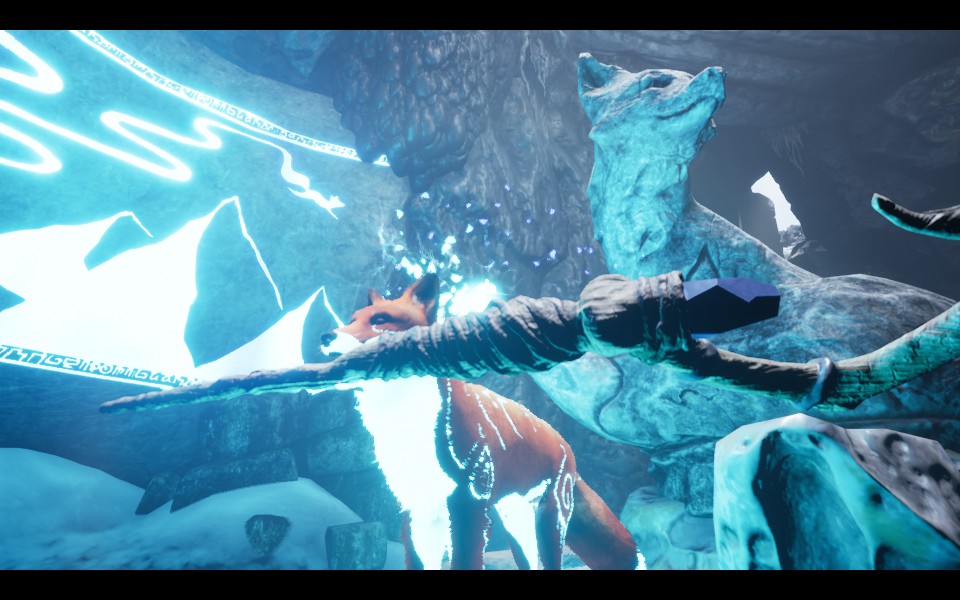
The core gameplay works well enough at first. Running, leaping, exploring, following environmental clues, and slowly unlocking spiritual abilities is a strong enough loop for a game of this type. The official store descriptions also emphasize traversal, puzzle solving, and environmental interpretation as the central structure of the experience, and that is definitely what the game is built around.
For the early and middle portions, that formula mostly holds up. The fox controls well enough, the atmosphere carries the lighter puzzle design, and the movement through ruins and landscapes gives the game purpose. But after around chapter 5, the cracks become harder to ignore. Several abilities stop feeling especially relevant or satisfying, and the puzzle design becomes less intuitive at the exact point where the game seems to think it is becoming more interesting.
Difficulty and balance
This is not a difficult game in the traditional sense. It is rarely about precision challenge or combat mastery. The difficulty comes more from interpretation, navigation, and puzzle logic. That is fine in theory, but once the game becomes too vague, the challenge stops feeling elegant and starts feeling poorly communicated.
That is what happened to us. The later game is not hard because it demands mastery. It is hard because it often fails to tell the player enough.
Pacing of the game
The pacing starts off well and then degrades badly. There is a clear drop in quality once the later chapters begin, and by the time chapter 7 arrived, that drop was impossible to ignore. The early game benefits from mystery and novelty. The later game suffers because it no longer has enough clarity to support that same mystery.
That is a big problem in a relatively short atmospheric adventure. Games like this live or die by sustained flow. Once that flow is broken, every remaining issue becomes more noticeable.
Innovation and uniqueness
There is still something unique about the game’s approach. A wordless fox adventure rooted in Nordic inspired imagery and environmental storytelling is not exactly common. The concept itself remains appealing, and that deserves credit.
But a unique concept is not the same as a fully successful game. Spirit of the North has originality, but it does not always know how to develop that originality into strong late game design.
Controls and user interface
The controls are mostly functional. They are not the main problem. The issue is more that the design around them becomes less satisfying as the game continues. The UI is minimal, which fits the style, but that minimalism also contributes to the lack of guidance once the puzzles become more obscure.
Minimalism works best when the game underneath it is confident and readable. Here, it sometimes feels more like missing support than good restraint.
Microtransactions
None.
Rating
After combing through many of the mechanics, the pacing, and other factors of this game, I rated the gameplay and mechanics with a 5.5.
Graphics and art style
Quality of graphics and art direction
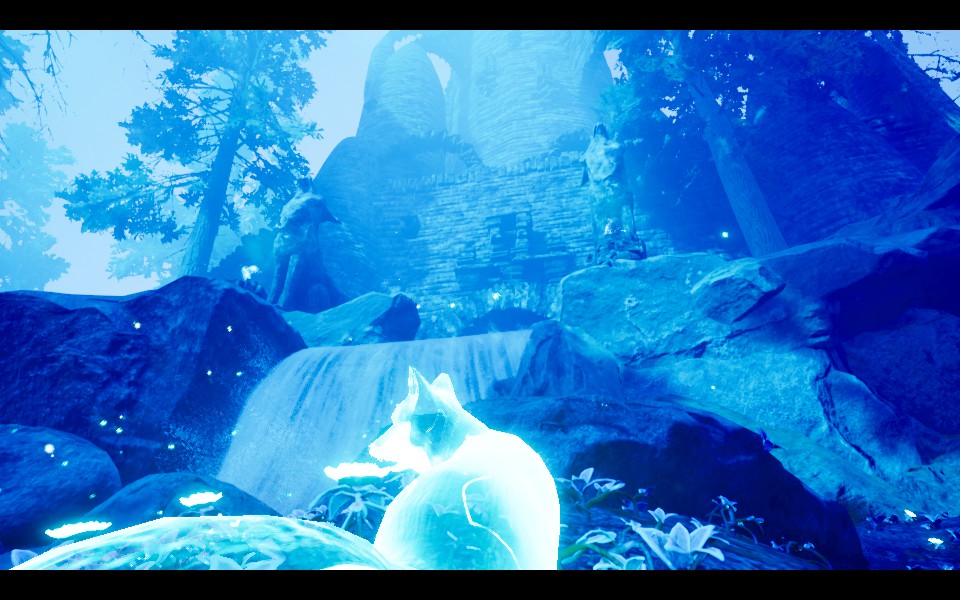
This is where the game earns a lot of its goodwill. Visually, it is often very beautiful. The landscapes, lighting, spirit effects, and Nordic-inspired ruin aesthetic all come together in a way that makes the game appealing even when the design itself starts to wobble. The red sky motifs and snow-heavy environments especially give the game a recognizable identity. Official material repeatedly emphasizes the visual inspiration from Icelandic scenery, and that absolutely comes through.
Technical performances
Performance has been a recurring criticism of the game across versions, especially in the original release and even to some extent in the Enhanced Edition. That reputation is understandable given how often players and reviewers have pointed to controls and technical roughness as ongoing weaknesses.
From our own experience, the bigger issue was less raw technical collapse and more the feeling that the game never quite reached the level of smoothness or refinement that its visual ambition deserved.
Environment and design uniqueness
Environment design is one of the strongest reasons to play the game at all. Even when the puzzles frustrate, the world often still looks like somewhere worth wandering through. There is a clear artistic vision here, and that matters. If the game had matched that visual confidence with stronger late-game design, the whole experience would have landed much better.
Rating
It took me some time to give the graphics and art style an objective rating. There are many things to consider, but ultimately, I rated this section with a 7.5.
Sound and music
Music score and how it contributed to the game
The music fits the game well. It supports the lonely, spiritual, slightly mournful tone that the world is going for, and it helps carry a lot of the atmosphere that the game depends on. The soundtrack is not trying to overwhelm. It is trying to reinforce quiet wonder and sadness, and in that respect it succeeds.
Sound effects quality
Sound effects are subtle but effective enough. Footsteps, environmental audio, and spirit related effects all help build the mood. The game does understand how important sound is for a title with no traditional dialogue driven storytelling.
Voice Acting
There is no conventional voice acting, and that is by design. Official descriptions explicitly note that the game was built without dialogue or narration, asking players to interpret the world through surroundings and symbolism instead.
That choice fits the game’s artistic goals, but it also means the game has no backup system when its visual storytelling becomes too vague. Silence can be powerful. It can also leave too much empty space when the design starts slipping.
Rating
After a lot of consideration, I rated the sound and music section with a 7.
Replayability
Game Length and content volume
The game is not especially huge, which normally would work in its favor. But because the final chapters drag emotionally and mechanically, the back portion feels longer than it should. That is always a bad sign. A modest runtime can still feel exhausting if the player has stopped enjoying the flow.
Extra Content
There is some reason to revisit for cleanup and collectible completion, especially if you care about gathering the shamans. But that is not the same as meaningful extra content. It is more completionist cleanup than an exciting postgame incentive.
Replay value
Replayability feels limited unless you are specifically returning to gather everything, such as all the shamans or other missed completion elements. For a game that is mostly built around atmosphere, mystery, and discovery, a lot of the replay value disappears once those first impressions are gone.
That is not unusual for a game in this genre, but it does mean the later frustrations matter even more. A short atmospheric game does not need huge replayability, but it does need a satisfying first run. That is where this one stumbles.
Maybe for players who really connect with the atmosphere or want every collectible. For us, replay value felt low. Once was enough, and even that one run was wearing thin by the end.
Rating
After thoughtful consideration, I decided to rate the replayability and game length of Spirit of the North with a 5.
Suggestions and comparisons
Suggestions and feedback
The biggest need is clearer late game design. The game does not need to become loud, overexplained, or mechanically bloated. But it absolutely needs better communication in its final chapters. Mystery is not the same thing as obscurity, and chapter 7 in particular crosses that line badly.
The handling of the shamans could also have been stronger and more meaningful, because they feel like a larger part of the world than the game ultimately lets them become.
Comparisons
The obvious comparison is to other atmospheric exploration games where tone and symbolism do most of the work. Spirit of the North clearly wants to live in that space. The difference is that stronger games in that style usually remain clearer even when they are abstract. This one too often confuses being hard to read with being deep.
Personal experiences and anecdotes
My wife really disliked chapter 7 in the spirit world because there was no clear clue at all about what she was supposed to do. That was the first moment where we gave up and actually looked up information on where to go next.
That moment says a lot about the whole review. Up until then, the game had still managed to hold onto enough goodwill through atmosphere and curiosity. After that, it felt like the game had stopped respecting the player’s time and attention.
Rating
Taking in all the personal experiences with Spirit of the North, I give it a personal rating of 4.5.
Last words
Pros
- Strong visual atmosphere
- Beautiful environments
- Quiet, melancholic mood works early on
- The fox spirit concept is appealing
- Music supports the tone very well
- The opening chapters show real promise
Cons
- Story becomes too vague
- Later chapters drop in quality badly
- Chapter 7 is frustratingly unclear
- Several abilities feel pointless later on
- The shamans are not handled well enough
- Puzzles become more annoying than clever
- The ending stretch feels like a weak excuse compared to the stronger opening
Spirit of the North is one of those games that makes a good first impression and then slowly chips away at it. It has a genuinely attractive world, a nice atmosphere, and a concept that is easy to like. But it also becomes increasingly confusing, less satisfying, and more frustrating as it goes on.
That leaves it in the middle: not terrible, not great, and definitely weaker by the end than it had any right to be.
FINAL RATING

5.8
Please let me know what you think of Spirit of the North in the comments!
I hope you enjoyed reading this review, I hope to see you in the next review!
If you liked reading this review, maybe you would like to share this review with your friends.
The setting for this game is great, but wow, really missed the target with a great story.
They indeed missed the mark.
You captured both its calming beauty and frustrating design quirks in equal measure.
Its Yin-Yang!
It’s a shame, because the game is really beautiful. The music is good and the game has a poetic quality that I really liked.
A poetic fox has emerged.
Uh, a game I actually played… partially… yeah, the issues you see with the later levels made me loose interest. I had no idea what I was actually doing and so I stopped at some point…
I can understand that.
i have this, ill try later
Good luck with it!
I personally done 100% achievements for this game. However generally agree that game is beautful, but story maybe sometimes too vague. I had also problems with finding all shaman spirits, especially in that forest, I got lost, but somehow after some time I did that.
The shaman spirits are indeed hidden well.
Reading the reviews, I can’t help but think the developers must have run out of steam before they could finish the latter half of the game.
They indeed ran out of juice.
annoying puzzle – one of the worst things in gaming
Yes, it is.
Games without texts, words or talking can be a very unique experience (like in Little Nightmares) but if you the possibilities are too open or the road ahead is not 100% clear … it can be quite annoying.
It is indeed very annoying.
Huh! Is the game’s rating dropping after the visual charm fades? I thought it was one of those overwhelmingly positive games, but noticed many reviewers and curators being skeptical because the game is vague and confusing…
It is indeed vague.
Looks like a good game that was rushed at the end
Rushed to the ending!
This game is on my list to play, 4.5 doesn’ sound good but… Every person different opinion.
You can try it, but perhaps the second game is better?
Oh, dear, I ran into that in games and know exactly what you meant. It’s like the devs want us to roleplay or make up our story of what is happening, but it doesn’t offer environment for that. Instead, it’s just empty.
Emptiness! But yeah, vague is depth equals good gameplay.
There is indeed a lot of walking in this game.
Ah…. I had a feeling the game wasn’t very polished, especially based on the graphics being a little rough 🙁 Cute idea but probably needed some more time to work on everything!
They instead started working on the second game.
This isn’t a great game, but there are definitely some nice aspects to it
There are indeed some nice aspects to this game.
I once thought about playing it. Thanks for your honest review!
I am glad you like the review!
I like this review. Sometimes we can find a hidden gem among indie projects.
Hopefully the review helps with your point of view.
Thanks for the review. I saw this around and thought it might be something that I like, but after reading the review perhaps not so much
Sadly the game was not perfect.
My friend said foxes are adorable and gave it 10/10. Chilling beautifull game, that’s all.