
Introduction
Basic information
Developer Name: Konami Computer Entertainment Kobe
Full Name: Castlevania: Legacy of Darkness
Release Date: November 30, 1999
Released on: Nintendo 64
Cross Play: No
Initial thoughts
I was wondering what game to play next, and eventually I decided on Castlevania: Legacy of Darkness. I had played the original Castlevania 64 long ago, but it had been enough time that I wanted to revisit the N64 era properly. Instead of replaying the original version again, it made much more sense to jump into this expanded version with Cornell and Henry, especially since this release is basically what Castlevania 64 should have been from the start.
And honestly, that is part of what makes this game so interesting. It almost feels like an early version of what we would now call an expanded edition, director’s cut, or even DLC style revision before that was really a normal thing. It takes the original game, patches up several issues, adds new content, brings in new playable characters, expands the structure, and turns the whole package into something much more complete.
Playing it on the Analogue 3D was also a huge part of the enjoyment. The game keeps its unmistakable N64 polygonal look, but with much cleaner presentation and modern display comfort. It still looks like a 1999 game, obviously, but in the best possible preserved way. That matters a lot for a game like this, because the atmosphere is half the experience.
Story and setting
Plot overview
The story is actually great when you consider the era it came from. This was still a time when many games, especially outside RPGs, barely told more than congratulations, you saved the kingdom. The SNES had some amazing exceptions, of course, but by N64 standards, Legacy of Darkness offers a surprisingly dramatic gothic adventure with cutscenes, character motivation, boss encounters, and even proper fighting scenes.
Cornell’s story gives the game a strong emotional spine. He is trying to save his sister from Dracula’s dark influence, only to discover that the whole situation is a trap. That setup is simple, but it works. Castlevania does not need ten layers of political intrigue to be effective. It needs cursed castles, desperate heroes, monstrous villains, and a sense that darkness is constantly closing in.
Henry’s mode adds another interesting angle because it turns the game into a rescue mission. Saving children across dangerous areas gives the world a different kind of urgency. It feels less like a normal hero’s journey and more like a timed survival operation inside a nightmare.
World building and immersion
The world has that classic Castlevania gothic flavor, but filtered through the strange, harsh geometry of the N64. That gives it a unique atmosphere. The castles, forests, towers, crypts, and nightmare spaces all have a distinct old 3D horror charm that modern games rarely replicate. Everything feels slightly stiff, slightly haunted, and slightly cursed by early 3D limitations, which somehow makes it more unsettling.
Because this version expands and revises the original Castlevania 64, the world feels fuller. New enemies, added bosses, and alternate level structures make it feel less like a simple replay and more like a broader version of the same dark adventure. The official summaries describe it as an expanded version with improved graphics, added villains, and alternate versions of some levels, and that really is the best way to understand what makes it stand out.
Character development
Cornell is a memorable lead because he has both a clear goal and a unique mechanical identity. His werewolf transformation gives him a distinct role compared to the other Castlevania heroes, and that helps him stand apart. Henry is also interesting because his mode changes the tone and pacing of the game, turning the experience into more of a rescue challenge.
Reinhardt and Carrie are still present too, but since I had already played them in the original game, Cornell and Henry were the real attraction this time. If I ever replay their routes again, though, I would absolutely do it in Legacy of Darkness rather than the original.
Emotional impact
The emotional impact is stronger than I expected. Cornell’s personal motivation gives his campaign enough weight to matter, and Henry’s rescue mission adds a direct sense of urgency. The game is not emotionally complex in a modern cinematic way, but it does not need to be. The stakes are clear, the danger is constant, and the atmosphere carries a lot of the emotional load.
The final boss especially reinforces that feeling. It is not just a simple victory lap. It feels like a real test, and that makes the conclusion more satisfying.
Rating for story and setting
I have visited multiple aspects of the story, and after some thought and objective thinking, I rated the story and setting with an 8.
Gameplay and mechanics
Core gameplay mechanics
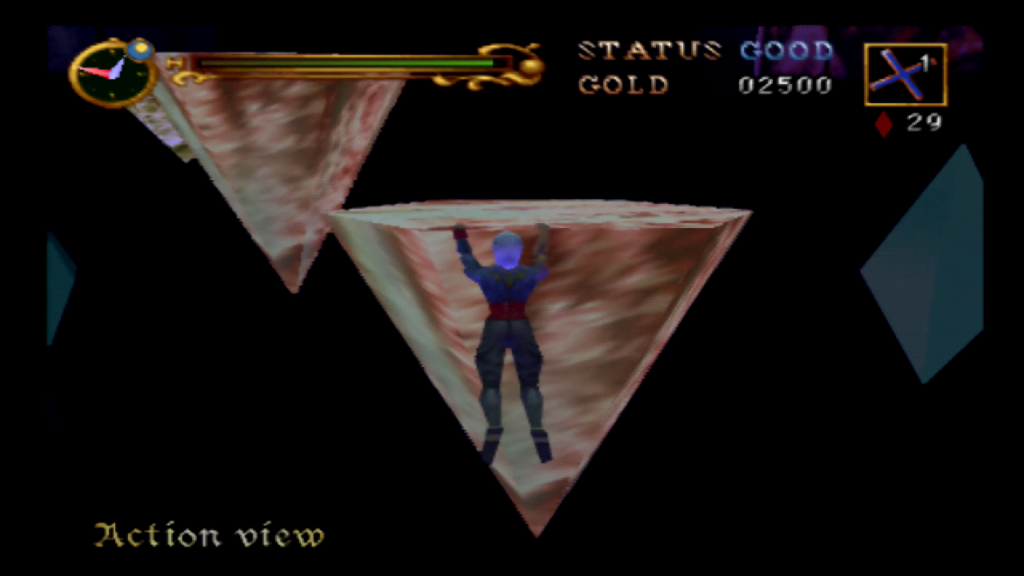
The gameplay is very innovative for an N64 action adventure game. It combines 3D platforming, combat, exploration, environmental hazards, subweapons, item management, and character specific mechanics in a way that was ambitious for the time. It is easy to forget how awkward many 3D action games were in this era, but Legacy of Darkness was genuinely trying to push Castlevania into a new dimension.
Cornell’s wolf transformation is one of the coolest additions. Being able to transform into a werewolf gives combat a real burst of power and makes Cornell feel different from a standard whip wielding hero. The downside is that the transformation has no proper cancel button and consumes your red crystals, which are also needed for subweapons. That can be frustrating, especially if you accidentally burn through resources you wanted to save.
Subweapons still feel great. I especially liked the cross and holy water, even if aiming can be awkward because, well, it is an N64 game. Thankfully, playing with an 8BitDo controller on the Analogue 3D made controlling the game much easier than it could have been on original hardware. The jumping also holds up surprisingly well, and honestly, it feels better than some later GameCube era attempts at 3D platforming.
Difficulty and balance
The difficulty is one of the game’s biggest strengths. It is hard, but in a way that becomes satisfying once you learn what it wants from you. Bosses are not just damage sponges. They require pattern recognition, movement, dodging, and understanding when to attack. The final boss especially can destroy you if you try to brute force it.
I spent my entire wealth on roast chickens, and even that was not enough to trivialize the final fight. That says a lot. Healing items help, but they do not replace learning the boss. If you cannot dodge, counter, and react properly, you will still get wrecked.
Pacing of the game
The pacing is very strong for this kind of old 3D adventure. It has slower exploratory sections, platforming challenges, combat heavy areas, and boss encounters that break up the rhythm. Henry’s rescue mode especially changes the pace because it turns certain areas into speedrun like objectives where efficiency matters.
There are some old school rough edges, of course. Some sections can feel stiff or unclear by modern standards. But once you settle into the game’s rhythm, it becomes deeply engaging.
Innovation and uniqueness
For its time, this game was doing a lot. A 3D Castlevania with multiple playable characters, expanded campaigns, werewolf transformation, platforming-heavy environments, and gothic action adventure structure was ambitious. Even if critics were mixed at the time, this version is far more interesting than its reputation suggests.
It also feels like one of the earliest examples of a publisher taking a game, revising it, expanding it, and essentially releasing the better version shortly afterward. That makes it historically fascinating.
Controls and user interface
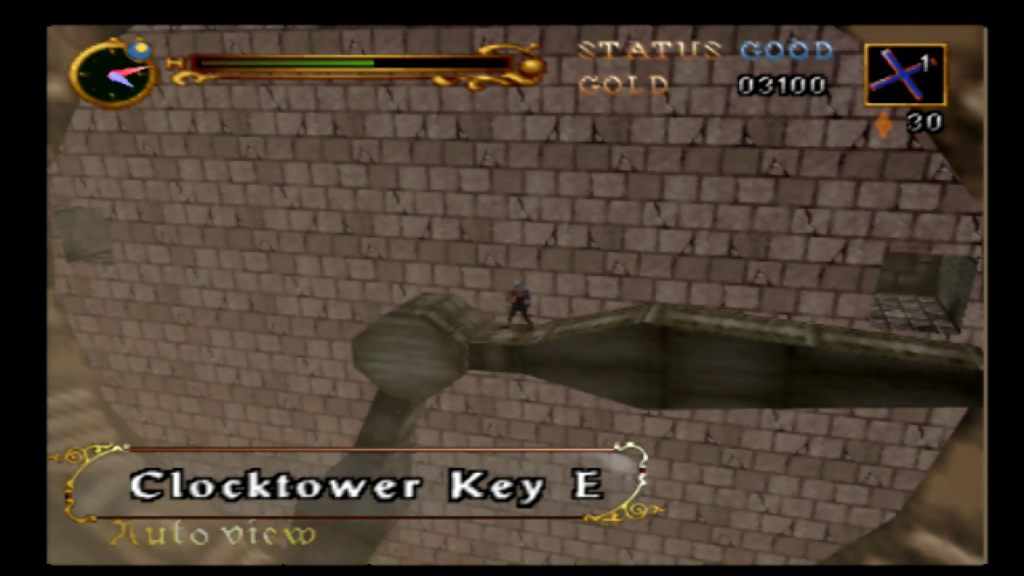
The controls are old but playable. The camera and aiming can be awkward, but the Analogue 3D setup and modern controller comfort help a lot. Once you adapt, the controls become part of the challenge rather than a dealbreaker.
The interface is functional, but the lack of a cancel option for Cornell’s transformation is a real annoyance. Resource management would feel much cleaner if that ability were easier to control. However, I can understand having problems controlling your inner beast! Cornel certainly has some trouble with it.
Microtransactions
None. Just vampires, werewolves, roast chickens, and pain.
Rating
After combing through many of the mechanics, the pacing, and other factors of this game, I rated the gameplay and mechanics with an 8.
Graphics and art style
Quality of graphics and art direction
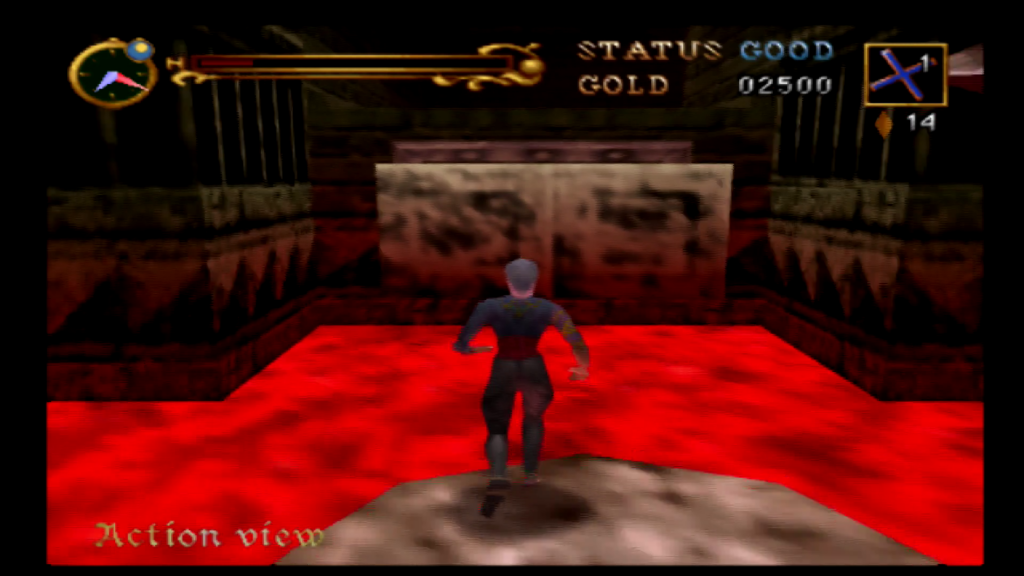
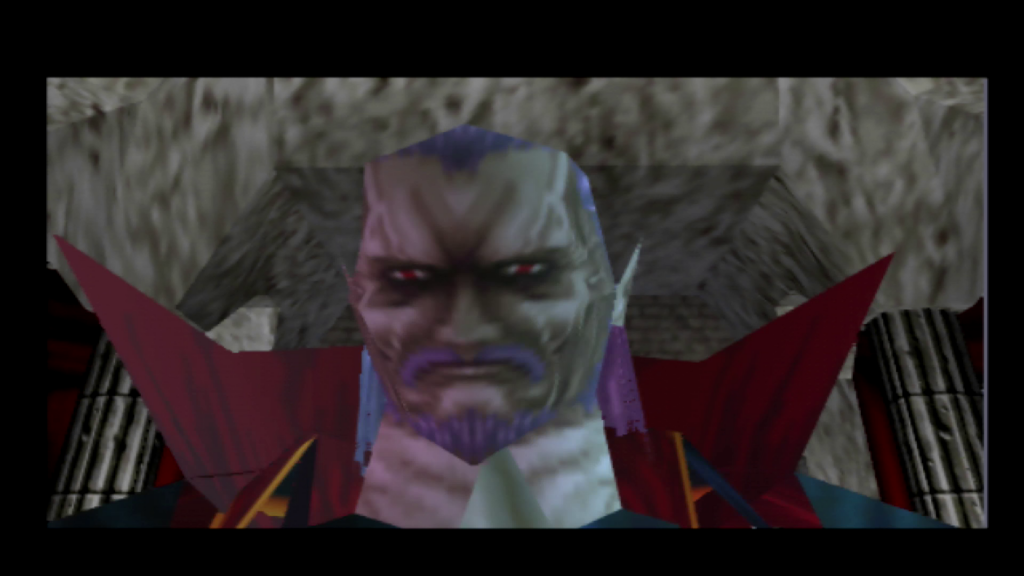
I loved the graphic style. This is pure N64 gothic horror, and that gives it a charm modern games cannot really imitate. The models are angular, the textures are rough, and the environments are blocky, but the atmosphere is excellent. It has that late 90s haunted polygon look where everything feels just a little unnatural.
There are many different levels, many different enemy types, and plenty of additions compared to the previous version of Castlevania 64. The expanded content helps the game feel more alive and varied. The final boss especially looks like something dragged straight out of a nightmare. It is grotesque, memorable, and exactly the kind of thing Castlevania should throw at you near the end.
Technical performances
On original N64 hardware, the game was ambitious and occasionally rough. On the Analogue 3D, it becomes much easier to appreciate what the game was trying to do. The sharper image and cleaner output make the environments much more readable while preserving the original look.
The game still has old 3D quirks, but those quirks are part of the experience now. They do not ruin it. They remind you of the era.
Environment and design uniqueness
The environment design is one of the game’s strongest features. The areas feel distinct, gothic, and dangerous. The game has forests, towers, castles, underground sections, and nightmare spaces that all contribute to the Castlevania identity.
It is not as elegant as the 2D games, but it has its own flavor. That is important. This is not just Castlevania but worse because it’s 3D. It is Castlevania filtered through a very specific experimental era, and that gives it value.
Rating
It took me some time to give the graphics and art style an objective rating. There are many things to consider, but ultimately, I rated this section with a 6.0.
Sound and music
Music score and how it contributed to the game
Frigging awesome. It is Castlevania, alright. The soundtrack carries the gothic mood beautifully, using tension, melody, and atmosphere to keep the game feeling dark and adventurous. Even when the visuals show their age, the music keeps the tone strong.
The soundtrack does exactly what a Castlevania score should do: make you feel like you are walking into cursed territory where everything wants you dead, but somehow you still push forward.
Sound effects quality
Sound effects are strong for the era. Attacks, monster noises, environmental effects, and item sounds all support the gothic atmosphere. The audio helps sell the danger of enemies and the impact of combat.
Voice Acting
There is limited voice work by modern standards, but the cutscenes and presentation are still impressive for an N64 game. The game does not need full modern voice acting to work. The atmosphere, music, and text carry enough of the story.
Rating
After a lot of consideration, I rated the sound and music section with a 8.5.
Replayability
Game Length and content volume
The content volume is excellent. Cornell’s campaign alone is substantial, but then Henry’s rescue mode adds an entirely different structure. Reinhardt and Carrie’s revised routes add even more value. This is not a tiny revision. It is a heavily expanded package.
That is why I like calling it almost one of the first DLC-like games before DLC was really a standard thing. It took the base game, added content, improved systems, and created a more complete version.
Extra Content
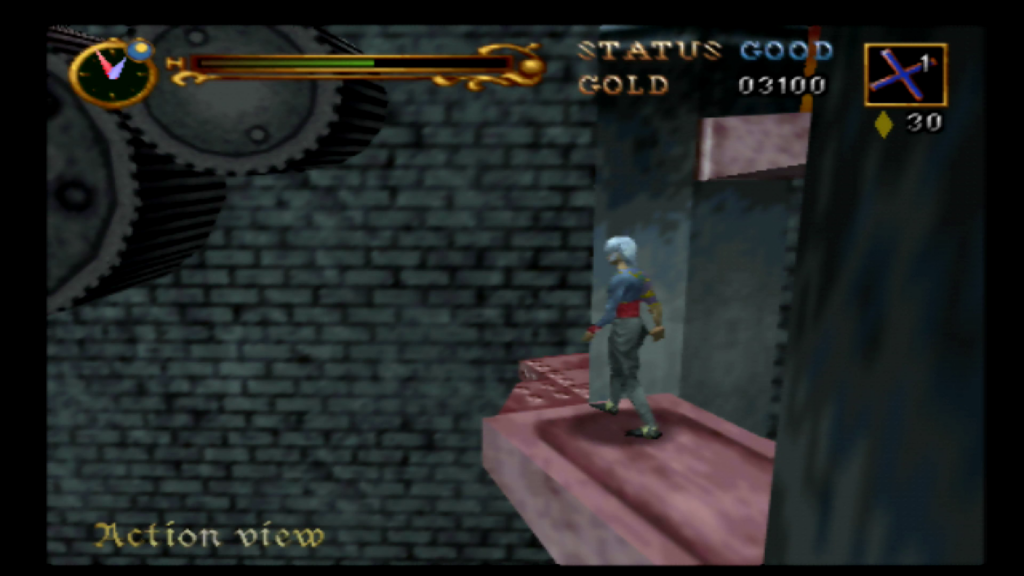
Henry’s mode deserves special mention. Saving the kids feels like a speedrun, and it adds a totally different kind of pressure. It is not just more of the same. It changes how you think about levels and movement.
Replay value
Replayability is genuinely impressive. There are four playable characters, multiple campaigns, multiple difficulties, and different routes or objectives depending on who you play. Do the math, that is a lot of content for an N64 action-adventure game.
This time I focused on Cornell and Henry because I had already played Reinhardt and Carrie in the original Castlevania 64. But if I ever decide to replay Reinhardt and Carrie, I will absolutely do it through Legacy of Darkness. This is simply the better version.
Replay value is very high for fans who can handle N64 era design. This is not a game everyone will replay four times, but the option is there, and the variety between characters makes that more realistic than expected.
Rating
After thoughtful consideration, I decided to rate the replayability and game length of this game with a 9.
Suggestions and comparisons
Suggestions and feedback
My biggest suggestion is simple: make new 3D Castlevania games like this again, but with modern polish. Not like the 2010-ish attempts that completely missed what made Castlevania special. Those games did not feel like the right future for the franchise. They felt like the franchise was getting lost.
A modern version of this design could be incredible: gothic exploration, multiple characters, strong platforming, tough boss fights, classic subweapons, character specific mechanics, and proper Castlevania atmosphere. The foundation is still good.
Comparisons
Compared to the original Castlevania 64, Legacy of Darkness is simply the better package. It adds content, improves presentation, and gives players more ways to experience the world. Contemporary and later summaries often frame it as the expanded or revised version of the original, and that is exactly how it feels.
Compared to later 3D Castlevania attempts, this one has more identity for me. It may be rougher technically, but it feels more like Castlevania in spirit.
Personal experiences and anecdotes
My personal favorite part of the experience was the difficulty. Not frustration for the sake of frustration, but the kind of difficulty where you slowly improve until you finally break through. That feeling of I pulled a GIT GUD is extremely satisfying.
The final boss was the perfect example. So many attempts. Learning his moves. Learning how to counter. Learning when to dodge. Realizing that even a mountain of roast chickens would not save me if I played badly. That is good boss design. It forces you to engage, not just stockpile healing and mash through.
That final victory felt earned, and that is exactly what I want from Castlevania. Simone was sitting at the computer, doing some work while I was facing the boss. I, of course, gave some updates on when I died, and then it finally clicked: I parried, I dodged, and I defeated the final boss. Leading me to jump up and scream, Fuck yeah, you are dead, Dracula! The rush of victory was amazing, this only happens with games where I can fully immerse myself.
Rating
Taking in all the personal experiences with this game, I give it a personal rating of 9.
Last words
Pros
- Much improved version of Castlevania 64
- Cornell is a great playable character
- Werewolf transformation is awesome
- Henry’s rescue mode adds great replay value
- Strong gothic atmosphere
- Great soundtrack
- Surprisingly good story for the era
- Multiple playable characters
- Strong boss difficulty
- Excellent N64-era environmental variety
- Analogue 3D makes it much nicer to revisit
- Feels like an early expanded edition before that became normal
Cons
- Cornell’s wolf form has no proper cancel option
- Some N64 era camera issues remain
- It deserves a modern rerelease or remake but is still trapped on old hardware
Castlevania: Legacy of Darkness is far better than its reputation suggests. It is rough, yes, but it is also ambitious, atmospheric, challenging, and packed with content. It feels like the fixed and expanded version of Castlevania 64, and for that reason alone, it deserves more respect.
Playing it today on the Analogue 3D made me appreciate it even more. This is not just an old curiosity. It is a bold early attempt at 3D Castlevania that actually has numerous great ideas.
Give me a modern 3D Castlevania built from this foundation, not the later games that forgot what the series should feel like.
FINAL RATING

8.6
Please let me know what you think of Castlevania Legacy of Darkness in the comments!
I hope you enjoyed reading this review. I hope to see you in the next review!
If you liked reading this review, maybe you would like to share this review with your friends.
I had no idea there was a 3D Castlevania title like this — it’s got great ratings, and reading the reviews, it looks like a lot of fun! Looks like there are others in the series too, so it’d be great if they released it as a 3D collection!
A 3D collection would be so neato!
This looks a bit different from the Castlevanias I usually hear about, but it seems like it does have the juice!
Thanks for showcasing this one! 😃
You are welcome!
“I loved the graphic style. This is pure N64 gothic horror, and that gives it a charm modern games cannot really imitate.” ~ And you know someone adult wrote this, I would like to see some young kid enjoying old game like that. >.<
Did you just call me old? Lol, but I get what you mean!
An interesting read as usual, although I didn’t get why the Graphics and art style section got a 6 despite the verdict for all the sub-sections being great… Also I admire your perseverance in playing old games. I also played games from this era as a child, but won’t want to go back and revisit most of them.
Maybe needed to be a bit more clear, but camera, lol.
Thanks for review, i don’t know how many users can play on Nintendo Switch so if you can focus for more PC games, its better i think. Have a good day.
I’m not sure I’d find myself playing through such an old, dated game now, but it sounds like a lot of the gameplay mechanics have really held up over the years.
Love going through old games!
“jo Dracula, wait a sec I need to eat a couple of roast chickens. I’ll be back in a minute… or two” 😀
This!
I personally love the N64/PS1&2 art style it is somewhat nostalgic for me I suppose, also the game sounds like a lot of fun to play!
I love nostalgic games; screw the bad controls!
There are so many Castlevania games to try out! Thanks for giving us a quick review of this one.
I am glad you liked it!
It’s a surprise that there’s a 3D castlevania game for the N64. The werewolf transformation is particularly interesting. I always thought it was either humans or vampires.
There are also skeletons!
I like a setup and story, a climat. It is great you also appreciate such things like climatic old school graphics (especially this polished version) and more variety in gameplay. Lot of content if interactive and usable is also important thing. Good review. One note, well you often says in review “good like for an old” and i often got feeling that modern games are very often not better, because they are simplified.. so i wouldnt make a general rule from this, that older is worse :] But remake if made well is of course good idea, there are examples of some good remakes recently like Gothic 1, Oblivion, probably Neverwinter Nights but i didnt tryed it yet..
It really depends on the developer.
Gotta admit I admire the pacing they managed to pull off, given how many features they packed into it, even at that era. Nowadays the more features we get, the more cluttered the gameplay gets. We’re expected to juggle platforming, combat, boss encounters, timed events and whatnot at the same moment, like the real world wasn’t enough of juggling already. XD
They did a lot of testing back in the day!
It’s good that it’s hard, but satisfying and great sound effects support gothic atmosphere. However I think it needs remake, better graphics.
A remake would be neat!
It is fascinating to hear about Legacy of Darkness as it would have been a patch or post launch update to Castlevania 64 if it was released in modern times, an example of a developer going back and retooling a game and re releasing it within a short time frame, even PC games of the time had an analogue in game of the year editions where new modes or controls could be added with changes to the campaign or a new set of levels etcetera
I had both cartridges back in the day but for some reason never played this one.
An incredible game that hasn’t aged a bit. If this is your kind of game, go for it, you won’t regret it.
It is indeed a fun game!
It looks interesting, and you seem to have liked it! I wonder why they went back to 2D after just 2 of those N64 3D games.
I think there are two other 3D games, but never played them, we need a collection! Oh they went back to 3D later, but those games were horrible.
Only played the previous one, felt weird to see a 3D Castlevania
Still love it!
Never played these games, looks interesting though. It’s cool to see, that old games still have fans out there.
Seems games before 2000 are called Veteran games…
This is oneo f those castlevania I would not recommend but if you a strong fan of teh series why the hell not. But that camera though….. ew.
You get used to the camera.
Seems cool for a retro game, especially the multiple playable characters and werewolf form! It looks like it has a nice atmosphere and story! It definitely needs a remake to let it’s positives really shine!
A remake would be a great surprise!
Oh that’s why i thought they were the same game, this one is besically the first one but with patches and DLCs XD
i played the first one though i never got far, game was clunky, it seems to still be a little but the imrpovements made the game a lot better
definitely one of the games of all times
It is indeed a great game!