
Introduction
Basic information
Developer Name: Intelligent Systems
Full Name: Super Paper Mario
Release Date: April 9, 2007
Released on: Nintendo Wii
Cross Play: No
Initial thoughts
My wife wanted to try out the new Wii controller we bought, and Super Paper Mario felt like a perfect contender. It is one of those games that sits in a very specific place in Nintendo history: weird enough to feel experimental, familiar enough to still feel like Mario, and bold enough to make later Paper Mario games look painfully timid by comparison.
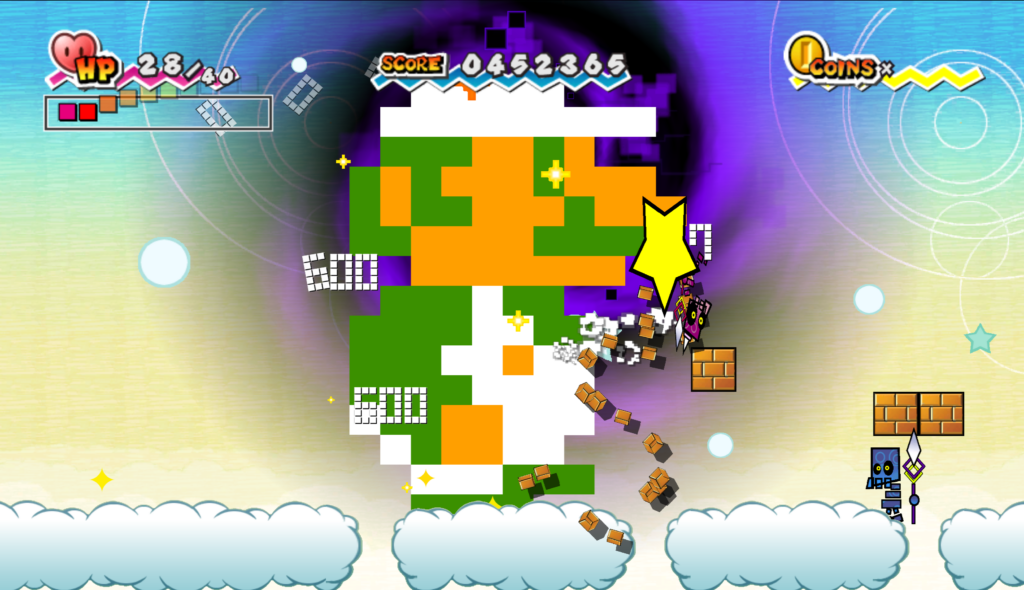
We also immediately had our own running joke: the lag hole. Flipside, or Flop City as it became during our playthrough, has that giant black void in the background, and the game clearly does not always love dealing with it. Simone and I called it the lag hole because, clearly, it is not merely consuming dimensions in the story. It is also absorbing the performance, frame by frame. Honestly? That makes it even funnier. The void is so powerful it eats worlds and hardware stability.
What makes Super Paper Mario stand out today is how much personality it still has. This was the last Paper Mario game that truly felt like it had wit, originality, and courage. After this came Sticker Star, where the RPG soul got flattened into dumb stickers. Then Color Splash splashed onto the Wii U, which I still need to properly try before judging fully. Then Origami King, which we reviewed, and while it had some nice ideas, it had basically zero real RPG progression: no proper level-ups, no traditional partners, and a structure where you can just push toward the final boss. Compared to all that, Super Paper Mario feels like the final Paper Mario game that still understood the series could be clever, funny, emotional, and mechanically rewarding at the same time.
Story and setting
Plot overview
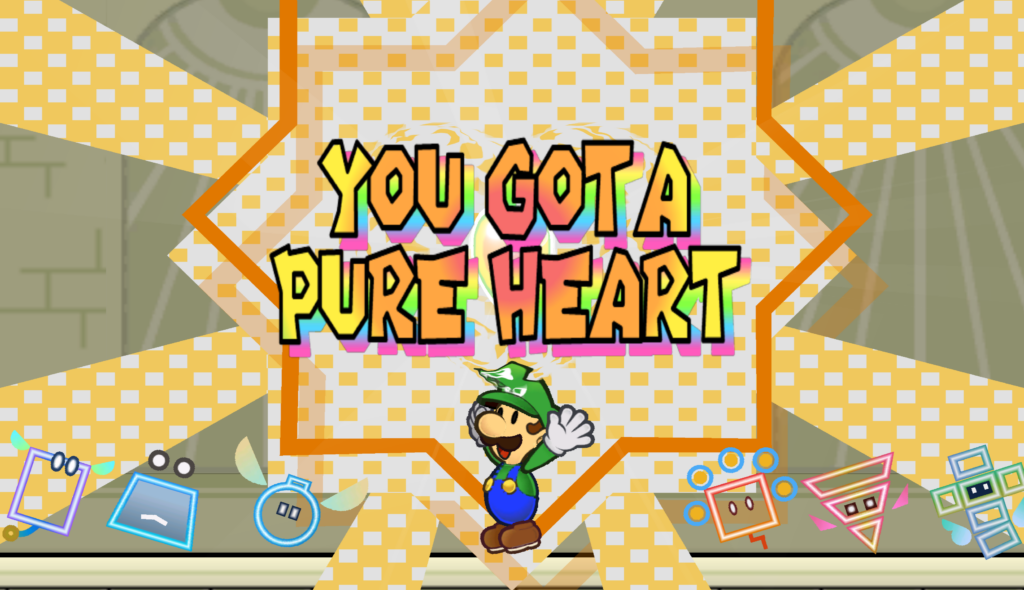
This time around, everyone gets kidnapped, and somehow Peach is still forced to marry Bowser. That is already one of the most ridiculous Mario premises imaginable, but Super Paper Mario takes that nonsense and turns it into something far more dramatic than expected. Count Bleck creates the Chaos Heart through Peach and Bowser’s forced marriage, threatening to destroy all worlds and dimensions. From there, Mario, Peach, Bowser, and Luigi are pulled into a multi dimensional adventure to collect Pure Hearts and stop total universal collapse.
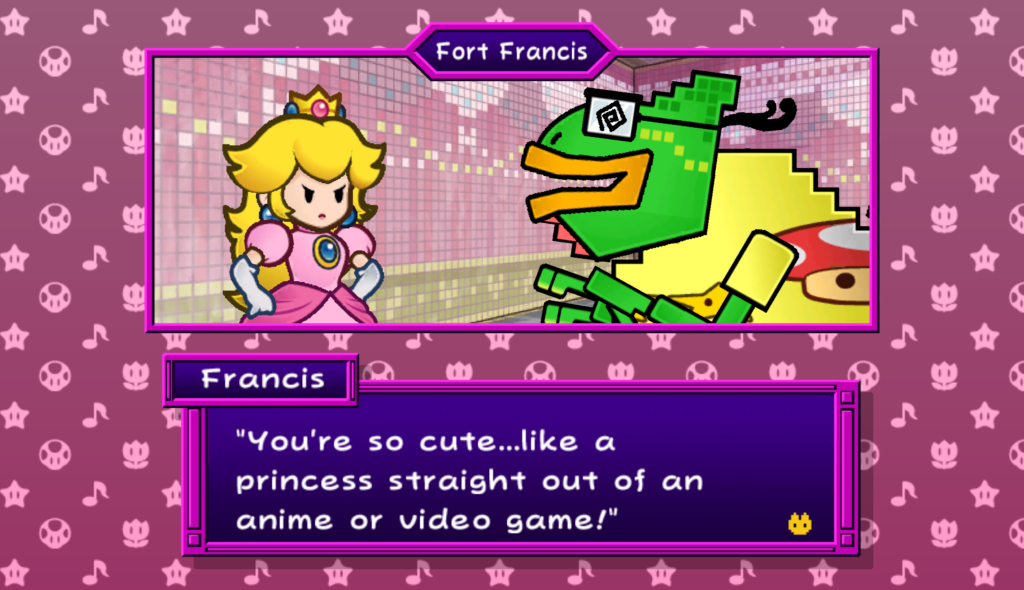
The plot is absurd, but it is also shockingly ambitious. This is a Mario game about doomed love, grief, manipulation, apocalypse, betrayal, identity, and redemption. Somehow, it still has jokes, weird NPCs, rectangular people, cooking nonsense, dating-sim parody rooms, and Bowser being hilariously Bowser. That balancing act is exactly why the game works.
Official summaries describe the game as following Mario, Peach, Bowser, and Luigi as they collect Pure Hearts to stop Count Bleck from destroying the universe, and that really does capture the scale of the story. But what those summaries cannot fully capture is how weirdly sincere the game becomes.
World building and immersion
The world building is excellent because every chapter feels like its own bizarre little universe. You are not just going through grass world, desert world, ice world, and lava world in the usual Mario way. You visit strange dimensions with their own rules, jokes, inhabitants, and problems. Some are funny. Some are unsettling. Some feel like the writers were left unsupervised in the best possible way.
Flipside and Flopside are especially memorable hubs. They feel layered, vertical, and strange, and the dimensional flipping mechanic makes the architecture feel more playful than a normal town. The lag hole of doom in the background only adds to the experience. Is it a technical weakness? Yes. Is it also thematically appropriate that the void eating all dimensions makes the game sweat? Also yes.
Character development
The playable cast is fantastic in concept. Mario, Peach, Bowser, and Luigi all have distinct abilities, personalities, and roles in the story. Bowser joining the party is still one of the funniest and best ideas the series has ever used. Peach’s float gives her real platforming utility. Luigi’s jump ability makes him feel meaningfully different. Mario’s flip ability defines the whole game.
The only real issue is that the full party arrives late. You only have all four playable characters for a very small portion of the game, mainly around sections like 7-4 and 8-1, which is a shame. The team dynamic is so fun that the game would have benefited from letting the full party breathe for longer.
Emotional impact
This game has far more emotional weight than most Mario games even attempt. Count Bleck and Tippi’s story gives the game a tragic spine. Underneath the jokes and blocky weirdness is a surprisingly sad story about love, loss, and someone choosing destruction because they cannot live with what happened.
The game does not always present its emotion subtly, but it lands because the rest of the story is so committed. The ridiculousness makes the sincerity stronger, not weaker. One moment you are laughing at Bowser’s ego, the next you are realizing the villain is not just evil for the sake of being evil. That contrast is classic Paper Mario at its best.
Rating for story and setting
I have visited multiple aspects of the story, and after some thought and objective thinking, I rated the story and setting with an 9.3
Gameplay and mechanics
Core gameplay mechanics
The gameplay is very good, especially because it refuses to be just another copy of the first two Paper Mario games. Instead of turn based battles, Super Paper Mario uses real time action platforming with RPG progression. You still gain points, level up, use items, explore towns, complete quests, and equip helpful tools through Pixls, but the moment to moment action is closer to a side scrolling Mario adventure with RPG layers.
That decision was risky, and it works far better than it probably should. The 2D to 3D flip mechanic is genuinely clever, and it gives the game a central identity. Mario’s ability to rotate the world reveals hidden paths, secrets, enemies, and puzzle solutions that simply do not exist from the normal perspective. This mechanic was widely praised and remains one of the game’s strongest innovations.
The Pixls are also a great addition. They function almost like tool based partners, giving you bombs, grabs, flips, hammer like attacks, protection, platforming options, and more. They are not full traditional RPG partners like Goombario, Vivian, Koops, or Bobbery, but they do give the game mechanical variety. So high technical, indeed.
Difficulty and balance
The difficulty balance is generally good. The game is not brutally hard, but it has enough challenge to keep players engaged. Some puzzles require actual observation, the platforming can demand attention, and boss fights usually ask you to use the right character or Pixl rather than just mindlessly stomp everything.
That said, the balance can feel uneven because the game gives you many tools, but not always enough time with all of them together. Since the full playable cast arrives late, the game does not fully capitalize on the strategic character switching potential until near the end. That is a real shame because when everything is available, the mechanics shine.
Pacing of the game
The pacing is mostly strong, but occasionally rough. The chapter structure keeps the game moving, and each world introduces enough new ideas to avoid becoming stale. However, some sections drag, especially when the game leans too heavily into backtracking or text heavy sequences.
The large amount of text was a known point of criticism even when the game released, despite the writing itself being praised. I understand both sides. The writing is often brilliant, funny, and strange, but there are moments where it goes on just a little too long. Luckily, because we turned it into a live voice acting event, the text became part of the fun for us.
Innovation and uniqueness
This is where Super Paper Mario is strongest. It dared to do something different without throwing away everything that made Paper Mario special. It still has RPG elements. It still has witty writing. It still has weird characters. It still has progression. It still has an identity beyond Mario but paper.
That is what later games often failed to understand. Innovation is good when it builds on the soul of the series. It is bad when it removes the soul and replaces it with stickers, paint, or shallow battle gimmicks. Super Paper Mario proves the series could change dramatically and still feel meaningful.
Controls and user interface
The controls are mostly good, but switching can be rough. Character swapping and Pixl swapping are central mechanics, yet they can feel a bit clunky when the situation demands quick changes. Mario only having the flip ability also makes him feel both essential and oddly limited at the same time.
The Wii controls are thankfully not too gimmicky. The game uses the controller in a fairly restrained way, which helps it age better than many Wii titles that insisted on waggling for everything.
Microtransactions
None. Just real content, weird dimensions, and a void powerful enough to consume performance.
Rating
After combing through many of the mechanics, the pacing, and other factors of this game, I rated the gameplay and mechanics with a 7.5.
Graphics and art style
Quality of graphics and art direction
Except for the lag hole, the game looks amazing. And honestly, the lag hole is also amazing, just in a cursed technical way. The paper style, sharp shapes, surreal environments, and bizarre character designs all work beautifully together. This is one of the most visually inventive Mario games because it does not limit itself to standard Mushroom Kingdom aesthetics.
The game uses geometry and contrast in ways that make it feel closer to a playable pop up book full of broken dimensions. Some worlds are cute, some are strange, and some are genuinely eerie. That variety helps the game stay visually fresh from start to finish.
Technical performances
Most of the game runs well enough, but Flipside’s giant void background can clearly push the game to extremes. That is where the lag hole nickname came from, and it honestly became part of our playthrough’s identity. The idea that the black void is not only destroying all dimensions but also trying to destroy the frame rate is too perfect.
Still, the performance issues are not enough to ruin the experience. If anything, they became funny because they matched the plot so well. The void is hungry. It eats worlds. It eats frames. It eats peace.
Environment and design uniqueness
The environments are wonderfully unique. The game does not feel like a normal Mario platformer. It feels like a strange RPG platformer hybrid that uses Mario characters to explore increasingly odd worlds. That originality is exactly what makes it special.
Every chapter has its own identity, and even the weaker sections usually have some strange concept or visual idea that makes them memorable.
Rating
It took me some time to give the graphics and art style an objective rating. There are many things to consider, but ultimately, I rated this section with a 9.0.
Sound and music
Music score and how it contributed to the game
The soundtrack is excellent. It supports the game’s strange emotional range beautifully, moving from silly to eerie to dramatic without feeling out of place. Count Bleck’s themes, dimension themes, boss music, and hub music all help the game feel much bigger than a normal platformer.
The music is also one of the reasons the emotional moments work. It gives the villain’s story weight and makes the final chapters feel properly apocalyptic.
Sound effects quality
Sound effects are classic Nintendo: clean, readable, and satisfying. Attacks, Pixl abilities, flipping dimensions, collecting items, and enemy reactions all sound good. The audio feedback helps keep the action clear, which matters because the game can shift between puzzle solving and platform combat quickly.
Voice Acting
The game has no real voice acting, which bummed out my wife. So I had the obvious solution: I read everything out loud myself. Every character. Different voices. Different tones. Probably a few accidental voice swaps. Possibly some lung damage. Definitely too many bleck lines.
This became one of the best parts of the playthrough. I coughed from doing rough voices, almost died from theatrical exertion, and somehow made the game even more memorable. Nintendo may not have given us voice acting, but we made our own extremely unstable production.
Rating
After a lot of consideration, I rated the sound and music section with a 10.
Replayability
Game Length and content volume
The game has a strong amount of content without feeling bloated most of the time. The chapters are varied, the hub expands over time, and the optional material gives players enough reason to keep exploring if they want more.
The only drawback is that some completion tasks can feel tedious. The game is at its best when moving through weird story worlds and clever mechanics, not when asking players to grind out every last extra.
Extra Content
There is quite a bit of extra content, including optional challenges and collection systems. The Pit of 100 Trials style material gives the game more longevity, and the cards and recipes add another layer for players who want to fully dig in.
Replay value
There is a lot of content here, though doing everything can be rough. The main story alone is substantial, and then there are optional areas, collectibles, recipes, cards, maps, and challenge content. The game has plenty for completionists, even if not all of it is equally smooth.
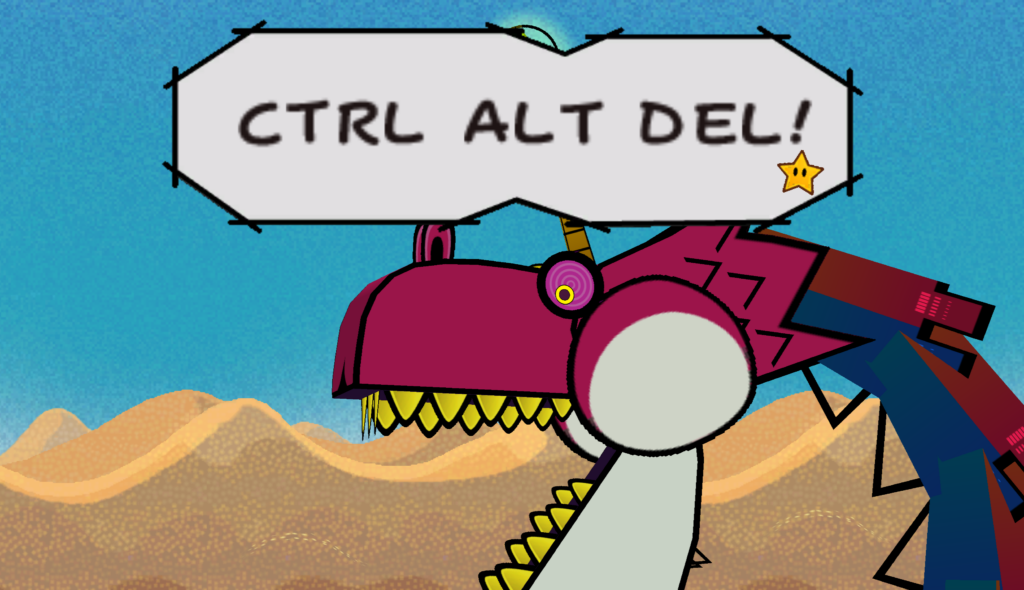
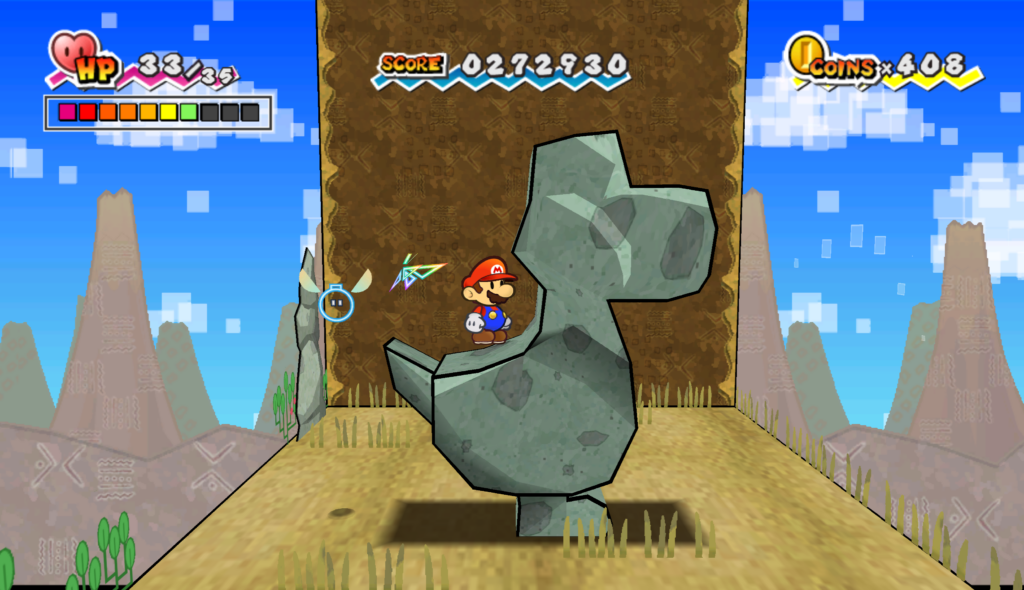
We decided to focus on playing through the game and facing the final cursed fusion of Luigi, Dimentio, and the lag hole. That thing is still one of the most unhinged final boss concepts in Mario history. It is ridiculous, creepy, and somehow exactly the kind of nonsense this game earns by the end.
Replay value is good, especially because the story and writing are strong enough to revisit. That said, this is not something I would replay instantly after finishing. It is more the kind of game I would return to years later and rediscover, especially if someone like me is willing to voice act the entire thing again like a maniac.
Rating
After thoughtful consideration, I decided to rate the replayability and game length of this game with an 8.3.
Suggestions and comparisons
Suggestions and feedback
Remake, anyone? Seriously, this game would benefit greatly from a modern remake or remaster. Clean up switching. Smooth out some pacing. Improve performance in hub areas. Maybe give players all four characters a little earlier. Add optional voice acting, or at least make it easier for lunatics like me to perform the whole script without needing a recovery day.
A remake should not remove the weirdness. That is the most important part. Keep the wit. Keep the darkness. Keep the strange geometry. Keep the lag hole, but maybe stop it from devouring the game itself.
Comparisons
Compared to Paper Mario 64 and The Thousand Year Door, this is less of a traditional RPG but still respects RPG structure far more than later games. It has level ups, progression, character abilities, items, stats, and meaningful mechanical growth. That alone puts it miles above the later we are scared of RPGs now direction.
Compared to Sticker Star, this has soul. Compared to Origami King, this has actual progression. Compared to Color Splash, well, I still need to play that one properly before going too hard, but this game sets a very high bar for creative Paper Mario design.
This is why I see it as the real final Paper Mario of the classic era. Not because it copies the first two games, but because it still understood what made the series matter: writing, originality, mechanics, and the courage to be weird.
Personal experiences and anecdotes
The best experience was absolutely me doing the voice acting. It made the whole playthrough funnier and more personal. I had to remember which character had which voice, then immediately forgot, chose the wrong voice, adjusted mid scene, and somehow made it worse and better at the same time.
Saying bleck repeatedly in a dramatic voice was ridiculous. Doing rough voices until I coughed was probably medically questionable. But we laughed a lot, and those are the kinds of memories that stick forever. Some games are good because they are well designed. Some become special because of how you play them. This one became both.
And yes, the lag hole will live forever. It is the true villain. Dimentio was merely borrowing its power.
Rating
Taking in all the personal experiences with Super Paper Mario, I give it a personal rating of 10.
(Yes, because of the voice acting and the memories we made while playing the game.)
Last words
Pros
- One of the most original Paper Mario games
- Excellent writing and humor
- Surprisingly emotional story
- Count Bleck is a fantastic villain
- Dimentio is wonderfully cursed
- 2D to 3D flipping is brilliant
- Real RPG elements remain intact
- Four playable characters add variety
- Pixls are fun and useful
- Strong art direction
- Great soundtrack
- Weird worlds full of personality
- The game dared to be different without losing its soul
- The lag hole is accidentally legendary
Cons
- Full party arrives too late
- Character and Pixl switching can feel clunky
- Some sections are text heavy or slow
- Flipside performance can struggle with the void
- Later Paper Mario games make this one hurt more in hindsight because the series went in the wrong direction afterward
Super Paper Mario is the real final Paper Mario game that still had the full spirit of the series. It is witty, strange, emotional, original, mechanically meaningful, and brave enough to do something different without gutting the RPG foundation entirely.
It is not perfect. Switching can be rough, the full party arrives too late, and the lag hole of Doom clearly tries to eat everything, including frame rate. But none of that takes away from how special this game is. If Nintendo ever wants to understand how to move Paper Mario forward again, this is the game they should study: not because it is traditional, but because it dared to be new while still respecting what Paper Mario is.
Also, remake it. Let the lag hole consume us in HD.
FINAL RATING

9.3
Please let me know what you think of Little Super Paper Mario in the comments!
I hope you enjoyed reading this review. I hope to see you in the next review!
If you liked reading this review, maybe you would like to share this review with your friends.
Looks cute! Though I think I prefer the DS one’s art style. 😮
Why is that?
That’s a nostalgic game.
I do think it was a good game in its own right, but personally, since I liked the first and second Paper Mario games the most, I remember not being a fan of this one because it felt so different.
It is indeed different, but fun!
I’d really like to play this one, it was strange going from a 3D perspective from the super mario RPG from SNES to paper mario being 2D but its not like that, its an illusion XD and mario works really well as a funny and interesting rpg
They should go back to the normal RPG era!
Drift between 2d and 3d for puzzle solving this is interesting game as always and also for mario fan you should play once.
Indeed a must play!
After all it’s still mario series… A little sentiment always would hit…
Sentiment is good!
Sorry if I missed something, but what I got reading this review is that Sven feigned dying from voice acting and still rated himself a perfect 10! I need proof…
Proof is not needed, but yes, I did almsot die, lol.
At first I thought it was a remake from a Paper Mario from the Super NES I never heared of 😅🙈
Lol, too bad!
One of those games that just bring it up motivates you to want to play it all over again.
It indeed does!
How many Super Mario game exist. i wonder it lol
Too many? Oh wait, there can never be enough!
Maybe you should record yourself and make a mod? Voice Overs by Supersven! Haha (includes laughing track by Superfluffy).
But honestly I love the flip mechanic! Breaking that 2D or 3D constraint and mixing them together is something I love to see games do but even better when they do it well!
That would be such a great mod, lol.
Hmm… I have a feeling this one is a very nostalgia driven game if played today and thus I don’t really feel drawn in either by the visuals nor by the premise… But glad you had fun 🙂
It needs a bit getting into.
Very cool review, despite i havent chance to play those Mario games i really liked review. Game have many good elements. Btw probably no, but is there a way to play it on pc?
You can get Retroarch on Steam and then play it after downloading the core and a proper Rom.
That voice acted playthrough sounds like it was a lot of fun! 😄
Good review as always!
It was a lot of fun, glad you liked the review.
Voice acting and commentary during a playthrough is a lot of fun, so many happy memories shared with my sister from funny nicknames to crafting alternate storylines impromptu 🙂
Games do that, create memories!
That sounds like original, creative game and also pretty graphics. Discovering secrets also sounds fun, especially with rotate the world ability. Let’s hope that when I will still live, will see that paper world in Remake Steam Edition 😀.
Maybe Nintendo goes to PC one day, or use Retroarch!
I’m not sure I could get past the janky graphics to enjoy the game underneath.
Gotta love them janky graphics!
I like that the game has a lot of content and you can spend a long time exploring it.
That is indeed fun!
OK, the game sounds very much like someone let go and let their child’s imagination do the work. And not just a random mashup of thoughts, but a well constructed and wholesome gameplay.
Wonder if they dish out new Paper Mario games with such spirit. 😀
Test 😮
They haven’t for a veeeeeery long time.
Looks pretty good, should have tried it when I played on Wii
Maybe play it now?
This is the only Paper Mario game I’ve played and I really loved it! I was very young though and don’t remember it enough, would love to play it again!
It is a very classic game for kids