
Introduction
Basic information
Developer Name: KOEI TECMO GAMES
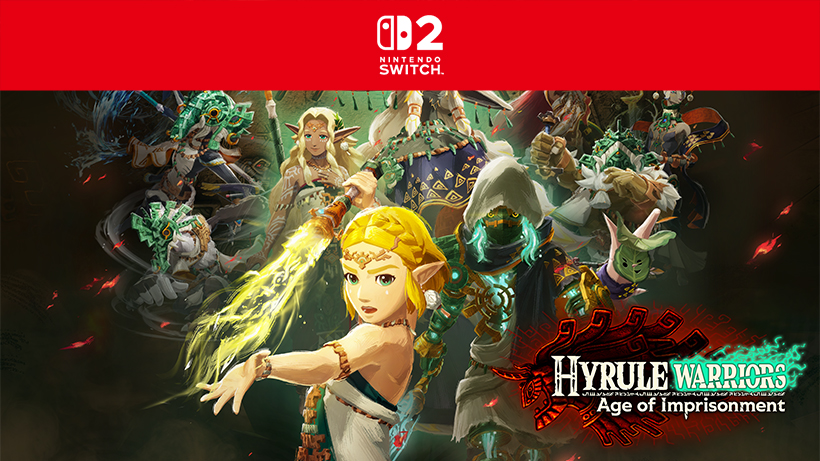
Full Name: Hyrule Warriors: Age of Imprisonment
Release Date: November 6, 2025
Released on: Nintendo Switch 2
Cross Play: No
Initial thoughts
We pre-ordered Hyrule Warriors: Age of Imprisonment, and honestly, we expected more. Not because the game looked terrible and not because the idea was bad, but because Hyrule Warriors as a series has already shown how good this formula can be when it goes all in. I still think the first Hyrule Warriors is the best one, and sadly we played that before making the site, because that would have been a very fun review to write. It had its own story, its own ridiculous crossover energy, a massive roster, tons of content, and Linkle. I still miss Linkle.
This game had a strong concept. Taking the Imprisoning War from Tears of the Kingdom and turning it into a Musou style battlefield story sounds like a great idea. We get ancient Hyrule, Rauru, Sonia, Zelda, Ganondorf, secret stones, sages, armies, and massive fights. That should have been perfect material for a dramatic Warriors game.
The problem is that the result feels strangely mediocre. It is not awful. It is not unplayable. There is still plenty of fun in clearing huge groups of enemies and seeing old Hyrule in action. But the story creates a lot of questions, the co op is blocked too often, and the battles can feel chaotic in a way that is less satisfying than the simpler and cleaner fights from the first Hyrule Warriors.
Story and setting
Plot overview
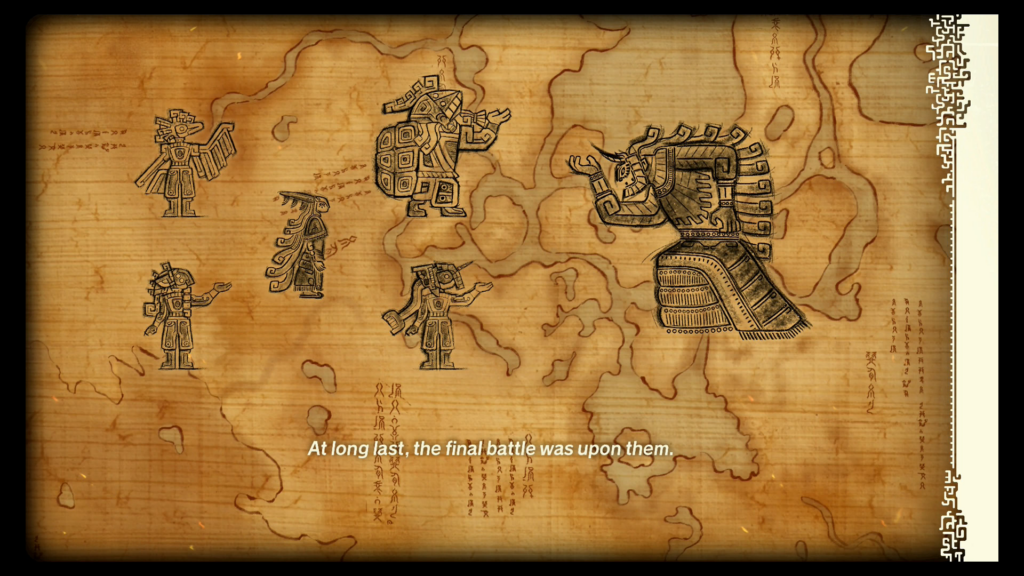
The plot is built around the Imprisoning War, the ancient conflict that leads into the events known from The Legend of Zelda: Tears of the Kingdom. Zelda is transported into the distant past, where she joins Rauru, Sonia, Mineru, and the ancient sages as Ganondorf rises as the Demon King.
That premise sounds strong. It gives the game a clear purpose: show the war that was only hinted at before, let players experience those battles, and fill in the gaps. But instead of cleaning things up, the story often makes the timeline feel messier.
The biggest issue is Sonia’s death and Zelda’s existence. Sonia dies, but Zelda does not disappear. So how exactly does Zelda exist? Was there already a child? Was the royal bloodline already secured before Sonia died? Was this simply never mentioned? The game does not answer that clearly enough, and it becomes a massive distraction. In a time travel story, especially one directly tied to Tears of the Kingdom, that kind of detail matters.
Rauru also reacts in ways that make the story feel odd. At times, it almost feels like Sonia’s death was not fully integrated into the emotional logic of the game. That makes it seem like a late design choice or a story point that was forced into place because the game needed to line up with known events.
And then there is the missed opportunity of a secret ending. This is a Warriors spin off. It could have had a special route where things go differently. Let the player save Sonia. Let Rauru reverse her fate. Let Zelda return to a restored timeline. Let the ancient sages actually beat Ganondorf. Give us the fun split timeline madness. Instead, the game never really commits to that possibility, and that feels like a huge waste.
World building and immersion
Seeing ancient Hyrule is one of the better parts of the game. There is something exciting about seeing the world before the events of Breath of the Wild and Tears of the Kingdom. Rauru’s era has a different flavor, and the game does give players a chance to see old Hyrule in motion rather than only hearing about it through memories and lore fragments.
The setting works best when it focuses on the scale of the war. Large battlefields, armies moving around, sages fighting together, and Ganondorf’s forces spreading across the land all fit the Warriors formula. This is exactly the kind of story where huge battles make sense.
But the immersion suffers because the story keeps raising questions it does not properly answer. The more the game tries to act like an important canonical missing chapter, the more its plot holes stand out. If this had been a wild alternate Warriors story like the first Hyrule Warriors, it would be easier to accept nonsense. But when the game wants to sit directly beside Tears of the Kingdom, it needs tighter writing.
The secret stones are another issue. Rauru, Sonia, and Zelda understand them, or at least understand enough about their power. Then Ganondorf gets one and almost immediately turns into a super god. Yes, Ganondorf is powerful. Yes, he is the villain. But it still feels ridiculous that everyone else has these stones and uses them in controlled ways, while he grabs one and instantly becomes nearly unbeatable. The rules feel shaky.
Character development
Rauru, Sonia, Zelda, and Ganondorf are the characters who matter most, and they all had potential. Rauru should be the tragic king trying to protect his kingdom from an impossible threat. Sonia should be the emotional heart of ancient Hyrule. Zelda should be the future princess trapped in the past, using everything she knows to help. Ganondorf should be the overwhelming threat that history remembers as the Demon King.
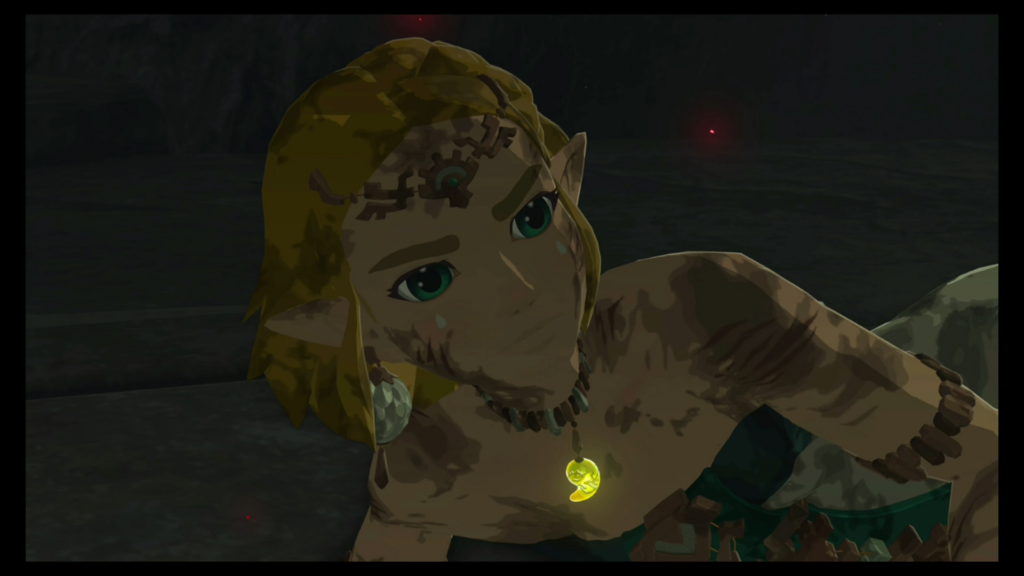
Some of that works. The characters look good, sound good, and fit the dramatic setting. But the story does not always support them properly. Sonia’s role especially feels underused because her death creates more questions than emotional clarity. Rauru also feels strange afterward because the game does not always sell the full weight of what happened.
Ganondorf is still entertaining because Ganondorf is Ganondorf. He is dramatic, powerful, and fun to fight. But even he suffers from the secret stone problem. The game wants him to feel terrifying, but the way his power escalates feels more like because plot than a properly explained rise.
There is also that suspicious missing character slot on the menu screen. It really feels like something was cut. Maybe a playable Sonia route, maybe a secret ending character, maybe something else. Whatever it was, the empty feeling is noticeable. It adds to the sense that the game could have done more.
Emotional impact
The emotional impact should have been much stronger. The Imprisoning War is supposed to be tragic, massive, and important. Sonia’s death, Rauru’s sacrifice, Zelda being trapped in the past, and Ganondorf’s rise should have created a heavy story.
There are moments where the game gets close. Seeing these characters fight a doomed war can work. Sonia and Rauru have enough presence that the game could have made their fate hit harder. Zelda being stuck in the past should also carry emotional weight.
But the plot holes weaken that emotion. Instead of fully feeling Sonia’s death, I kept thinking about the bloodline issue. Instead of being fully invested in Ganondorf’s rise, I kept wondering why the secret stone logic felt so messy. Instead of feeling amazed by the ending, I felt annoyed that the game did not give us a more creative secret route.
Rating for story and setting
I have visited multiple aspects of the story, and after some thought and objective thinking, I rated the story and setting with a 5.
Gameplay and mechanics
Core gameplay mechanics
The core gameplay is what you expect from a Hyrule Warriors game. You control powerful characters, take down hordes of enemies, capture battlefield points, fight bosses, complete mission objectives, and unlock more content across the map.
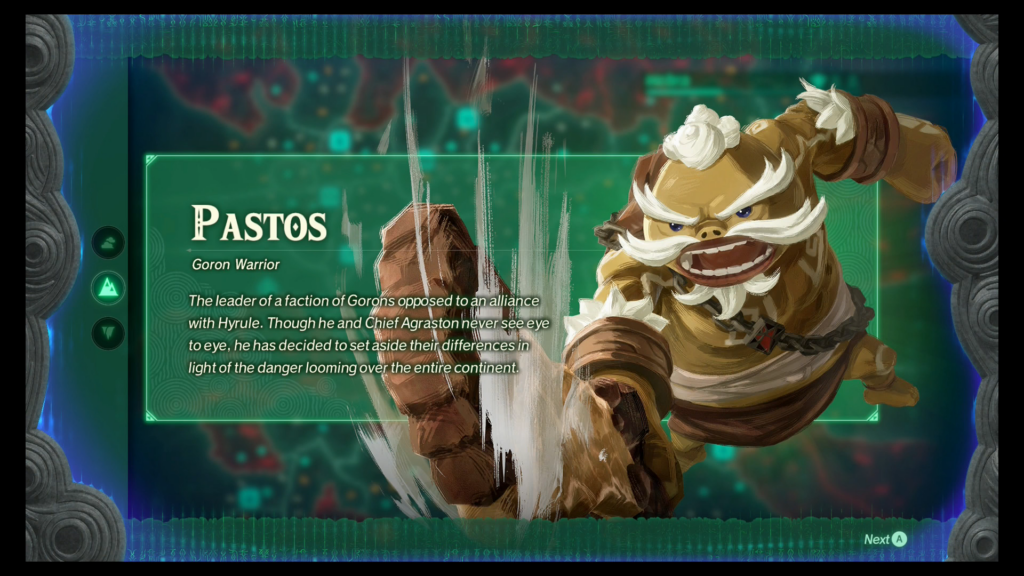
Each character has their own style, and that part can still be fun. Zelda, Rauru, sages, and other characters all bring different attacks and abilities. Learning how a character clears enemies or handles stronger opponents gives the gameplay some variety.
The battlefield structure also still works on a basic level. You move between objectives, deal with threats, stop enemy advances, and respond to map changes. When the pacing is good, this can still be satisfying.
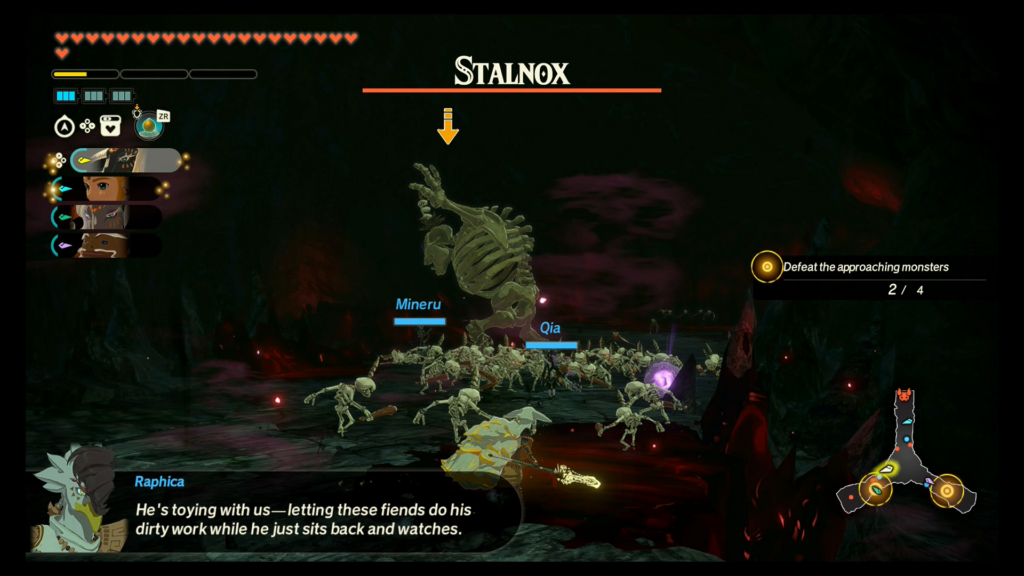
The issue is that battles often feel messier than they need to. There is so much happening on screen that the action can feel less readable. Instead of enjoying the rhythm of clearing enemies and handling objectives, I sometimes felt like I was just pushing through visual chaos.
Difficulty and balance
The difficulty is not impossible, but it can feel uneven. Some missions feel straightforward, while others become chaotic or annoying because the battlefield throws too much at you at once. The challenge is not always about smart strategy. Sometimes it is just about surviving the mess.
Bosses and stronger enemies can be fun, but the game does not always hit the best balance between spectacle and clarity. Warriors games need chaos, but controlled chaos. The player should feel like they understand what is happening, even when hundreds of enemies are on screen. Here, that did not always happen.
Pacing of the game
The pacing is mediocre. The game has plenty of content, but not all of it feels equally exciting. Some missions are fun, some drag, and some feel like they exist because the game needs another battlefield before the next story beat.
The first Hyrule Warriors handled its content better for me because it embraced its own ridiculous identity. It felt like a celebration of Zelda through Warriors chaos. Age of Imprisonment has to carry the burden of being tied to a serious backstory, and that makes its weaker missions stand out more.
The plot pacing also hurts the gameplay. When the story is not landing, the missions start feeling less important. Instead of thinking, I need to see what happens next, I was often thinking, Please do not create another plot hole.
Innovation and uniqueness
The strongest unique idea is playing through the Imprisoning War. That is a great setup for a Warriors game. Ancient Hyrule, Rauru, Sonia, the sages, and Ganondorf’s invasion all fit the format naturally.
But the game does not innovate enough beyond that premise. It feels like it had the ingredients for something bigger but played things too safe. A secret alternate route would have helped a lot. A split timeline where the heroes win could have turned this from a mediocre canon-adjacent prequel into something memorable.
Controls and user interface
The controls are fine overall. Attacking, moving, using specials, and managing objectives work as expected. The game is playable, and fans of Warriors games will understand the basics quickly.
The interface is also functional. Mission information, objectives, character management, and upgrade systems are mostly clear enough. There is nothing completely broken here.
Microtransactions
There are no intrusive microtransactions ruining the game. This is a full Nintendo release, and the main problems are not tied to monetization.
Rating
After combing through many of the mechanics, the pacing, and other factors of this game, I rated the gameplay and mechanics with a 6.
Graphics and art style
Quality of graphics and art direction
Visually, the game is still fun. Seeing ancient Hyrule is cool, and the character designs carry a lot of the experience. Rauru, Sonia, Zelda, Ganondorf, and the sages all fit the setting well, and the battlefield presentation gives the war a sense of scale.
The game benefits from being on Nintendo Switch 2 because the battles can look larger and more detailed than older Warriors entries. The amount of action on screen helps sell the idea of a massive conflict.
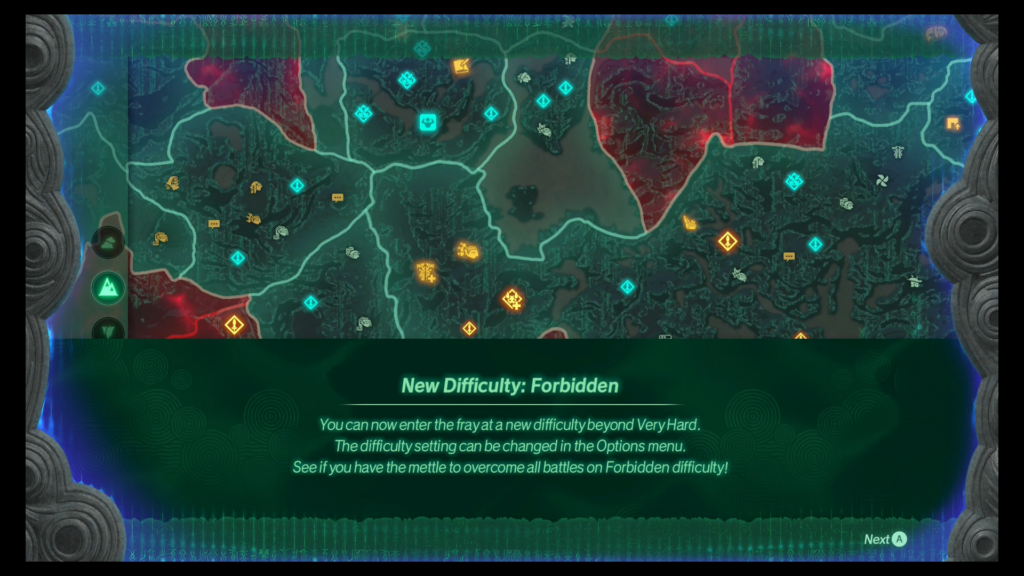
But the visual chaos can also become a downside. Warriors games are supposed to be busy, but this one sometimes becomes too much. Effects, enemies, attacks, objectives, and battlefield clutter can make fights harder to read than they should be.
Technical performances
Technical performance is generally acceptable, but the game still feels heavy in places because of how much is happening during combat. Even when the performance holds up, the action can feel overwhelming.
Environment and design uniqueness
Ancient Hyrule is the visual highlight. Seeing Hyrule in this period gives the game a setting that immediately feels different from the usual Zelda timeline. There is a lot of potential in watching the kingdom before its later ruin, before the long consequences of Ganondorf’s rise fully settle in.
The battlefield locations are enjoyable at first, but they do not always feel as memorable as they should. Warriors games often rely heavily on repeated mission structures, and this one is no different. Because the story did not fully grab me, the environments had to carry more weight, and they only partly managed that.
Rating
It took me some time to give the graphics and art style an objective rating. There are many things to consider, but ultimately, I rated this section with a 7.0.
Sound and music
Music score and how it contributed to the game
The music is one of the easier parts to enjoy. Zelda music mixed with large scale Warriors battles is almost always going to have some impact. Big fights need big music, and the soundtrack gives the battles energy even when the missions themselves are not always exciting.
There is still that classic Zelda feeling in the audio. Even when I was frustrated with the story, the music helped keep the game from feeling completely flat. It gives the war scale, tension, and a sense of importance.
Sound effects quality
The sound effects are solid. Attacks hit with enough force, specials sound powerful, and the battlefield has the expected Warriors noise of enemies, impacts, explosions, and chaos.
However, just like the visuals, the sound can become very busy. When everything is happening at once, the audio becomes part of the chaos instead of always helping with clarity. It still sounds good, but it can be a lot.
Voice Acting
The voice acting is fine and helps the story feel more dramatic. Zelda, Rauru, Sonia, and Ganondorf all benefit from having proper performances behind them. Ganondorf especially has the kind of presence that works well in a Warriors game.
The issue is not the acting. The issue is the writing. Even good voice acting cannot fully repair plot holes or wasted story potential. The cast does what it can, but the script gives them a shaky foundation in places.
Rating
After a lot of consideration, I rated the sound and music section with a 7.5.
Replayability
Game Length and content volume
There is a lot of content if you are invested. This is still a Warriors game, so completionists can chase missions, upgrades, weapons, characters, challenges, and extra objectives. If you like clearing maps and squeezing everything out of a Musou game, there is enough here to keep you busy.
Extra Content
The extra content is decent on paper. There are additional challenges, map objectives, upgrades, and reasons to keep playing after the main story. For players who enjoy grinding out everything, the game has plenty to offer.
But extra content only works if the core loop stays fun. Since the battles already felt chaotic and the story left me irritated, I did not feel a strong pull to clean everything up. More missions are not automatically better if the base experience feels repetitive or messy.
Replay value
Replay value depends heavily on how much you enjoy this specific version of Warriors combat. If you love the roster, the setting, and the mission structure, you can get a lot of time out of it. But if you prefer the first Hyrule Warriors, this one may feel weaker.
Compared to the first Hyrule Warriors, Age of Imprisonment has less replay magic for me. The first game felt like a big Zelda celebration with its own story and a massive sense of fan-service fun. This game feels more locked into explaining one corner of the timeline, and that makes the extra content less exciting.
Compared to Age of Calamity, this game also feels less emotionally satisfying. Age of Calamity at least played with the idea of changing fate more directly, while Age of Imprisonment had the perfect chance to give us a secret we win route and did not use it.
Rating
After thoughtful consideration, I decided to rate the replayability and game length of Hyrule Warriors: Age of Imprisonment with a 5.5.
Suggestions and comparisons
Suggestions and feedback
The biggest suggestion is simple: do not make plot holes this obvious. If Sonia dies and Zelda still exists, explain the royal bloodline clearly. Was there already a child? Was Zelda’s existence protected by time travel rules? Was the timeline locked? Give the player something. Do not leave a major story point hanging in a game that is supposed to explain ancient events.
The game also should have had a secret ending or alternate route. A split timeline where the heroes save Sonia and defeat Ganondorf would have been perfect for a Warriors game. It would not even need to replace the canon route. Just make it a special reward for completing certain conditions.
Co-op should also be available in far more missions. Blocking it often enough that Simone did not want to join much was a big mistake. This kind of game is better together, and the design should support that.
Comparisons
Compared to the first Hyrule Warriors, this game feels less fun and less free. The first game had its own story, a broad roster, a strong sense of celebration, and Linkle. It did not need to fit perfectly into a strict timeline, so it could just enjoy being a wild Zelda Warriors game.
Compared to Hyrule Warriors: Age of Calamity, Age of Imprisonment feels like it missed a similar chance to play with fate. If you are already making a Warriors prequel about a doomed event, give us a reason to push beyond doom. Let us unlock the ridiculous hopeful route. Let us break history for fun.
Compared to Tears of the Kingdom, the game struggles because it is trying to support that story while also making parts of it feel less clean. Instead of making the lore stronger, it raises more questions.
Personal experiences and anecdotes
The more I thought about the secret stones, the more annoyed I became. Rauru and Sonia have secret stones. Zelda has one too. They know how to use them. In Tears of the Kingdom, the stones are supposed to amplify abilities, and Zelda’s sage powers are tied into that whole system. Then Ganondorf gets one and immediately becomes a super god, despite not really knowing how to use it properly. It feels like the rules bend because the plot needs him to be ridiculous.
Yes, Ganondorf is a cheater. Yes, he is supposed to be terrifying. But come on. If everyone else gets your ability is stronger, and Ganondorf gets congratulations, you are now a divine murder engine, then the story should explain that better.
I also really wanted Ganondorf to sing Suavemente during the final boss fight. It would not have fixed the story, but at least it would have made the nonsense more honest.
The plot holes were stupid enough that they turned both me and my wife off from the game. That is the real problem. I can forgive a Warriors game for being over the top. I can forgive battlefield chaos. I can forgive silly power scaling. But when the game wants to be an important Zelda lore chapter and then creates questions this big, it becomes hard to stay invested.
Man, I just want a Hyrule Warriors game with its own story again.
Rating
Taking in all the personal experiences with Hyrule Warriors: Age of Imprisonment, I give it a personal rating of 5.5.
Last words
Pros
- Ancient Hyrule is fun to see.
- The music still brings strong Zelda energy.
- Some characters are enjoyable to play.
- Clearing large groups of enemies can still be satisfying.
- There is a lot of content for invested Warriors fans.
Cons
- The story creates major timeline questions.
- Sonia’s death and Zelda’s existence are not explained well enough.
- Rauru’s reaction and story handling feel strangely underdeveloped.
- The game wastes the potential for a secret split timeline ending.
- Co op is blocked too often.
- Simone had little reason to join regularly because of those co op restrictions.
- Battles are more chaotic than fun at times.
- The first Hyrule Warriors still feels much better.
- The secret stone power scaling feels ridiculous.
- The missing looking character slot makes the game feel like something was cut.
- The story feels too trapped by canon while still making canon messier.
- Extra content exists, but it is not exciting enough to fully save the game.
Hyrule Warriors: Age of Imprisonment is not terrible, but it is definitely mediocre. It has fun moments, strong Zelda music, a cool ancient Hyrule setting, and enough Warriors content for players who are deeply invested. But it also has too many issues to ignore.
The story should have been the big selling point, but it introduced questions that bothered me more than they intrigued me. Sonia dies, Zelda does not disappear, and the game does not explain the bloodline situation clearly enough. Rauru acts oddly around the consequences, Ganondorf’s secret stone power jump feels absurd, and the game never gives us the fun secret route where history changes and the heroes actually win.
It would have been so much better to see Rauru reverse Sonia’s fate, restore Zelda’s future, and then have everyone group up and kill Ganondorf. But no, Rauru is apparently super powerful, everyone has secret stones, and they still cannot win from one guy with a secret stone because he is a cheating Demon King.
FINAL RATING

6
Please let me know what you think of Hyrule Warriors: Age of Imprisonment in the comments!
I hope you enjoyed reading this review. I hope to see you in the next review!
If you liked reading this review, maybe you would like to share this review with your friends.