
Introduction
Basic information
Developer Name: Nintendo
Full Name: Super Mario Galaxy 2
Release Date: June 11, 2010 in Europe
Released on: Wii, later Nintendo Switch as part of Super Mario Galaxy + Super Mario Galaxy 2, playable on Nintendo Switch 2 through update
Cross Play: No
Initial thoughts
We played Super Mario Galaxy 2 after playing the first Super Mario Galaxy, and that was probably the roughest way to experience it. The first game had such a lovely sense of wonder, adventure, atmosphere, and chill cosmic exploration. It felt magical. It had challenge, of course, but it also knew how to let the player enjoy floating through space, discovering planets, hearing Rosalina’s story, and soaking in the strange lonely beauty of the galaxy.
Story and setting
Plot overview
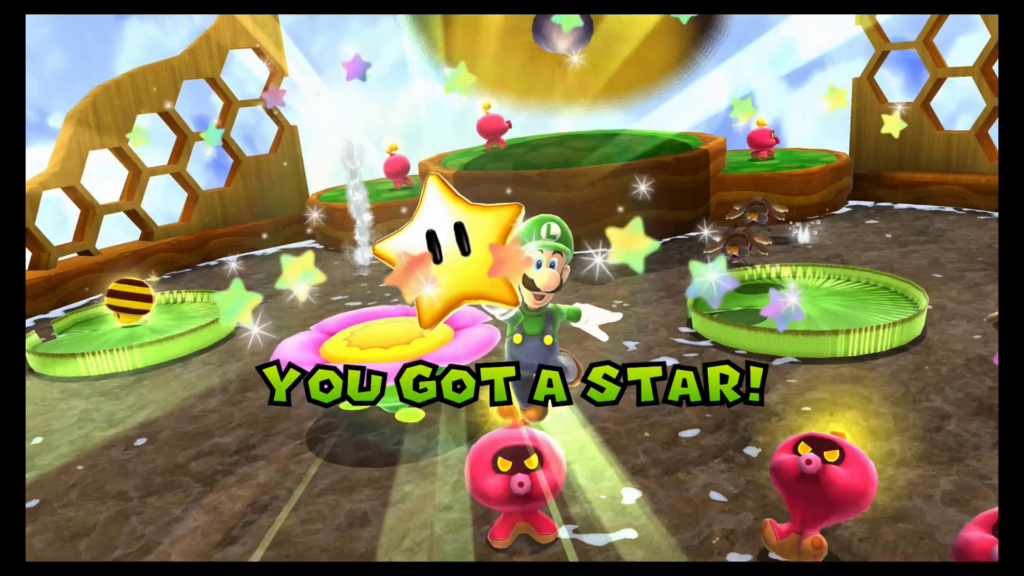
The story in Super Mario Galaxy 2 is weirdly hard to place. Is it a sequel? Is it a soft reset? Is it an alternate fate after the first game? Who knows? The game does not seem very interested in explaining that cleanly. Peach is kidnapped again, Bowser is huge again, Mario goes into space again, and instead of the Observatory from the first game, we now ride around on a giant face shaped spaceship.
That spaceship is charming in a silly Mario way, but it also shows the difference between the two games. The first Galaxy felt like a grand cosmic journey with mystery and melancholy. The second one feels more like a collection of obstacle courses connected by a cute hub. That is not automatically bad, but it makes the story feel thinner.
The game is basically about chasing Bowser through space, collecting stars, helping Lumas, and clearing galaxies. It works as an excuse for gameplay, but it does not give the same emotional pull as the first game. Rosalina’s storybook and the lonely atmosphere of the first game gave that adventure a stronger heart. Galaxy 2 focuses much more on gameplay challenges.
World building and immersion
The world building is still creative because the galaxy concept remains strong. Small planets, gravity tricks, strange shapes, space platforms, colorful worlds, and weird Mario logic all return. There are many fun ideas here, and some galaxies still have that lovely how did they even think of this? Nintendo feeling.
However, the immersion is weaker than in the first game. Super Mario Galaxy felt like a journey through space. Super Mario Galaxy 2 often feels more like a level pack, even when the levels themselves are well made. The map structure is clearer and more direct, but it loses some of the grand adventure feeling.
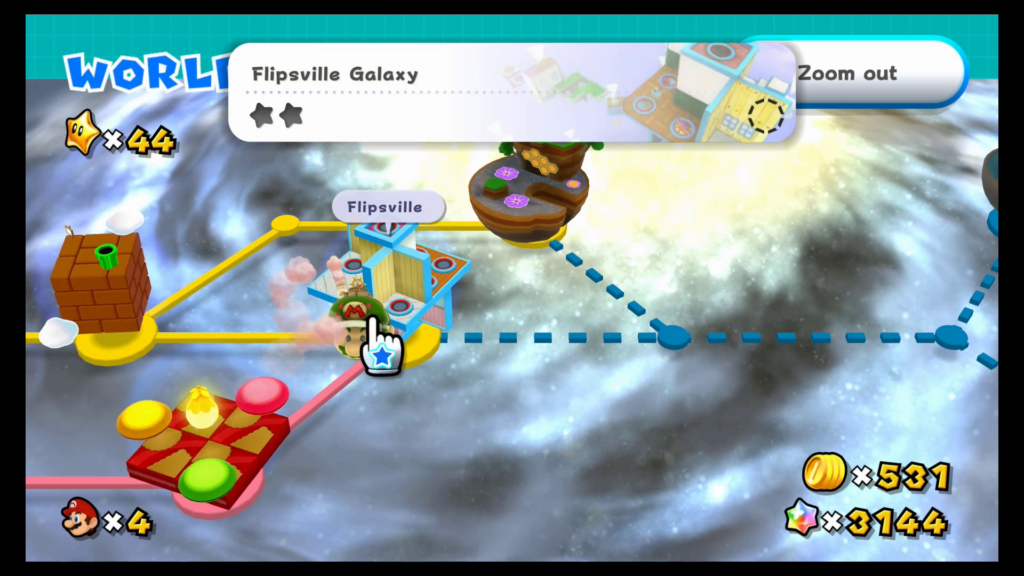
Starship Mario is cute, but it does not have the same wonder as Rosalina’s Observatory. The Observatory felt like a mysterious home between galaxies. Starship Mario feels more functional, like a menu with a face. A very Mario face, yes, but still more of a map tool than a magical location.
Character development
There is not much character development here. Mario is Mario. Peach is kidnapped. Bowser is big and loud. The Lumas are cute. Yoshi returns and adds fun gameplay variety. That is about it.
Compared to the first game, this feels like a step down because Rosalina and her story added more atmosphere and emotional identity. Galaxy 2 does not really have an equivalent. It is less interested in character and more interested in platforming ideas.
Yoshi is the best addition from a character perspective. He changes how certain levels play and brings some fun personality into the adventure. Riding Yoshi through space is still a great concept, and his different powers help some missions stand out.
Emotional impact
The emotional impact is where Galaxy 2 falls behind the first game the most. The first Galaxy had a gentle sadness and wonder to it. It felt like a big space fairy tale. Galaxy 2 is more playful, more energetic, and more focused on pure platforming, but it does not hit the same emotional notes.
That would be fine if the gameplay stayed fun all the way through. The problem is that the difficulty spikes created frustration instead of excitement. There were times where we wanted to enjoy the game together, but instead we were dealing with stressful missions that demanded too much precision.
The co-op helped, and that is worth saying. Playing together made the experience more enjoyable than it would have been solo. But even improved co-op could not fully save the mood when the game kept throwing stressful stars at us.
By the end of our time with it, the emotion was not wonder. It was irritation. That is a shame because the presentation is still charming, and the game clearly has a lot of creativity.
Rating for story and setting
I have visited multiple aspects of the story, and after some thought and objective thinking, I rated the story and setting with a 6.
Gameplay and mechanics
Core gameplay mechanics
The gameplay is still built on the excellent foundation of Super Mario Galaxy. Running around small planets, flipping gravity, long jumping across strange shapes, launching between worlds, and solving platforming challenges in 3D space is still fun. When Galaxy 2 is good, it is very good.
The co-op is the biggest improvement. Compared to the first game, the second player feels more useful. They can help more actively, interact with enemies and objects, and make tricky situations a bit more manageable. That made the game better for us as a shared experience.
But the overall gameplay felt like it declined because the balance became much harsher and less consistent. Galaxy 1 had challenge, but it also had flow. Galaxy 2 often feels like it is more obsessed with making the player prove themselves. There are more missions that feel built around speed, precision, and punishment. That can be exciting for hardcore players, but it makes the game less chill.
Difficulty and balance
This is the biggest problem. The balance is all over the place. Some stars feel easy and relaxed. Then suddenly the game throws a mission at you that feels like it belongs in a challenge pack. The difficulty spikes up and down so much that it becomes hard to settle into a rhythm.
Speedrun style stars are the worst offenders. A chill Mario game becomes much less chill when a star demands near perfect movement through a stressful level under a tight time limit. Would it really have hurt to add 30 more seconds? That small change could have made some missions much more enjoyable without removing the challenge.
The difficulty itself is not the enemy. Mario games should have tricky stars. The problem is that the spikes do not always feel properly placed. Instead of building smoothly, the game jumps between fun and irritating. That makes the experience feel less balanced than the first game.
For us, the stress eventually outweighed the fun. That is where the game lost us.
Pacing of the game
The pacing is faster and more mission focused than the first Galaxy. That can be a strength if you want pure platforming. The game wastes less time and pushes you from galaxy to galaxy quickly.
But that faster pacing also makes the game feel less magical. There is less room to breathe. The first game felt like an adventure; this one often feels like a challenge board. That shift is not automatically wrong, but it made the game less enjoyable for us.
Innovation and uniqueness
Super Mario Galaxy 2 is creative, but it feels more like a mechanical expansion than a true new adventure. It adds Yoshi, new power-ups, new galaxies, improved co-op, and more challenging level design, but it does not have the same fresh impact as the first Galaxy.
The first game was a revelation. It took Mario into space and made gravity the playground. The second game builds on that, and often builds well, but it does not feel as magical because the surprise is gone.
Controls and user interface
The controls are mostly excellent, because this is still Mario. Movement is responsive, jumps feel good, and most mechanics are easy to understand. On Switch 2, the game also looks and feels clean, which helps the experience.
However, tight challenge missions expose every small frustration. When a timer is strict and one mistake ruins the run, even tiny control quirks become more annoying. A mechanic that feels fine in a normal star can feel much worse when the game demands perfection.
Microtransactions
There are no microtransactions. This is still a proper Mario game. No paid stars, no timer skips, no Yoshi energy packs, no buy 30 seconds for €1.99 nonsense.
Thank goodness, because with some of those timed missions, modern game monetization would have found a way to be evil.
Rating
After combing through many of the mechanics, the pacing, and other factors of this game, I rated the gameplay and mechanics with a 6.5.
Graphics and art style
Quality of graphics and art direction
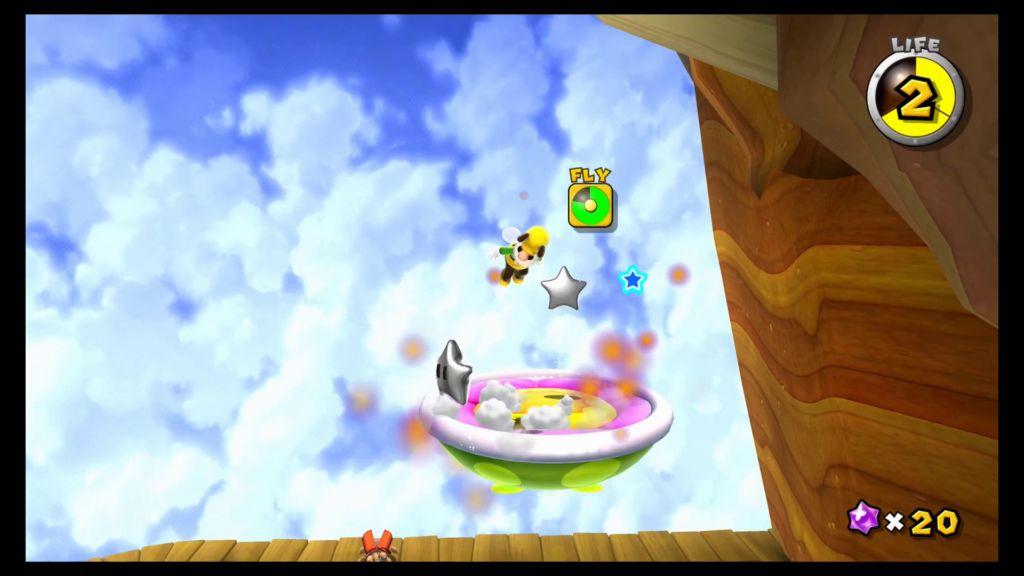
There is nothing wrong here. Super Mario Galaxy 2 still looks great, and on Switch 2 it looks awesome. The colorful planets, weird gravity based stages, space backdrops, enemies, effects, and Mario animations all hold up well.
The art style is timeless because it is clean and imaginative rather than realistic. Mario games age well when they lean into strong shapes, bright colors, and readable designs. Galaxy 2 does exactly that.
The worlds are visually fun, even when the missions themselves become stressful. The game still has that excellent Mario ability to make space feel playful instead of cold. Planets can be tiny, strange, circular, upside down, or completely ridiculous, and the art direction sells all of it.
Technical performances
The technical performance is strong overall, especially when playing the newer Switch version on Switch 2. The game looks clean, runs smoothly, and still feels responsive, which is very important for a platformer that asks for precise movement. Mario’s jumps, spins, Yoshi actions, gravity shifts, and launch star moments all feel technically solid.
Environment and design uniqueness
The environments are creative, but they do not feel as special as the first time around. That is the challenge of being a sequel to Super Mario Galaxy. The first game already introduced the space and gravity concept, so the second game has to work harder to surprise.
Some galaxies absolutely succeed. Yoshi levels, gravity puzzles, and certain set pieces are still clever. But the overall world structure feels more like a collection of levels than a mysterious space adventure.
Starship Mario is fun visually, but again, it does not hit like Rosalina’s Observatory. It is charming, silly, and very Mario, but it lacks the same atmosphere.
Rating
It took me some time to give the graphics and art style an objective rating. There are many things to consider, but ultimately, I rated this section an 8.5.
Sound and music
Music score and how it contributed to the game
The music is strong, because of course it is. This is Super Mario Galaxy, and the series already proved how powerful orchestral Mario music can be. The soundtrack still gives the adventure scale, excitement, and energy.
That said, the music did not emotionally carry the game as much as the first one did for me. The first Galaxy soundtrack felt tied to wonder, loneliness, and discovery. Galaxy 2 has great tracks, but the overall adventure feels more action-focused, so the music lands differently.
Sound effects quality
The sound effects are classic Mario quality. Jumps, spins, coins, star bits, enemies, launch stars, Yoshi actions, and power-ups all sound exactly as clean and satisfying as they should.
Yoshi’s sounds add charm, and the co-op actions also have enough feedback to make the second player feel involved. The audio helps keep the game readable even when the screen gets busy.
Voice Acting
There is no full voice acting, but Mario, Peach, Bowser, Yoshi, and the Lumas all have their usual expressive sounds. That works perfectly fine for this type of game.
Full voice acting would not add much here. The issue with the story is not the lack of voices; it is that the game simply has less story weight than the first one.
Rating
After a lot of consideration, I rated the sound and music section an 8.
Replayability
Game Length and content volume
The game has a solid length, especially if you go for optional stars and completion. A normal playthrough already gives plenty of galaxies and missions, while completionists can spend much longer collecting everything.
The problem is not the amount of content. The problem is how that content feels. If you enjoy the difficulty, the length is a positive. If the spikes frustrate you, the extra stars start feeling like more stress instead of more fun.
We decided not to finish the game because it was earning more stress than joy. That is the clearest sign that the balance did not work for us.
Extra Content
The extra content is built around more stars, tougher challenges, and mastery based missions. For players who love precision platforming, that can be great. The game has a reputation for being packed with ideas and challenges, and that is visible.
But extra content should make you want more. Here, the harder stars made me want a break. That is not a good sign.
The game would have benefited from more optional difficulty separation. Let the main path stay smoother and put the truly brutal speedrun style stars in clearly optional challenge zones. That way, players who want pain can chase it, while others can enjoy the adventure without feeling ambushed.
Replay value
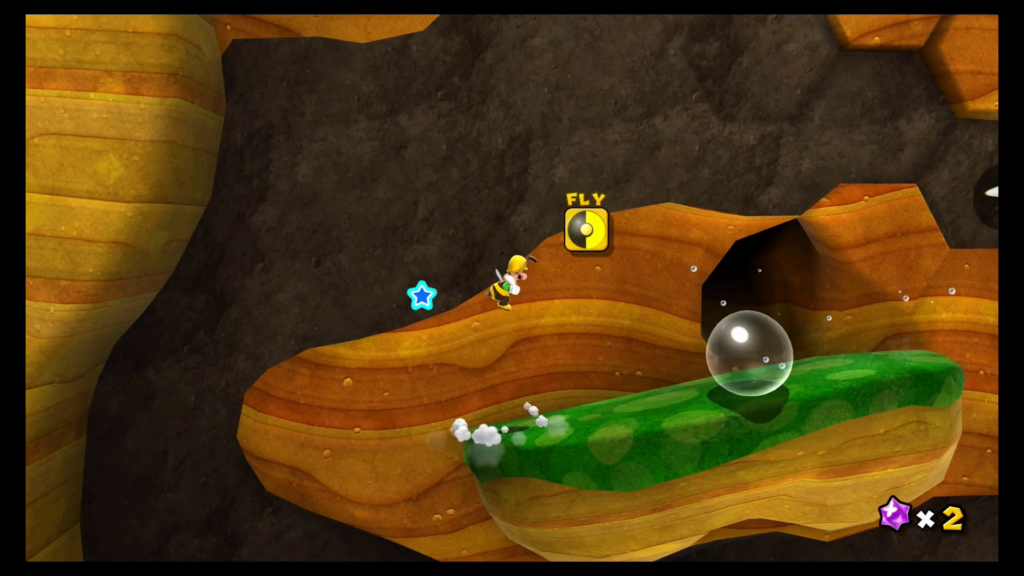
Compared to the first Super Mario Galaxy, this game has more challenge focused replay value but less emotional replay value. The first game is easier to revisit because it feels magical and atmospheric. The second game is more about mastery, and that makes replaying it less appealing if the difficulty spikes annoyed you.
Compared to Super Mario Odyssey, Galaxy 2 feels less free. Odyssey lets you explore, experiment, and collect moons in many ways. Galaxy 2 is tighter and more linear, which works for focused platforming but can feel restrictive when the missions are stressful.
Compared to Super Mario 3D World, Galaxy 2 is more imaginative with gravity but less comfortable as a co-op experience because it is not true full-character multiplayer. The helper co-op is improved over Galaxy 1, but it still does not replace proper shared platforming.
Rating
After thoughtful consideration, I decided to rate the replayability and game length of Super Mario Galaxy 2 with a 5.
Suggestions and comparisons
Suggestions and feedback
Nintendo should make Super Mario Galaxy 3, but it needs to take the best parts from both games. Use the co-op improvements from Galaxy 2, but bring back the stronger story, atmosphere, and emotional charm from Galaxy 1. That would be the dream.
The difficulty curve also needs to be smoother. Challenge is good, but sudden spikes are not. Timed missions should be tuned more generously, especially in a mainline Mario adventure. Adding 30 seconds to some of those missions would not destroy the game. It would make it more enjoyable for players who want fun, not stress.
Comparisons
Compared to Super Mario Odyssey, Galaxy 2 feels far more restrictive. Odyssey gives players freedom, movement expression, and many different ways to progress. Galaxy 2 is more controlled and mission-based, which can work, but only if the missions feel fair and fun.
Personal experiences and anecdotes
Except for the speedrun levels and difficulty spikes, the game is fun. There were plenty of moments where we enjoyed the co-op, the visuals, the galaxies, and the classic Mario creativity. When Galaxy 2 is relaxed and creative, it still feels great.
But the stressful missions kept dragging us out of that fun. The game started creating more frustration than excitement, and eventually we decided not to finish it. That does not happen often with Mario, especially after we had just gone through the first Galaxy.
The sad part is that the co-op really is improved. We wanted to enjoy it more. But better co-op does not help enough if the missions themselves keep pushing the experience away from fun and toward irritation.
This is still a good game in many ways, but for us, it was not the smooth space adventure we hoped for.
Rating
Taking in all the personal experiences with Super Mario Galaxy 2, I give it a personal rating of 5.5.
Last words
Pros
- Co-op is improved compared to the first Super Mario Galaxy.
- The game still looks awesome, especially on Switch 2.
- Yoshi and the gravity based level ideas still bring classic Mario creativity.
Cons
- The difficulty balance is very uneven.
- Some stars feel far too stressful for a chill Mario adventure.
- Timed missions can feel too strict.
- The gameplay feels less relaxed than the first Galaxy.
- The story and atmosphere are weaker than the first game.
- Starship Mario is cute but less memorable than Rosalina’s Observatory.
- Replayability suffers if you dislike precision heavy challenge stars.
- We decided not to finish because the game became more stressful than fun.
Super Mario Galaxy 2 is a hard game to rate because it does many things well. The co-op is better, Yoshi is fun, the graphics look great on Switch 2, and the galaxy ideas still have that Mario creativity. But the difficulty spikes hurt the experience too much for us.
The first Super Mario Galaxy felt magical and chill while still being creative. Galaxy 2 feels more like a challenge focused sequel, and that shift did not work as well for us. Some missions felt like they needed perfect speedrunning instead of joyful platforming, and eventually the stress overtook the fun.
We really need a new proper 3D Mario game. We finished Super Mario Odyssey twice, replayed the Galaxy games, and yes, Super Mario Wonder was great, but it was a 2D platformer. Switch 2 still needs its big new Mario adventure. But I rant.
As for Super Mario Galaxy 2, it is still good, but not as enjoyable as it should have been.
FINAL RATING

6
Please let me know what you think of Super Mario Galaxy 2 in the comments!
I hope you enjoyed reading this review. I hope to see you in the next review!
If you liked reading this review, maybe you would like to share this review with your friends.