
Introduction
Basic information
Developer Name: Nintendo
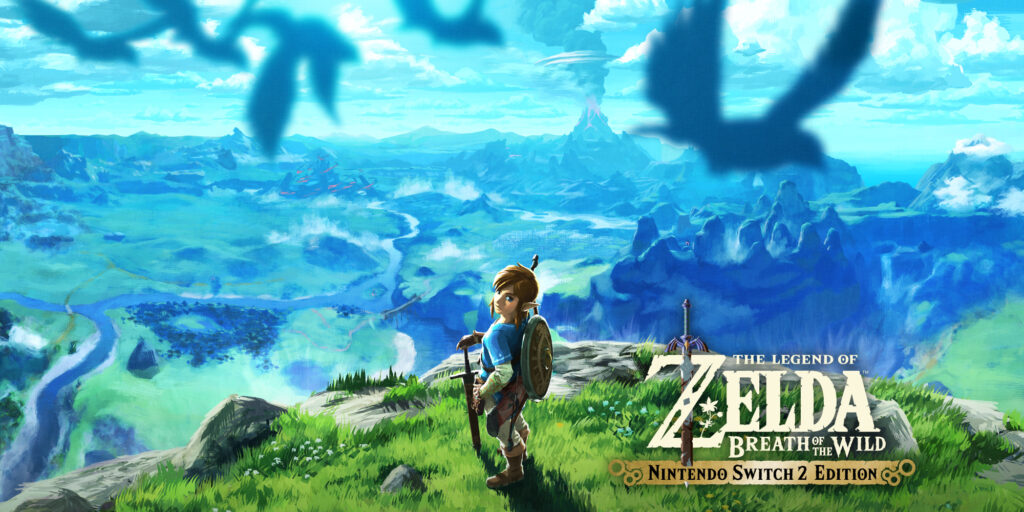
Full Name: The Legend of Zelda: Breath of the Wild – Nintendo Switch 2 Edition
Release Date: 2025 (Switch 2 edition)
Released on: Nintendo Switch 2
Cross Play: No
Initial thoughts
Revisiting Breath of the Wild on the Nintendo Switch 2 felt both exciting and daunting. This is a game my wife and I have already completed twice, and going back in again was never about discovery, it was about seeing how the definitive hardware version would feel. The promise of improved performance, sharper visuals, and better stability made the idea tempting, even if we knew the content inside out.
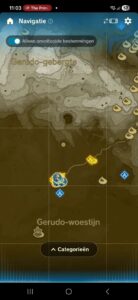
We approached this playthrough differently. One of us handled the controller while the other used a phone to track Korok Seeds like a GPS, coordinating movement and objectives together. That cooperative approach was genuinely fun and fresh at first as we switched every ten minutes or so. However, early on, the connection between phone tracking and in-game flow felt spotty, with delays and inconsistencies. After a few patches, this improved noticeably, but the damage was already done in terms of momentum.
Ultimately, we did not finish this run, not because the game failed, but because familiarity turned into exhaustion. That context matters greatly for this review.
Story and setting
Plot overview
The story remains largely unchanged, and that is both its strength and its limitation. Link awakens after a century of sleep, Hyrule lies in ruins, and Calamity Ganon looms as an ever-present threat. The narrative is intentionally understated, delivered through memories rather than linear progression.
On a first playthrough, this fragmented storytelling feels mysterious and elegant. On a third run, however, the emotional weight diminishes. The beats still land, but they no longer surprise. The story is timeless in structure, yet familiarity makes it feel distant rather than engaging.
World building and immersion
Hyrule remains one of the most convincing open worlds ever created. The sense of scale, environmental storytelling, and freedom are unmatched. On Switch 2, draw distance and clarity significantly enhance immersion, making landscapes feel even more expansive.
That said, immersion suffers when repetition sets in. Knowing where every village, Divine Beast, and shrine sits removes the sense of wonder that once defined the experience.
Character development
Character development remains subtle and effective, particularly for Zelda. However, repeated exposure flattens those arcs. They are well written but no longer evolving for the player.
Emotional impact
Emotionally, Breath of the Wild still resonates, but only up to a point. Moments that once felt profound now feel remembered rather than lived. Nostalgia replaces discovery, and while that has its own warmth, it lacks urgency.
Rating for story and setting
I have visited multiple aspects of the story, and after some thought and objective thinking, I rated the story and setting with a 7.5.
Gameplay and mechanics
Core gameplay mechanics
The core gameplay loop is unchanged, exploration, experimentation, physics-based problem solving, and survival elements blend seamlessly. These systems remain revolutionary, even years later.
Using a phone to track Korok Seeds added a strange but enjoyable cooperative element. One player navigating, the other directing, it turned exploration into teamwork. Unfortunately, tracking every seed exposes how bloated that aspect truly is.
Difficulty and balance
Combat balance is solid, but knowledge trivializes challenge. Enemy patterns, shrine puzzles, and boss mechanics lose their bite when already mastered. Difficulty becomes more about endurance than skill.
Pacing of the game
Pacing is excellent for first time players and exhausting for veterans. Early freedom gives way to long stretches of shrine revisits, Korok hunts, and known solutions. The lack of novelty becomes the pacing issue itself.
Innovation and uniqueness
The game remains one of the most innovative open world designs ever created. However, innovation does not reset with hardware upgrades. Once experienced, it cannot surprise again.
Controls and user interface
Controls feel excellent on Switch 2, with improved responsiveness. The UI remains clean and intuitive, unchanged but still effective.
Microtransactions
None. However, Amiibos can grant a few upgrades.
Rating
After combing through many of the mechanics, the pacing, and other factors of this game, I rated the gameplay and mechanics with a 7.5.
Graphics and art style
Quality of graphics and art direction
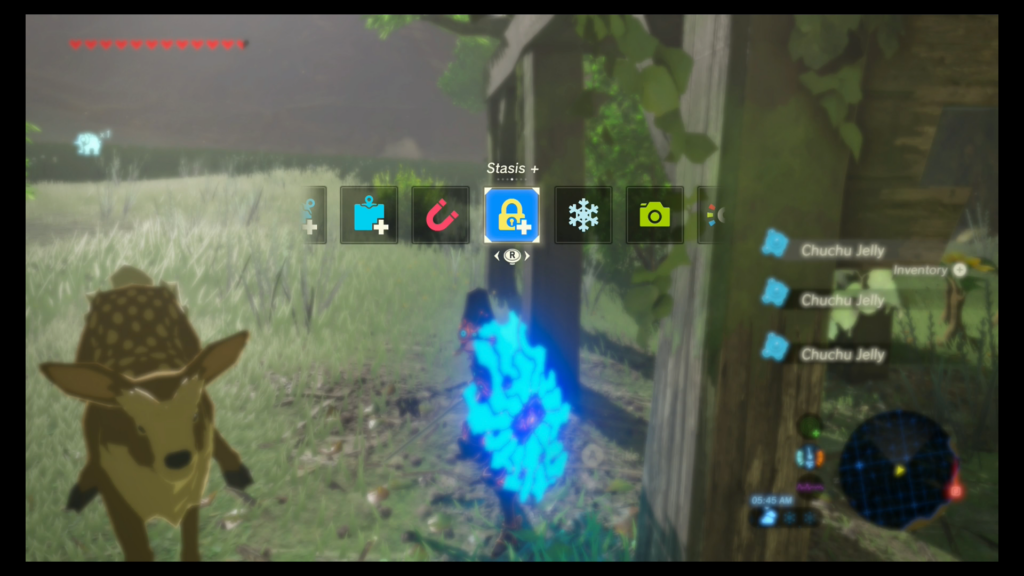
On Nintendo Switch 2, the game looks stunning. Higher resolution, cleaner edges, and improved lighting elevate an already timeless art style. This version finally matches how many players remember the game looking.
Technical performances
Performance is vastly improved. After early patches stabilized connectivity and performance quirks, the game ran smoothly with consistent frame rates and faster loading.
Environment and design uniqueness
Environmental design remains peerless. From snowy peaks to quiet forests, Hyrule still feels alive, even when familiar.
Rating
It took me some time to give the graphics and art style an objective rating. There are many things to consider, but ultimately, I rated this section with a 9.0.
Sound and music
Music score and how it contributed to the game
The minimalist piano driven soundtrack remains brilliant. It enhances exploration without overwhelming it.
Sound effects quality
Environmental sounds, wind, rain, footsteps, continue to ground the experience beautifully.
Voice Acting
This is something I want to drill down on in this review.
One of the most surprising additions in the Nintendo Switch 2 edition is the inclusion of new spoken lore collectibles, and yes, that is genuinely a big deal. These spoken logs, narrated by Zelda, finally provide something Breath of the Wild was often criticized for lacking: direct, structured lore delivery.
Hearing Zelda reflect on events, locations, and historical context adds emotional texture that the original release often left implicit. It feels like content that should have been there from the beginning, and its presence meaningfully improves narrative cohesion. We actively looked these logs up and listened to them, and they do enrich the world in a way written memories alone never fully achieved.
However, not all voice related additions land equally well. The GPS-style guidance voice, especially when hunting Korok Seeds, becomes repetitive rapidly. Instructions and callouts repeat far too often, sometimes interrupting the natural flow of exploration. Over long sessions, this repetition becomes distracting rather than helpful.
Additionally, spatial clarity is occasionally an issue. Determining whether a Korok Seed is above or below your position can be frustrating, especially in vertical terrain. The voice guidance does not always provide enough contextual nuance, leading to unnecessary backtracking and trial and error.
Rating
After a lot of consideration, I rated the sound and music section with an 8.5
Replayability
Game Length and content volume
The sheer amount of content is enormous. Hundreds of shrines, Koroks, side quests, and optional challenges ensure a massive runtime, perhaps too massive.
Extra Content
While DLC exists, revisiting everything again amplifies burnout rather than excitement.
Replay value
Replayability is paradoxical: incredibly high in theory, surprisingly low in practice after multiple completions. By the third run, burnout is almost inevitable.
Rating
After thoughtful consideration, I decided to rate the replayability and game length with a 6.5.
Suggestions and comparisons
Suggestions and feedback
Reduce Korok seed overload
Add dynamic variations to shrines on repeat playthroughs
Provide veteran focused replay modes.
Comparisons
Compared to Tears of the Kingdom, this feels purer but more exhausting. Compared to older Zelda titles, it trades narrative density for freedom.
Personal experiences and anecdotes
One of us acted as a human GPS, tracking Korok Seeds on a phone while the other controlled Link. It was genuinely fun at first, and eye-opening. We realized just how many Koroks we had missed before.
But that realization quickly turned into fatigue. Seeing every shrine again, knowing every solution, and chasing hundreds of collectibles felt more like work than adventure. Eventually, we stopped, not out of frustration, but out of exhaustion.
Rating
Taking in all the personal experiences with Legend of Zelda Breath of the Wild Nintendo Switch 2, I give it a personal rating of 7.
Last words
Pros
- Masterful open world design
- Stunning Switch 2 visuals
- Excellent performance improvements
- Timeless art direction
- Innovative physics systems
- Organic exploration
- Strong environmental storytelling
- Minimalist but effective music
- Still genre defining
Cons
- Severe burnout on repeat playthroughs
- Korok count is excessive
- Limited replay novelty
- Early connectivity issues
- Familiarity dulls impact
Breath of the Wild on Nintendo Switch 2 is the definitive technical version of a landmark game. It looks better, runs better, and remains deeply impressive. However, for players returning for a third time, the magic fades under repetition and sheer content volume.
It is still a masterpiece, just one that not everyone needs to revisit endlessly.
FINAL RATING

7,8
Please let me know what you think of Legend of Zelda Breath of the Wild Nintendo Switch 2 Edition in the comments!
I hope you enjoyed reading this review. I hope to see you in the next review!
If you liked reading this review, maybe you would like to share this review with your friends.
I guess the switch 2 version is just for the people who haven’t played the switch 1, but still a zelda game, even with such low score i’d love to play it
Exactly right! It’s one of the games I’d love to play, because I haven’t played it on Switch either.
Might be a bit biased score from Superteam, but I get them. 😀
The game is very flawed, actually.
Most of the flaws mentioned in the article were related to replayability, hence I made that comment. I still get you because just thinking about replaying it ONCE feels very repulsive, especially considering you were kind of chasing the 100%, with all the seeds. XD
For a first time, it would be a very great game.
New coat of paint on the same old car that was already giving you problems.
That about sums it up, lol.
I haven’t played either of them, but they look interesting.
If you do, play the newest version.
only 7.8? Damn that feels low. Also new design, nice
I accounted for the burnout.
I guess if I play what’s essentially the same game for the third time, I’d probably burn out unless I took a few years off, lol.
Yeah, not even the world exploration would help.
Love that you kept it real about the burnout, not every revisit needs to feel magical.
I am glad you agree.
Looks like great game with innovative world. I understand burnout after playing another time same game.
I hope there will be a brand new Zelda game.
I’m okay with a remaster having nothing new but putting development time into a kurok seed co-op feature definitely seems like a weird decision.
Yeah…. they should have added more new features.
I’m not going to lie, I haven’t played the original, but to me it doesn’t feel like this game needed a remaster this soon…
Great review, as always! 🙂
i have to agree with you.
Sad to hear that repetitive playthrough caused you two exhaustion, but that is expected from story-based RPGs that are not BG3… I can’t think of three playthroughs within a short period of time in any game that doesn’t have some kind of randomization, like Battle Brothers… I can think of multiple playthroughs with different characters/builds in games like Divinity OS2, but not sure how this game compares to that kind of variation with fixed singular protagonist…
A roguelike is indeed a lot more preferred to play over and over.
Sad to hear about the burnout 🙁
I feel for a first time playthrough the switch 2 version might be the better choice but with my habit of always trying to play the original version of a game for my first playthrough, I hope I make the right choice in the future and leave a bit of a break between the two versions if I decide to play them both 😉
It is indeed a better choice to start with the Switch 2 version.
After the third playthrough, I’d be burnt out too. But a remake for first starters in such good quality might be even more awesome =)
It would indeed be very awesome.
sad, you could not finish it.
Do you think you will play it again someday?
Probably not in ten years.
For me the Zelda games still look really awesome, but I don’t quite get the concept of the constant re-releases for new consoles, I with they were just downward compatible and be done with it…
You have a good point there!
Seems like a great game, as long as you don’t feel the need to complete everything, at which point it becomes too much
It becomes a lot if you intend to 100% the game.
This game is really a great success!
Just do not play it too much!
It’s good to see they still make fun games after so long
They indeed do.
Yes i wanted to say this myself that playing game you know so good it a tricky thing. You know a story already and largely map, familiarity can give an exchaustion after some time despite game is very good, i know that myself with many titles. I know many people saying like i played and finished Gothic 5-8 times, well i couldnt do that myself because after some time i got enought and i remember all story and map too well. But there a few games i can play again and still enjoy at least same like Cyberpunk 1.0 and then in version 2.0 with expansion, it was great, same some good deep strategy games etc. PS – I dont understand how this “phone gps guided voice” controlled by second player is working in game 😉 sry not experianced with mobile things in games, i only have carpet 😉 as you know.. and ps2 ds adapter not good working in new windows 😛
People who play The Witcher 3 for, like, ten times are insane.
What about those who play and finish Gothic 2: Night of the Raven (very dense with quests) and The Witcher 3, 4-5 times?
I’m disappointed to hear that this Zelda game is repetitive. That’s exactly the opposite of what I expect from this kind of open-world game.
It is indeed repetitive.
I like review and Nintendo can still surprise with their project with unique mechanics and well-prescribed characters. Sometimes their prices on games is very expensive for nowadays.
The prices are indeed high.