
Introduction
Basic information
Developer Name: Obsidian Entertainment
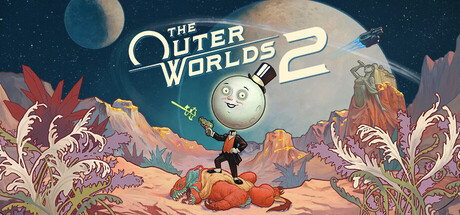
Full Name: The Outer Worlds 2
Release Date: 2025
Released on: PC, Xbox Series X|S
Cross Play: No
Initial thoughts
My wife and I loved The Outer Worlds, so a sequel immediately sounded promising. We were genuinely excited to meet new companions and see how Obsidian would expand the formula. The game opens strongly on paper: seven companions are introduced in the tutorial, creating the impression of a rich party-based RPG. However, that promise collapses quickly. Four companions die during the tutorial, one betrays you, and only two barely survive. After a ten-year stasis gap, the game resumes with those two survivors as you track down the traitor.
That setup could have been compelling, especially if the time dilation mechanic had been meaningfully tied to the stasis period. Instead, it feels disconnected and underdeveloped. Even more frustrating, Augustine, a character with clear narrative potential for making choices, the traitor, cannot be recruited as a secret companion. Despite how natural and exciting that would have been, since you started with 7 companions. My wife enjoyed the first planet, but by the second planet it became clear that the game was rushed, with cracks forming in pacing, systems, and narrative cohesion.
Story and setting
Plot overview
The narrative structure is where the game collapses most visibly. Although marketed as a sequel, the story behaves like a prequel, yet never openly acknowledges this. Major plot points suggest origin events like Earth going dark, experimental skip drives, and early corporate consolidation, all of which contradict the established status quo of the first game. At the same time, the game refuses to frame itself clearly as taking place before the events of the original, creating a constant sense of narrative dissonance.
The result is a plot that feels self-contradictory. Players are left wondering whether they are witnessing foundational history or a continuation, and the game never resolves that question. This confusion is not subtle or thematic; it feels accidental, as if different narrative drafts were stitched together without a final continuity pass.
World building and immersion
World-building suffers heavily from this identity crisis. Locations often lack contextual grounding because their place in the broader timeline is unclear. Later planets in particular feel underdeveloped, with meaningful loot, encounters, and story beats confined almost exclusively to main quest areas. Exploration rarely rewards curiosity with lore or mechanical depth, further weakening immersion.
Character development
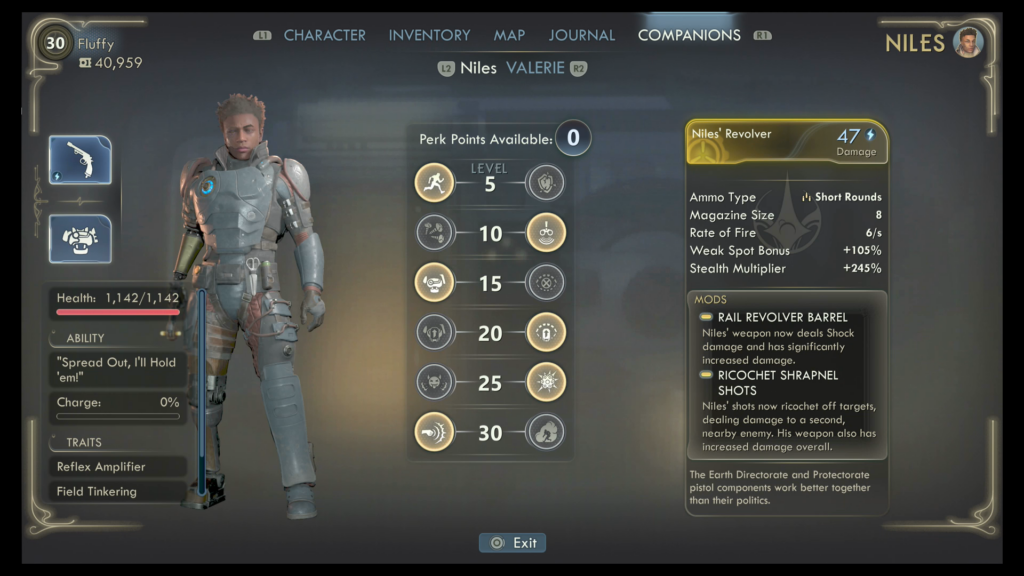
Character development is minimal. Companions are not only mechanically stripped down but also eerily silent for large stretches of the game. Banter is sparse, reactivity is limited, and they rarely comment meaningfully on major events. Compared to the first game, companions feel like passive observers rather than active participants in the story.
Emotional impact
Emotional impact is severely blunted. Early companion deaths are abrupt and feel more like shock tactics than earned tragedy. Later emotional moments fail to land due to broken dialogue flags, incorrect or missing ending slides, and text that often does not reflect the actual choices the player made.
Rating for story and setting
I have visited multiple aspects of the story, and after some thought and objective thinking, I rated the story and setting with a 1
Gameplay and mechanics
Core gameplay mechanics
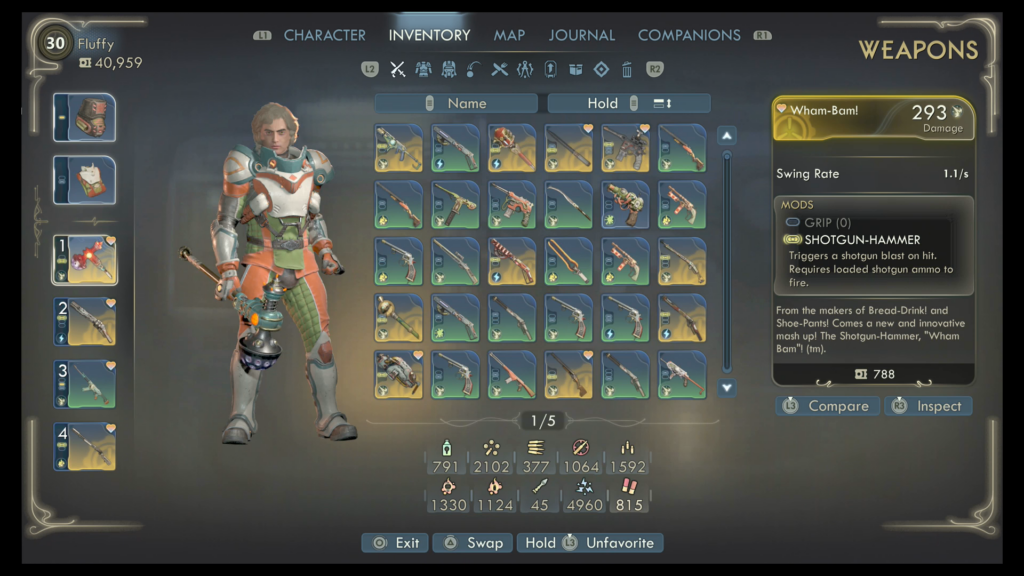
Gameplay systems have been significantly simplified, often to their detriment. There is no carry weight, allowing players to loot endlessly without decision-making. There is no storage on the ship, which paradoxically removes both convenience and strategy. Companions cannot be equipped with gear, eliminating a core RPG loop present in the first game.
Crafting is technically expanded but functionally pointless. The game showers the player with so much currency that crafting ammo is unnecessary; you can simply buy infinite supplies. Weapon and armor modifications exist, but after the first world there are no new recipes, making the system feel abandoned shortly after introduction. Moreover, every unique weapon has a mod slot, but there is no mod developed for that weapon.
Difficulty and balance
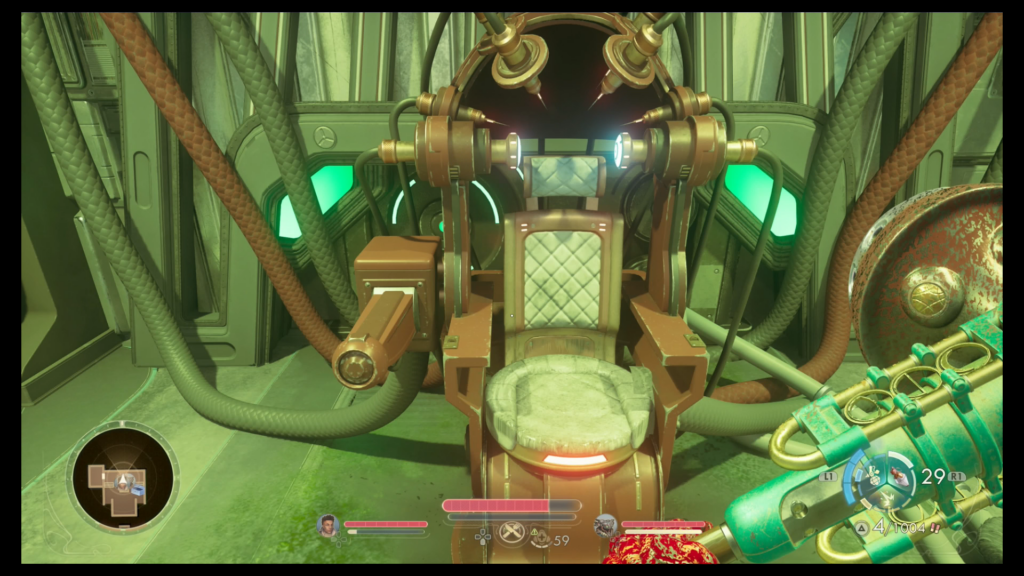
Balance is fundamentally broken. A single melee weapon obtained early on the second planet can be used unchanged for the entire game, killing most bosses in one hit, as it also levels with you, since the tinkering option has been removed. The Feedback Cannon can be sequence broken, also getting it at the second planet immediately. Completely invalidating the rest of the arsenal, as this weapon annihilates bosses as well from range. In comparison, it can deal over 1k damage, whereas companions barely deal 30 at the end of the game. Difficulty settings cannot compensate for systems this compromised.
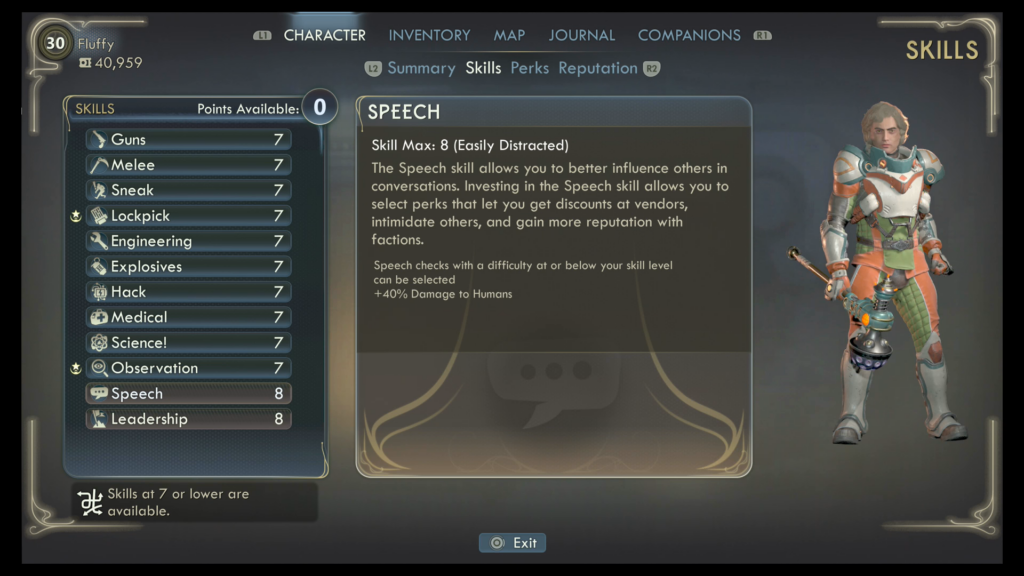
Progression is shallow, offering only two skill points per level with minimal tangible impact. Unlike in the first game, saving all your points would not be noticed except for the skill checks since these weapons can break the game anyhow. My suggestion is to just remove them, since they are this broken.
Pacing of the game
Pacing deteriorates sharply after the opening hours. Early areas suggest a dense RPG, but later planets feel rushed, with fewer side activities, recycled encounters, and minimal narrative buildup.
Innovation and uniqueness
Very little feels innovative. In many cases, systems are regressions from the first game, stripped down without replacement depth. What remains feels unfinished rather than streamlined.
Controls and user interface
Controls are serviceable, but the UI is worse than in the first game. Progression feedback is unclear, perks feel inconsequential, and large gaps in meaningful upgrades make leveling unsatisfying. Furthermore, the skills are no longer grouped together in a branch, like in the first game.
Microtransactions
None, but DLC is planned.
Rating
After combing through many of the mechanics, the pacing and other factors of this game, I rated the gameplay and mechanics with a 2.
Graphics and art style
Quality of graphics and art direction
The art direction attempts to maintain the series’ visual identity, but technical issues constantly undermine it. There are visible seams, holes in geometry, and broken collision boundaries. The double jump frequently allows players to land outside intended play spaces, completely shattering environmental illusion.
Technical performances
Technical performance is poor and inconsistent. Numerous glitches are easy to reproduce, including weapon exploits and sequence breaks.
Environment and design uniqueness
Later planets heavily reuse enemy types with superficial changes, such as adding ice or minor visual effects. Environmental assets are recycled, including the same workbench model from the first game, with little improvement or variation. Worlds feel less distinct the further the game progresses.
Rating
It took me some time to give the graphics and art style an objective rating. There are many things to consider, but ultimately, I rated this section with a 2.
Sound and music
Music score and how it contributed to the game
The music is repetitive and often loops awkwardly, becoming annoying rather than atmospheric. This is mostly since there are not enough soundtracks.
Sound effects quality
Sound effects are functional but unremarkable, offering little feedback or impact. Feels like a downgrade compared to Outer Worlds 1.
Voice Acting
Voice acting is inconsistent. The constant rattling off of numerical values during dialogue is particularly grating and breaks immersion. They also use difficult words a lot, which can only be understood with a higher level of English grammar, which to me sounds as if the dialogue comes out of an AI.
The companions no longer have epic voice acting when you use their skill. (They do say something, but it no longer slows them down, and they mostly just teleport around.)
Rating
After a lot of consideration, I rated the sound and music section with a 3.
Replayability
Game Length and content volume
The game is not especially short, but its length feels padded rather than purposeful. Large stretches are spent moving between underdeveloped locations with little meaningful interaction.
Extra Content
Side quests exist, but there are noticeably fewer than in the first game, and many lack memorable hooks or consequences. While DLC is planned, that does not excuse the lack of substantial optional content at launch. Furthermore, why would you focus on side content if the ending slides are broken and probably won’t show up anyway?
Replay value
Replay value is severely undermined by the game’s broken ending system. Ending slides are frequently missing, out of order, or contradict player choices. Text often does not reflect the decisions made, making replays feel pointless when outcomes cannot be trusted.
Rating
After thoughtful consideration, I decided to rate the replayability and game length of Outer Worlds 2 with a 2.
Suggestions and comparisons
Suggestions and feedback
The game desperately needs patching, rebalancing, and narrative clarification. Companion systems should be restored, endings fixed, and multiple paths to resolution added. As of writing, the game is on version 1.06.
Comparisons
Compared directly to The Outer Worlds, this sequel feels like a step backward in nearly every meaningful way. There is not much else I can say.
Personal experiences and anecdotes
My wife completed nearly everything in the game. She took the flaw easily distracted to get three skill points every level up, but the skills need to be distributed evenly. She reached the level cap and managed to get all skills to level 7, only to discover at the end that Speech 20 is mandatory for the best ending. As a result, she received a bad ending. On top of that, multiple ending slides were missing entirely for companions and for the peace she brokered, which all took hours, and slides were also incorrect. Oh, and there is no ending slide for the main character. I guess he just ups and vanishes? Her response was blunt: she asked me to put -10 here. So, I did.
Rating
Taking in all the personal experiences with Outer Worlds 2, I give it a personal rating of -10 (minus 10)
Last words
Pros
- Some early-world atmosphere is effective.
- Visual style retains a hint of the original charm.
- No microtransactions.
Cons
- Broken ending slides
- Confusing and contradictory story
- Forced Speech build for best ending
- Dumbed-down RPG systems
- No companion equipment
- No companion commands
- No carry weight
- No ship storage
- Completely broken balance
- One-shot bosses
- Weapon exploits
- Overpowered feedback Cannon
- Missing perks
- Shallow progression
- Poor UI
- Reused enemies
- Rushed later planets
- Weak emotional payoff
- Dialogue loops and bugs
- Regression from the first game
The Outer Worlds 2 suffers from a fundamental identity crisis. It insists on being a sequel while behaving like a prequel and never reconciles the contradiction. Systems are simplified to the point of feeling unfinished, companions are mechanically and narratively diminished, and the ending is not just weak but literally broken.
When combined with unreliable dialogue flags, missing ending slides, forced builds for optimal outcomes, and rushed late-game content, the experience feels incomplete and frustrating rather than ambitious.
FINAL RATING

2.8
Please let me know what you think of Outer Worlds 2 in the comments!
I hope you enjoyed reading this review. I hope to see you in the next review!
If you liked reading this review, maybe you would like to share this review with your friends.
This game just needed a bit more polishing time to it butt he review is spot on!
A lot more polishing!
Always first games will be best.
This is indeed true.
Oh my goodness.
Judging by the reviews, I think the score is fair.
I am glad you agree!
Wow I heard the price and performance sucked, but i didnt know it was this bad, thanks for the warning 🙂
I am glad to warn people!
Wow, I think that’s the lowest score I’ve seen you give a game so far! Never would have thought the sequel would turn out that bad…
Thanks for the review! Hopefully you get to play something better next time! 🙂
The sequel is indeed worse…. or is it a prequel?
Wow I though or heard this game was bad, but I didn’t expect it to be THIS bad!
It is indeed very bad.
The fact that they gutted companion equipment and commands is wild.
It is indeed awful.I don’t understand it either…
I really hope they can patch up the game nicely. I had high hopes for this and this is just breaking my heart. Why do they like to kill their franchise?
I am not sure what went wrong, but I think they rushed it.
It is hard If you looking forward to a game and it feels Kind of rushed, unbalanced and unpolished. Features with No real need for them feel like wasted potential!
This whole game is wasted potential!
Reading about narrative dissonance and simplified gameplay mechanics in your review is giving me Veilguard vibes…
Wasn’t that also a flop?
I’m astonished, didn’t suppose that rating for game will be that low. However on the other side, it was released 3 months ago and usually games from big companies have problems on start, that’s why better to wait and buy with discount. So hopefully it will be solved after some time.
True, games get released unpolished, but this one struggles with more than just performance issues, as Sven noted. There’s no cohesion to the story or the lore anymore. Everything feels uninspiring. Even the voice lines feel forced…
Not sure they can fix that. :/
Need to wait for patches and lots of discount!
Looks like the devs need to get to the outer worlds, too. (ban pun idk I wasn’t inspired)
A pity it scored so low, but sadly quite a fair review.
It sadly is an accurate review.
another sequel that seems to get a lot of negative reviews all around. I still kinda hope that they’ll do some more polishing like happened with a lot of other releases lately. And I will still give it a chance sometime in the future. The first one just was so cool.
The first one was so much better! And I do hope this one gets more patches, more polish, etc.
hm… I didn’t really got much info about the second entry until now.
a bit sad if you a locked out of good endings without giving you some kind of hint or nudge for it.
You get a hint right at the end of the game when you can do nothing about it :O
This game seems so interesting, let’s hope the DLC fixes most of the problems
We can only hope!
Oh sounds like a very rough launch. I mean I was gonna wait because of the price and not buying full price games. But sounds like everyone is better off waiting for patches, and bug fixes, and performance improvements, in addition to a cheaper sale price.
They rushed it way too much; so many errors.
Oh my, the personal score of -10 feels like something that the game can’t easily walk away from
It can indeed not.
Looks like it’s better to stick to the first one
That is indeed a good one.
Oh wow, it sounds like everything that could go wrong went wrong in this game! Too bad, the story theme sounds really cool… but I’ll definitely give the first one a try!
And maybe this one after it has been updated a lot.
Ah Obsidian.. i always liked games from this studio, what happaned to them? Not played Outer Worlds 1 and Outer Worlds 2 but review shows the same as in other reviews, that they deteriorating in every department unfortunately.. Of course i dont like to give opinion without trying myself but in that cases i think fans of their past games probably know that they telling. I hope other future games from them wont be effected by this.. Thanks for review. By the way no carry weight/storage is no a big negative for me, i quite often looked for mods/cheats to disable such things in games 😉 But after looking, it all started when they were bought my Microsoft i always had such worries but most of other people where happy that now they will be able to make even bigger project, so we see.. Last games before Microsoft was still very good like Pillars of Eternity 2 and Tyranny that is really sad to be honest 🙁 Pillars of Eternity 1 was a project, successful, to bring back old school crpg to the market and soon later Microsoft killing it again like we see..
I think this game could have been perfect if they had gotten the story right, allowed the developers more time to finish the game, looked at what made the first game good, and more.
Oh wow, the first game did well, so they rushed out a second, who could have guessed XD. Good review though.
They do tend to do that.
I agree with review. I think we need give a second chance for studios, which trying to impress players with unique worlds and companions background. That’s my opinion.
The companions need a good overhaul.