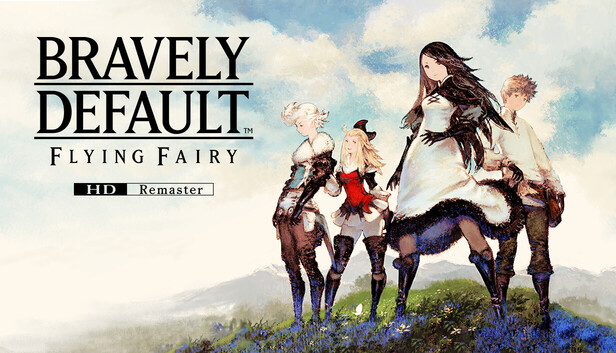

Introduction
Basic information
Developer Name: Square Enix / Silicon Studio
Full Name: Bravely Default: Flying Fairy HD Remaster
Release Date: June 5, 2025
Released on: Nintendo Switch 2
Cross Play: No
Initial thoughts
I played Bravely Default on the 3DS a long time ago, and wow, is the 3DS really that old already? That explains why my back hurts. Coming back to it now on the Switch 2 felt strange in the best and worst ways. On one hand, it is clearly a classic style JRPG with a fantastic battle system and a wonderful job structure. On the other hand, revisiting it with a review mindset made some of its weaker parts stand out much more sharply.
This time around, the site is live, reviews are being written properly, and I wanted to experience the game again with fresh eyes. The problem is that I accidentally finished rebuilding the village before even completing 30% of the main game, which already threw the balance of progression into a weird place. That side system can be addictive, but if you overdo it early, it creates a strange disconnect between your village progress and where you actually are in the story.
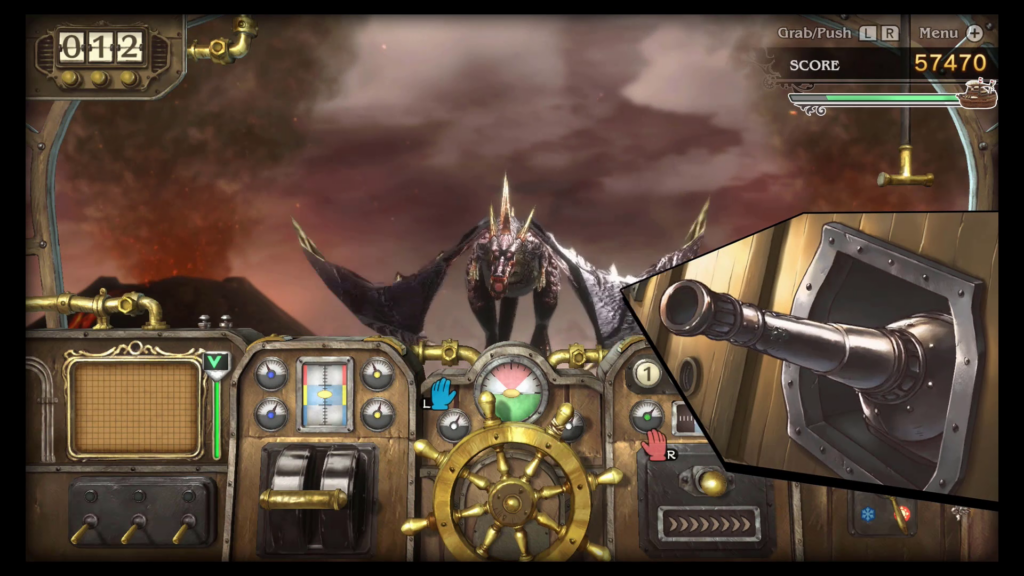
I also finally tried the new mouse control minigames. Having had multiple surgeries on my wrist, I can say this with honesty: it sucks. Not the minigames themselves, because those were actually fun enough, but the mouse control setup was not comfortable for me at all. Thankfully, the normal controls were great, and the main game still plays beautifully where it matters most.
Story and setting
Plot overview
TIME LOOP.
That is both the plot and the problem. The story begins with strong classic JRPG energy: crystals, chosen heroes, a collapsing world, a desperate journey, and a party slowly forming around a world saving mission. Official descriptions frame it as the tale of the warriors of light on a quest to awaken the crystals, and that early setup is exactly the kind of old school fantasy premise that should work very well.
The issue is that the story becomes increasingly repetitive and painfully obvious. I saw almost every major plot twist and character reveal coming from twenty miles away. The game acts like it is building to massive revelations, but by the time they arrive, they feel less like shocking turns and more like, yes, thank you, I already guessed this hours ago.
And then the loop structure hits. The game asks a lot from the player narratively, and for me, it asked too much. I understand the idea. I understand what it is trying to do. But understanding a story choice does not automatically make it enjoyable. By the end, I was burned out enough that I basically stopped caring, even though the gameplay itself remained excellent.
World building and immersion
The world itself is actually quite strong. Luxendarc has a lovely classic fantasy identity, with distinct towns, cultures, regions, and crystal mythology. The art direction helps a lot, and the world still has that storybook quality that made the original 3DS version stand out.
The problem is that the time loop structure damages immersion over time. Repetition can be powerful when used carefully, but here it eventually made the world feel less alive rather than more tragic. Instead of thinking, wow, this is a clever layered reality, I started thinking, please let me move on already.
That is where the story fails the gameplay. The world is charming enough to explore once. It is less charming when the structure keeps dragging you back through variations of the same broad beats.
Character development
The main cast has personality, and there are good interactions throughout the game. But the writing also has some ugly habits, especially in how it handles women. Too many male characters are written as creeps or perverts, and too often women are treated like objects for jokes or fanservice. The bikini talent show sidequest is the kind of thing that made me stop and go, ugh, really?
That kind of writing hurts the cast. The game wants to be sincere and emotional, but then it trips over dated, uncomfortable scenes that make parts of the world feel worse than they need to.
Emotional impact
The emotional impact is mixed. Early on, the game has genuine charm. The party dynamic works, the fantasy setup is engaging, and the sense of adventure is strong. But as the plot twists become predictable and the repetition increases, the emotional connection begins to weaken.
Instead of becoming more invested, I became more detached. That is a serious problem for a long JRPG. The game wanted me to be shocked, moved, and suspicious. Instead, I was mostly waiting for the story to catch up with what I had already figured out.
Rating for story and setting
I have visited multiple aspects of the story, and after some thought and objective thinking, I rated the story and setting with an 5.5
Gameplay and mechanics
Core gameplay mechanics
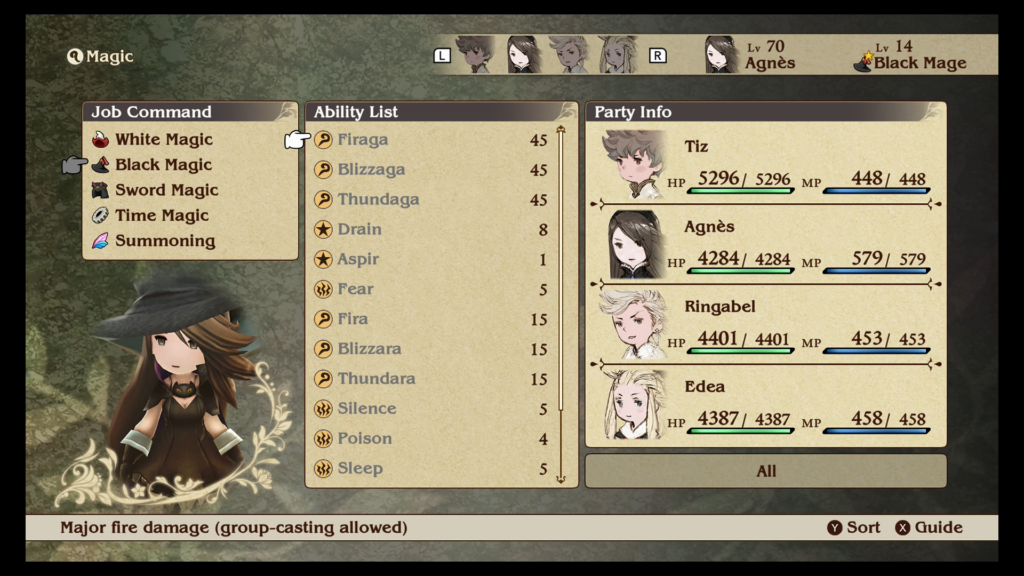
The gameplay is fucking awesome. This is where Bravely Default absolutely earns its reputation. The Brave and Default system remains brilliant: store turns, spend turns, defend and build BP, then unleash huge sequences when the timing is right. It is simple to understand but deep enough to support a massive number of strategies. Nintendo’s store description rightly highlights the Brave and Default commands and the large job system as the core appeal of the game.
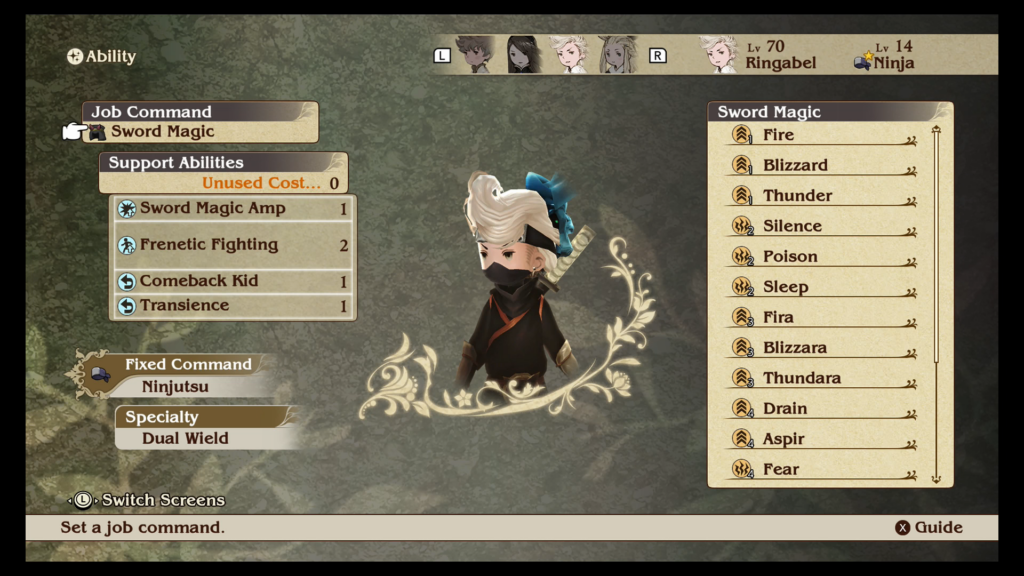
The job system is fantastic. There are so many combinations, so many passive abilities, and so many ways to break the game if you understand how the systems fit together. The deeper I got, the more the game turned into a strategy sandbox, and that is absolutely the best part.
Eventually, yes, it can boil down to absurd power setups. Have a buffer buff, have a healer on standby, run two ninjas with elemental blades, smash enemies for 9999 damage, then escalate into special attacks and damage cap nonsense. By chapter 5, I was sleepwalking through bosses with disgusting setups, watching numbers explode, and wondering whether the story or my overpowered party would kill my motivation first.
Difficulty and balance
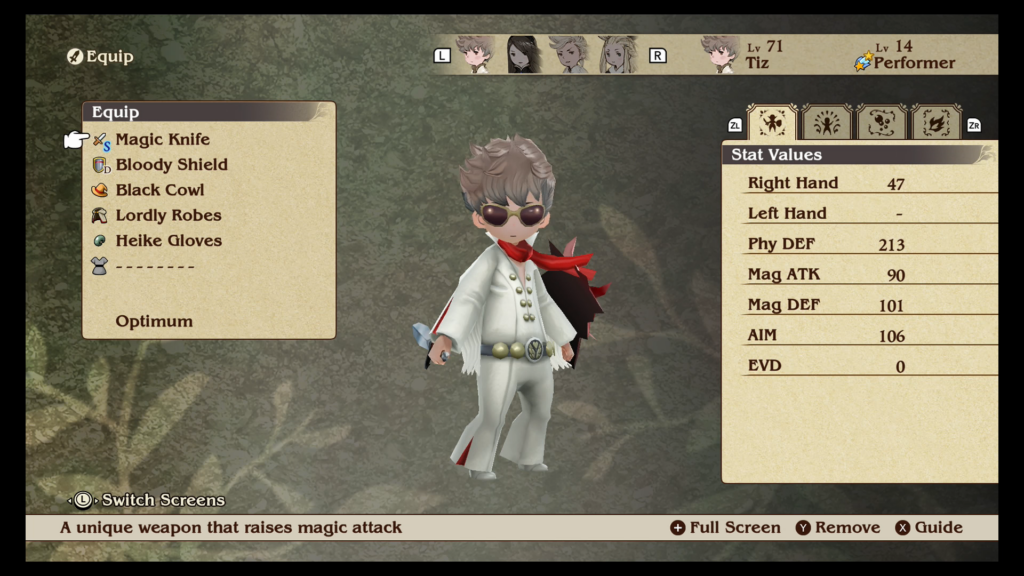
The balance is fascinating because the game can be challenging, but it also lets you break it wide open if you know what you are doing. That is not necessarily bad. In fact, part of the joy of a job based RPG is finding disgusting combinations that make you feel like a genius goblin.
The issue is that once I reached the point where my strategies were too strong, the challenge started evaporating. Seeing ninjas casually hit for ridiculous damage is funny and satisfying for a while, but once bosses stop pushing back meaningfully, the gameplay thrill starts to fade. The tools are amazing, but the game sometimes gives you enough rope to strangle the difficulty.
Pacing of the game
The pacing is the biggest gameplay adjacent problem because the story structure bleeds into everything. The early and middle parts have a nice sense of progression. New jobs, new regions, new bosses, new options, it all feels great. Then the time loop structure starts stretching the experience too far.
That is where the burnout set in. The game did not lose me because the mechanics got bad. It lost me because the repetition around those mechanics became exhausting. Whopping every boss was fun for a while. Doing it while the story loop kept dragging on became much less fun.
Innovation and uniqueness
The battle system is still excellent and unique. The Brave and Default mechanic gives turn-based combat a real push pull rhythm, and the job system gives the player an enormous amount of freedom. Even years later, the game still feels mechanically distinct.
The HD Remaster also adds quality of life upgrades and new minigames using Switch 2’s mouse controls. Square Enix describes the remaster as having updated graphics, improved UI, quality-of-life changes, and mouse-control minigames. The mouse additions are neat in concept but not comfortable for me personally because of wrist issues.
Controls and user interface
The normal controls are great. Menus are clean, battle flow is fast, and the remaster’s interface improvements help the game feel much more comfortable on modern hardware. Speed-up options and a smoother UI are exactly the kind of upgrades a JRPG remaster needs.
The mouse controls, however, are not for me. With my wrist history, they felt miserable. The minigames themselves were fun, but the control method made them hard to enjoy comfortably.
Microtransactions
None. The village rebuilding system may feel like it came from a handheld era obsessed with timers and side systems, but thankfully this remaster is not trying to squeeze money out of you for it.
Rating
After combing through many of the mechanics, the pacing, and other factors of this game, I rated the gameplay and mechanics with a 9.
Graphics and art style
Quality of graphics and art direction
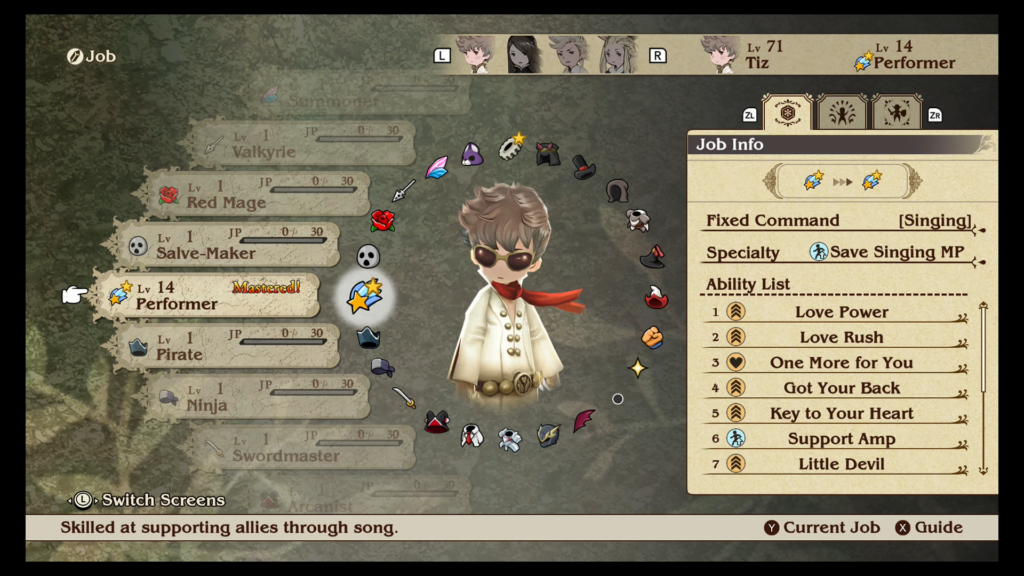
The game looks pretty good, especially when you remember it originally came out on the 3DS. The HD treatment helps the painted backgrounds and character models breathe more clearly. It still has a handheld origin look in some places, but the overall art direction holds up well.
The world has that diorama-like fairy tale style that made the original visually memorable. Towns look charming, dungeons have strong atmosphere, and the whole game carries a gentle fantasy book feeling that works well for the setting.
Technical performances
Performance is solid. The remaster does exactly what it needs to do technically: make an older 3DS RPG feel clean and playable on modern hardware. The quality of life updates and improved UI also make the experience smoother than going back to the original would be for many players.
Environment and design uniqueness
The environments are memorable enough, especially the towns. Each region has a distinct identity, and the backgrounds do a lot to sell the world’s charm. The game does not feel visually generic, which is important because the story itself becomes repetitive later. The art helps carry the adventure longer than the plot does.
Rating
It took me some time to give the graphics and art style an objective rating. There are many things to consider, but ultimately, I rated this section with a 8.0.
Sound and music
Music score and how it contributed to the game
The soundtrack is excellent. It gives battles energy, towns personality, and big moments the kind of classic JRPG drama they need. Even when the story started annoying me, the music kept doing its job.
The battle themes especially help sell the combat. When your party is about to unleash disgusting turn stacking nonsense and delete a boss, the music makes it feel properly heroic.
Sound effects quality
Sound effects are crisp and satisfying. Attacks, spells, job abilities, and special moves all have enough impact to make combat feel lively. That matters a lot in a game where battles are the main reason to keep playing.
Voice Acting
The voice acting coverage is surprisingly strong. Almost everything important feels voiced, which gives the game more presence than many older handheld RPGs. The performances are generally good, even when the writing itself is not.
The issue is not the voice work. The issue is what some of the dialogue is asking those characters to say. The repeated pervert jokes and women-being treated as lust object nonsense dragged things down for me.
Rating
After a lot of consideration, I rated the sound and music section with a 7.
Replayability
Game Length and content volume
There is a lot of content here. Main story, side quests, jobs, bosses, village rebuilding, minigames, and optional build experimentation all add up. This is not a thin RPG. If anything, it might be too much once the story starts looping.
The length would feel better if the story maintained momentum. Because it did not, the content started feeling heavier than it should.
Extra Content
The village rebuilding system, job collection, optional bosses, and new remaster minigames all add value. Nintendo’s store page specifically mentions modern gameplay enhancements and new minigames as part of the package.
But again, finishing the village early hurt the sense of progression for me. I broke that side system by overcommitting before the main story had caught up.
Replay value
TIME LOOP.
That joke writes itself, but replayability is genuinely complicated here. Mechanically, the game is very replayable. Jobs, builds, party setups, and difficulty choices can all support different runs. If you love experimenting with RPG systems, there is a lot to return to.
Narratively, though, I had enough. The time loop structure already made the first replay like stretch feel exhausting, so the idea of starting over again anytime soon does not appeal to me. The game has replay value in systems, but the story burned out my desire to use it.
Replay value is high for people who mostly care about combat systems. It is much lower for people who need the story to stay engaging. For me, the mechanics are worth praising heavily, but the story makes me hesitant to return quickly.
Rating
After thoughtful consideration, I decided to rate the replayability and game length of this game with a 7.
Suggestions and comparisons
Suggestions and feedback
The game needs a better story structure. The time loop idea is interesting, but it required either tighter pacing, stronger variation, or less repetition. It also needed plot twists that were harder to spot from the next continent.
Battle strategy could also use more late game pressure. Once builds become too powerful, the game needs more enemies that can push back against them intelligently. Not unfairly, but enough to keep the player awake.
And please, fewer creepy pervert jokes and less woman in a bikini for plot reasons nonsense. That writing aged like milk in a volcano.
Comparisons
Compared to classic Final Fantasy style RPGs, Bravely Default has one of the strongest battle systems in the genre. Compared to many modern JRPGs, it has a much better mechanical identity. Compared to better written RPGs, however, the story is weaker and far more predictable.
I did buy Bravely Default II, hoping the story lands better. If it can keep the excellent battle foundation while giving me a plot that does not make me want to shout at the screen, that could be a win.
Personal experiences and anecdotes
Whopping the shit out of everything was fun for a while. There is something deeply satisfying about watching a carefully built party break the game in half. Buffs, ninjas, elemental blades, huge damage, specials, and ridiculous numbers, that part was glorious.
But the story killed my momentum. I did not stop because the game was bad. I stopped because the loop structure and predictable twists made me tired. The gameplay kept shouting, look how awesome I am, while the story kept dragging me back into nonsense I had already figured out.
That is why this review is so conflicted. The systems are brilliant. The story can go eat a bag of dicks. Excuse my French.
Rating
Taking in all the personal experiences with this game, I give it a personal rating of 6.
Last words
Pros
- Fantastic Brave and Default battle system
- Excellent job system
- Huge strategic depth
- Very satisfying build experimentation
- Great soundtrack
- Strong normal controls
- HD remaster makes the game cleaner and easier to revisit
- Lots of content
- Quality of life updates are welcome
- Combat can become hilariously broken in a fun way
Cons
- Story becomes repetitive
- Time loop structure causes burnout
- Plot twists are painfully predictable
- Some character reveals are too obvious
- Late game builds can trivialize bosses
- Some repetitive side quests
- Village rebuilding can be finished too early and feel weirdly disconnected
- Mouse controls are uncomfortable with wrist issues
- Dated creepy writing around women
- Bikini sidequest is awful
- Story momentum collapses before the mechanics do
- Replayability suffers because the story already feels like too much repetition
Bravely Default: Flying Fairy HD Remaster is a great RPG with an outstanding combat system and a story that slowly tested my patience into oblivion. The Brave and Default mechanics are still brilliant, the job system is fantastic, and the amount of strategy available is genuinely impressive.
But the story? The twists? The time loop burnout? That part hurt the experience badly. I respect what the game was trying to do, but I did not stay emotionally hooked, and eventually I just drifted away despite the gameplay being excellent.
Still, the mechanics are so strong that I cannot call this anything less than a good game. Just one with a story that made me buy Bravely Default II while whispering, please, be better.
FINAL RATING

7.3
Please let me know what you think of Bravely Default: Flying Fairy HD Remaster in the comments!
I hope you enjoyed reading this review. I hope to see you in the next review!
If you liked reading this review, maybe you would like to share this review with your friends.
It’s a game I’d like to play because I love the music.
The story might be a bit questionable, but honestly I don’t care that much about story, so it should be fine for me! lol
Well, the gameplay is good, lol.
Seems like a game that people who skip the dialogue would love haha, unfortunately for me I like a good story and this sounds like they kept a bad story where they should have updated it and improved it. The minigames look fun though.
The minigames were indeed fun!
A JRPG with weak story? Huh… to be fair, I do feel that a lot of JRPGs have similar stories, and I’ve already played the one with the best and most unique story: Expedition 33. As for gameplay, I’m sure the UI/UX will get in the way… as a PC player, I can’t stand the generic JRPG UI of menu under menu under menu for basic actions. Once again, E33 nailed the modernization! Also, as an adult who didn’t grow up with JRPGs, I can’t stand the child-looking adult characters in most JRPGs… so don’t see myself enjoying most of these anytime soon, if ever.
It is indeed a bit weak for a JRPG.
I like the gameplay that show in some youtube and the cute character which is also nice
That was one of the minigames.
This is the style of game I just can’t get into… I don’t quite know what it is, but I just don’t enjoy it…
It originated from the 3DS that might make it look bit wonky.
I’m a bit confused. Is the time loop an ingame mechanic, like from roguelites or chrono trigger or is it a “you can play the game again” time loop without changes on the actual gameplay itself?
It is an actual story plot line which means you have to beat the game like 5 times, I am not kidding, even though each loop is a bit different.
Of course you saw every plot twist miles away—you’ve already played the game! XD
I wonder why didn’t they gate village content behind the main story so you can’t just complete it without progressing into the game. Sounds like my play style of doing everything side quest first would put me in the same broken spot as you ended in.
Yeah, that is what it boils down to.
This Game looks pretty good
It does look good.
Looks like the base of the game is good enough to make of it a good game
The base can indeed be fun.
It has dragon… it should be a banger. Is it a banger…. well no. Sad Times.
Indeed sad.
About initial thoughs… Time is not what made your back hurts! But I didn’t figured out yet what makes it!
My bones?
Although not sure if fairies are for me, that’s good that no microtransactions are present here. However it’s a pity that there is a lot of repetition due to time loop part. It reminds me watching The Project Lazarus series.
Repetetion is indeed annoying.
I feel like if you’re going to make someone play the game multiple times to finish the story, then either the gameplay and/or story has to be REALLY amazing to make you want to push through, or the game needs to have enough new content to justify the additional playtime. And it sounds like this game falls short of that…
Great job with the review as always! 👍
I am glad you liked the review!
Dam time loop? That’s amazing, I already know what’s to happen and I can prepare for everything it’s like deathloop. The menus look fun and the world looks interesting. The best part is the lack of micro transactions, I really do miss that feature.
Time loops can be fun.
It looks very cute and nostalgic, although it sounds like Square Enix should have spent a little more time improving the gameplay loop so it wasn’t so boring and repetitive.
They should have indeed.
I’ve been exhausted by weak storytelling, poor localizations, and the repetitive grind of gacha games, and since this looks pretty similar, I don’t think I’ll like it. 🙁
maybe try another game.
Loved reading this review. I hope to play through a game from the genre someday 🙂
It is indeed a great JRPG
It sounds like a grand magical and epic adventure.
Could have been.
Time loop remind me Deathloop game but i didnt felt it was very repetive in that one but lack of manual save was the only think i didnt like. As for this game it seems good from your review and only major downside seems to be that story is repetetive by design. In general i dont like grind too. Yet you praise gameplay and mechanic, both really important in games (for me) so thats interesting, different options and combinations should make it more entertaining. Hard to judge if i would like it but it is anyway not for me platform. Very probable it would be fun for some time but not until the end like for you..
It is very much a grinding game.