
Introduction
Basic information
Developer Name: ARTDINK & Square Enix Team Asano
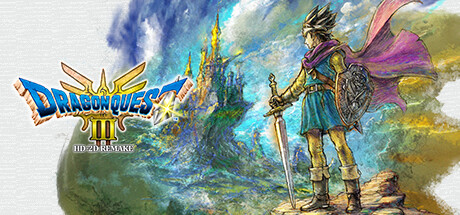
Full Name: Dragon Quest III HD-2D Remake
Release Date: November 14, 2024
Released on: Nintendo Switch, PlayStation 5, Xbox Series X|S and PC. Nintendo Switch 2 also received an enhanced update.
Cross Play: No, this is a single player RPG
Initial thoughts
Simone has always loved Dragon Quest. Give her the choice between Dragon Quest and Final Fantasy, and she will generally run toward the slimes rather than the Chocobos. So when Dragon Quest III HD-2D Remake came along, she was absolutely in the mood for a huge old-school JRPG adventure.
What surprised me most is how much game is hidden inside something originally released all the way back in 1988. You can still feel the old school RPG foundation underneath everything, but the remake has expanded and modernized it enough that it does not feel like you are simply playing an ancient NES game with prettier graphics.
Story and setting
Plot overview
You begin in Aliahan with very little beyond the Hero and the ability to recruit your own companions. Instead of receiving a fixed cast of story characters, you create the people who will accompany you.
That immediately makes the journey feel personal. Want a Warrior, Priest and Mage Sure.
Want a Monster Wrangler, Thief and Merchant Go ahead.
Want to make life unnecessarily difficult and wander around with a bizarre party composition The game is perfectly willing to let you learn from your mistakes.
Your central target is Baramos, but the game gradually opens up after the early linear sections. Once you gain access to the ship, the world becomes much freer and the hunt for the six orbs becomes one of the strongest parts of the adventure. You can approach much of that search in your own order, which gives the middle of the game a genuine sense of exploration.
Some routes are obviously nastier than others, and wandering into the wrong place too early can result in the game politely punching your party through the nearest wall, but I like that freedom.
There are also major twists later on that significantly expand what initially looks like a very straightforward defeat Baramos storyline. For such an old game, it still knows how to make the adventure feel larger than you expected.
World building and immersion
This is where the game’s age actually becomes fascinating.
The world is enormous and filled with kingdoms inspired by different cultures and parts of the real world. Rather than spending the entire adventure inside one fantasy country, you sail across oceans, explore deserts, snowy regions, mountains, islands, castles, villages, caves and other strange places.
The remake adds so much visual detail that these locations feel much more distinctive than they could in the original version Exploration is also rewarded constantly.
Sparkly spots appear throughout the overworld containing items and equipment. Secret locations are tucked away from the obvious roads. Friendly monsters can be hiding almost anywhere, and some only appear under certain conditions or at certain times.
That made searching the world much more enjoyable.
Character development
Character development is unusual because most of your party members are created by you rather than written as traditional story companions.
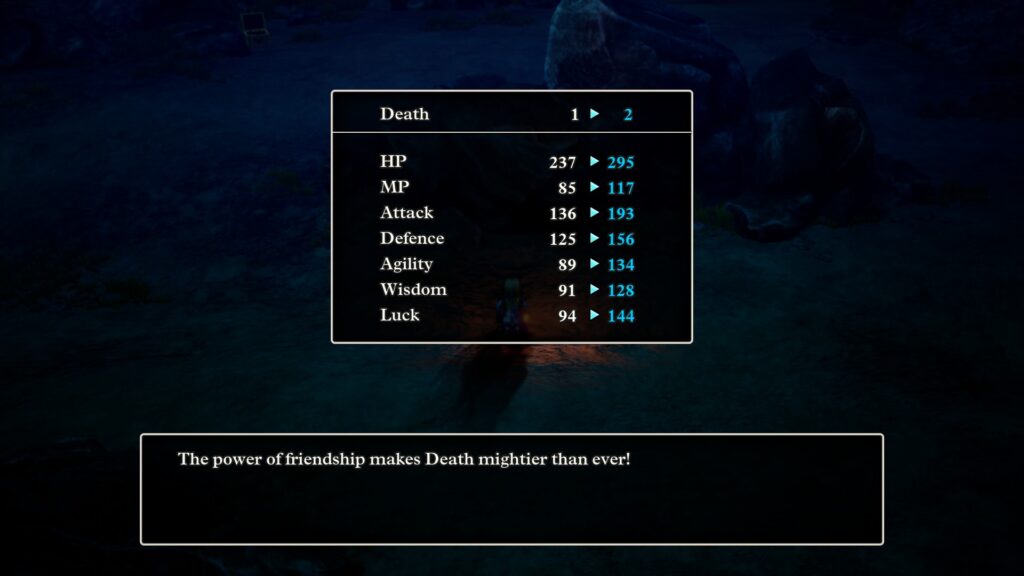
At first, that might sound like a weakness In practice, I really liked it You choose their appearance, name, vocation and personality, and after spending dozens of hours with them, they become your characters. Their development comes through gameplay rather than lengthy cutscenes. The vocation system strengthens that enormously.
A Warrior who has spent hours being the party’s physical powerhouse can later change vocation and begin learning an entirely different set of skills. A spellcaster can eventually become something else while retaining useful abilities from their previous life.
That makes party development feel like something you actively control. The Hero remains more fixed, but the other three characters are almost little projects. By the end of the game, your party can look completely different from how it began.
Emotional impact
Dragon Quest III does not constantly try to make you cry. The emotional satisfaction mostly comes from the journey itself. You remember when a boss destroyed you. You remember when your party finally learned the spell that changed everything. You remember finding a weapon that massively improved one character. You remember discovering another friendly monster tucked away somewhere stupid. That sense of progression becomes surprisingly powerful.
The Ortega storyline also gives the Hero a personal connection to the adventure. You are not simply some random person who woke up and decided Baramos looked annoying. You are continuing a mission your father failed to complete, and the remake adds more material around him that gives this part of the story additional weight.
There are also smaller stories throughout the towns and kingdoms. Some are funny, some strange and some considerably darker than the colorful visual style would suggest. That variety prevents the massive journey from becoming emotionally flat.
Rating for story and setting
I have visited multiple aspects of the story, and after some thought and objective thinking, I rated the story and setting with an 9.
Gameplay and mechanics
Core gameplay mechanics
There is a lot going on in Dragon Quest III, especially considering where the original game came from At its heart, this is still classic turn based JRPG combat. Pick commands, use weapons, cast spells, heal, buff, debuff and try not to get your entire party flattened by whatever horrible thing you accidentally wandered into.
But underneath that simple foundation are party creation, personalities, vocations, equipment choices, abilities, monster collecting, exploration, arena battles and plenty of opportunities to build your characters however you want.
The new Monster Wrangler vocation is particularly fun And very strong. Especially if you actually bother finding the friendly monsters.
Difficulty and balance
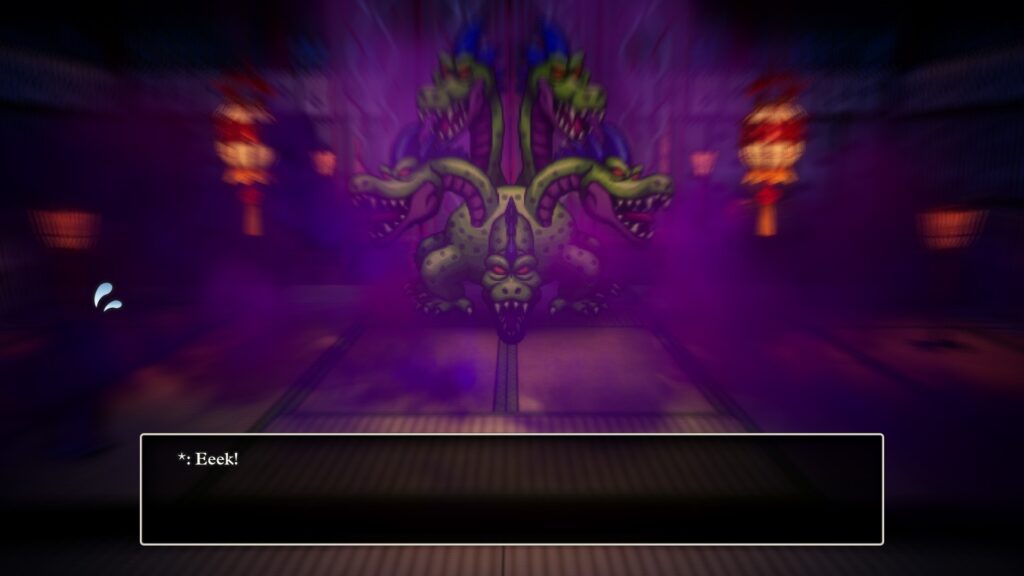
The difficulty is generally superb, but Dragon Quest III is still an old school RPG underneath the remake. Sometimes the game expects you to grind. Sometimes a boss suddenly acts as a gigantic wall. And sometimes you wander somewhere you probably should not have visited yet and discover this approximately three seconds before everyone dies.
But those moments can be extremely satisfying. The game gives you many ways to improve. Levels help, obviously, but so do better equipment, new spells, vocation development and understanding how a boss behaves.
That means a difficult boss can feel completely different after another hour or two of preparation. The remake also includes multiple difficulty options, so players who mainly want the adventure are not completely trapped by the old school challenge.
Monster Wrangler was extremely powerful during our experience, particularly once enough friendly monsters had been found. It can become one of those vocations where you start wondering why everyone else bothered bringing normal weapons. Still, having a slightly ridiculous option in a giant single player JRPG is hardly the worst crime imaginable.
Pacing of the game
The opening is relatively structured. You travel from place to place, build the party and gradually gain access to more of the world. Then you get the ship.
Suddenly, Dragon Quest III becomes much more open. The six orb section was one of my favourite parts to watch because the game gives you freedom over how you approach it. There are clues and natural routes, but you do not simply receive six numbered objectives telling you exactly where to go in sequence.
Explore, find something, get horribly murdered. Maybe go somewhere else. Come back later. It feels like an adventure.
The pacing slows whenever grinding becomes necessary, but even then there are usually several things you can combine. Search for monsters, hunt equipment, explore optional areas and gain experience along the way rather than simply walking in circles until numbers increase.
Innovation and uniqueness
What is remarkable is how influential many of these systems originally were.
Party creation, class changes and a large open section where the player determines their own route may not sound revolutionary in 2026, but Dragon Quest III originally helped establish ideas that later became normal throughout the genre.
The remake wisely does not throw those systems away. Instead, it modernizes them. Friendly monsters and Monster Wrangler give returning players something genuinely new, while quality of life improvements make exploration and combat easier to manage without turning the game into something unrecognizable.
It feels old school without feeling ancient.
Controls and user interface
The controls are straightforward and work exactly as they should for a turn based RPG. Menus are clear, equipment is easy to manage and combat commands are presented without unnecessary clutter.
There are also modern conveniences that make an enormous difference across such a long game. Faster battle options help when grinding or travelling through weaker areas, and objective information prevents the old school structure from becoming completely impenetrable.
The game still expects the player to investigate and occasionally think about where to go.
Microtransactions
There are no microtransactions interfering with progression.
No Dragon Gems.
No €4.99 Metal Slime Experience Booster.
No premium Monster Wrangler pass.
You buy the RPG and the RPG is there.
Rating
After combing through many of the mechanics, the pacing, and other factors of this game, I rated the gameplay and mechanics with a 9.5.
Graphics and art style
Quality of graphics and art direction
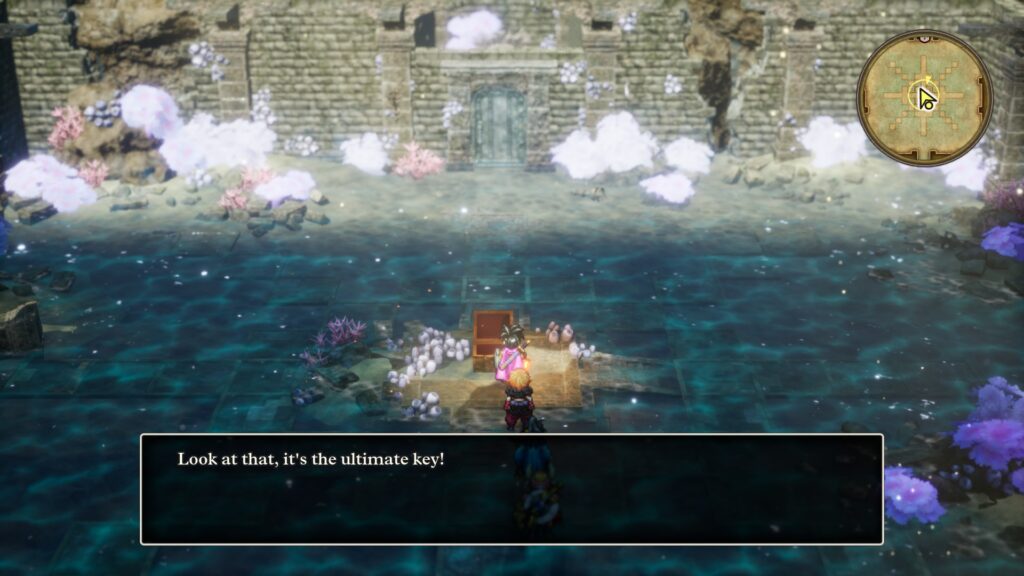
This game looks amazing.
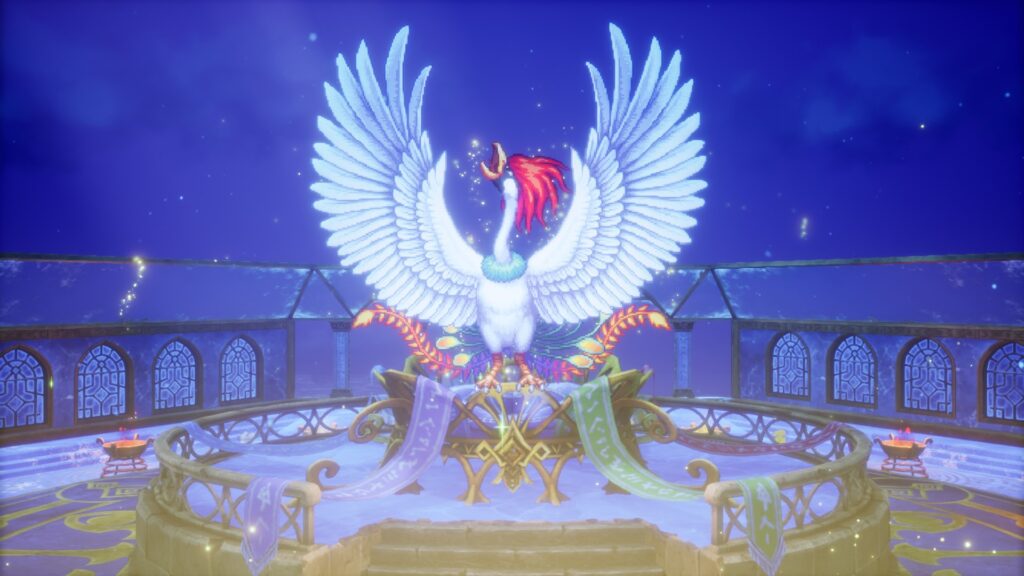
What makes that even more impressive is looking at where Dragon Quest III started. The original already looked good for its era, but the HD 2D treatment transforms those old locations into something that feels both nostalgic and modern.
The character sprites remain recognizably old school, while environments gain lighting, depth, detailed architecture, water, vegetation and atmospheric effects.
It is exactly the kind of remake I like. The developers did not look at the original and decide everything needed to become realistic 3D humans with individual nose hairs.
They preserved its identity.
Technical performances
The game loads enormous numbers of battles, locations and environmental transitions over a very long adventure without the technical side becoming the main thing you think about.
That is exactly what I want from a JRPG.
Environment and design uniqueness
The environments are probably where HD 2D shines brightest.
Castles feel grand. Small villages feel cozy. Caves become dark and atmospheric. Deserts genuinely feel dry and hostile. The overworld retains that classic RPG map appearance while now having much more detail.
Towns inspired by different regions also give the journey a sense of travelling across an actual world instead of moving between differently colored collections of houses. Secret spots and sparkly locations further encourage you to inspect that world rather than treating it purely as scenery.
Rating
It took me some time to give the graphics and art style an objective rating. There are many things to consider, but ultimately, I rated this section with a 9.5
Sound and music
Music score and how it contributed to the game
Dragon Quest. I can still hear that overworld travelling music.
The series has such a recognizable musical identity that wandering across the world map almost immediately feels like Dragon Quest, even if you have not touched the series for a while. The remake uses orchestral arrangements, and they fit the huge adventure beautifully.
The overworld theme makes travelling feel important. Town music provides relief after dangerous journeys. Battle themes give even random encounters enough energy to keep the traditional combat moving.
Sound effects quality
The sound effects carry that familiar Dragon Quest personality. Menu confirmations, attacks, spells, healing, enemy actions, and level-ups all have clear feedback. Even simple actions feel satisfying because the series has spent decades establishing its own audio language.
Monster noises also help the enormous bestiary feel more alive. The sound effects are not bombastic in the way of some modern action RPG, but they do not need to be.
Voice Acting
The remake adds voice acting to important event scenes, available in English and Japanese. That helps modernize the story without turning every NPC conversation into a twenty minute cutscene.
The approach fits Dragon Quest III particularly well. Most of the adventure still moves at a traditional RPG pace, but important story scenes gain extra personality and emotion.
Ortega especially benefits from the expanded presentation because his story feels more substantial than it did in older versions.
Rating
After a lot of consideration, I rated the sound and music section with a 9.
Replayability
Game Length and content volume
A straightforward main story run can take roughly 35 to 40 hours, but that number does not represent everything the remake contains.
If you explore thoroughly, search for friendly monsters, and spend time building your party, it can easily go well beyond that. Then comes the postgame.
Players going for everything can push toward the 100 hour range, especially when trying to finish optional challenges and maximize characters. That is enormous value for a remake of a game originally released in 1988.
Extra Content
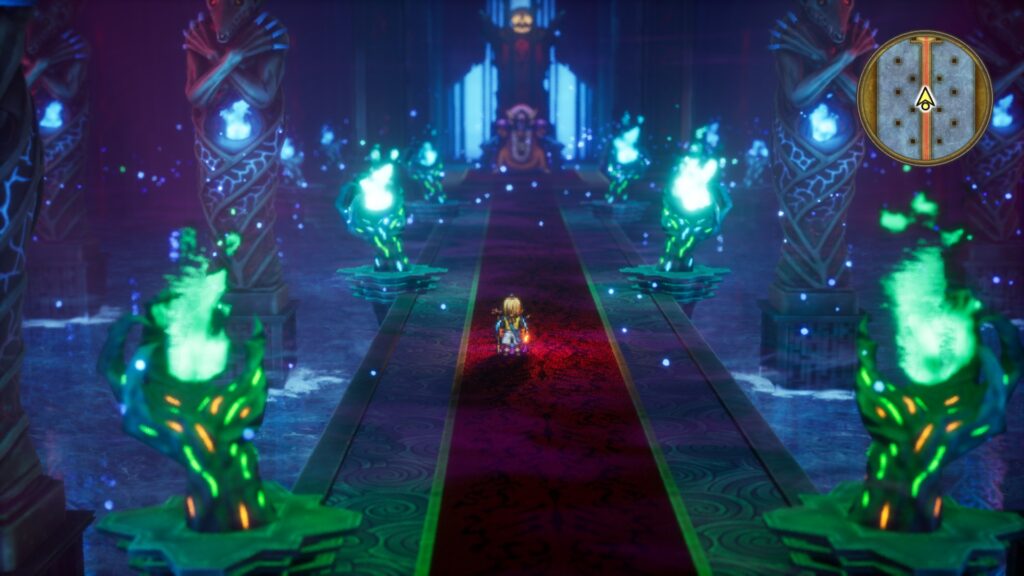
Friendly monsters are probably my favorite optional addition.
There are many scattered across the world, sometimes hidden in obvious locations and sometimes requiring certain conditions. Finding them expands your monster roster and feeds into the Monster Arena and Monster Wrangler systems.
The Monster Arenas then give those discoveries another purpose by allowing your collected creatures to compete. There are also secret locations, optional equipment, medals, exploration rewards, and the postgame itself.
The remake does not simply stretch the original campaign. It gives you additional systems worth engaging with.
Replay value
The vocation system alone gives another playthrough plenty of possibilities. Maybe next time you build around different spellcasters. Maybe use a Merchant. Maybe create a ridiculous physical party. Maybe lean heavily into Monster Wranglers. Maybe attempt a smaller party.
You can even take only the Hero if you really hate yourself. That flexibility makes Dragon Quest III much more replayable than a JRPG where every character joins with a predetermined job and progression path.
Compared to many modern JRPGs, it also has less pressure to watch the exact same enormous set of cutscenes again. The adventure is driven as much by exploration and party building as by narrative.
Rating
After thoughtful consideration, I decided to rate the replayability and game length of Dragon Quest III HD-2D with a 9.5.
Suggestions and comparisons
Suggestions and feedback
There honestly is not much I would fundamentally change. The entire point of this remake is that it preserves an old school JRPG while sanding down some of the roughest edges, and it accomplishes that very well.
The difficulty can occasionally jump considerably, so a little smoother signaling around certain bosses could help. You can be traveling happily and suddenly discover that the next enemy has been drinking steroids since 1988. Some of the friendly monsters could perhaps also have slightly clearer hints. Searching is fun, but there is a difference between exploration and checking every suspicious shrub at every possible time of day.
Beyond that? Keep doing this. Do not completely redesign classic games merely because they are old.
Comparisons
Compared to modern Final Fantasy, Dragon Quest III feels almost stubbornly traditional. That is part of its strength.
While Final Fantasy has experimented with real time action, huge cinematic sequences and completely different battle systems between entries, Dragon Quest has generally remained comfortable being a turn based JRPG. For Simone, that is one reason the series appeals more.
Compared to newer Dragon Quest games such as Dragon Quest XI, III obviously has a simpler central story and less characterization for party members. But it makes up for that with freedom. Your party belongs to you, and character development comes from how you build them.
Compared to other HD-2D games, Dragon Quest III also demonstrates why the style works so well for remakes. It looks modern without pretending the original visual identity was something that needed to be thrown away.
And compared to the original Dragon Quest III, this is simply enormous. Monster Wrangler, friendly monsters, Monster Arenas, expanded story material, voice acting, orchestral music, and quality of life improvements give even returning players plenty of reasons to make the journey again.
Personal experiences and anecdotes
One of the moments that stuck with us was the boss around the volcano. That thing was a wall.
Simone went in, fought it, and discovered very quickly that the party simply was not ready. It was one of those proper old school RPG moments where you realize that determination alone is not going to magically create another thousand points of damage.
So she went away. She gained levels. Learned new spells. Improved equipment. Worked on the party. Then she came back. And smashed it.
Those moments are what make RPG progression satisfying. The game does not merely tell you that your characters have become stronger because the number beside level increased. You feel it when something that previously destroyed you suddenly becomes manageable.
We had the same enjoyment from the friendly monster hunt. Finding another creature hidden in a secret location or finally reaching one that required a particular time of day kept giving exploration little rewards. That combination of progression and discovery carried the adventure for a very long time.
Rating
Taking in all the personal experiences with it Dragon Quest III HD-2D, I give it a personal rating of 9.5.
Last words
Pros
- The HD-2D visuals are absolutely beautiful while respecting the original art style.
- Creating your own party gives the adventure enormous flexibility.
- The vocation system allows excellent long term character building.
- Monster Wrangler is a fantastic new addition to the remake.
- Hunting friendly monsters makes exploration much more rewarding.
- The open ended six orb section gives the player genuine freedom.
- The enormous world contains tons of secrets, equipment and optional discoveries.
- The orchestral Dragon Quest soundtrack remains fantastic.
- There is a huge amount of main game and postgame content.
Cons
- Some difficulty spikes can suddenly require a considerable amount of grinding or preparation.
- A few old school systems and obscure discoveries may feel too cryptic for players unfamiliar with classic JRPG design.
Dragon Quest III HD-2D Remake is precisely the kind of remake an old game deserves. It respects what made the original important instead of replacing everything with a completely different game. At the same time, it adds enough modern features, new systems, and extra content that this feels like far more than an old RPG wearing expensive new clothes.
Simone loves Dragon Quest, and this game gave her exactly the kind of massive JRPG adventure she wanted. Building your own party, changing vocations, searching for friendly monsters, collecting the orbs in your own way and gradually growing strong enough to destroy bosses that previously flattened you all make the adventure incredibly satisfying.
And then you realize there is still more game. And more. And postgame. For something built on a game from 1988, the amount of content here is honestly ridiculous.
FINAL RATING

9.5
Please let me know what you think of Dragon Quest III HD-2D Remake in the comments!
I hope you enjoyed reading this review. I hope to see you in the next review!
If you liked reading this review, maybe you would like to share this review with your friends.