
Introduction
Basic information
Developer Name: Nintendo
Full Name: Luigi’s Mansion
Release Date: November 18, 2001
Released on: Nintendo GameCube, Nintendo Switch 2 via Nintendo Switch Online + Expansion Pack
Cross Play: No
Initial thoughts
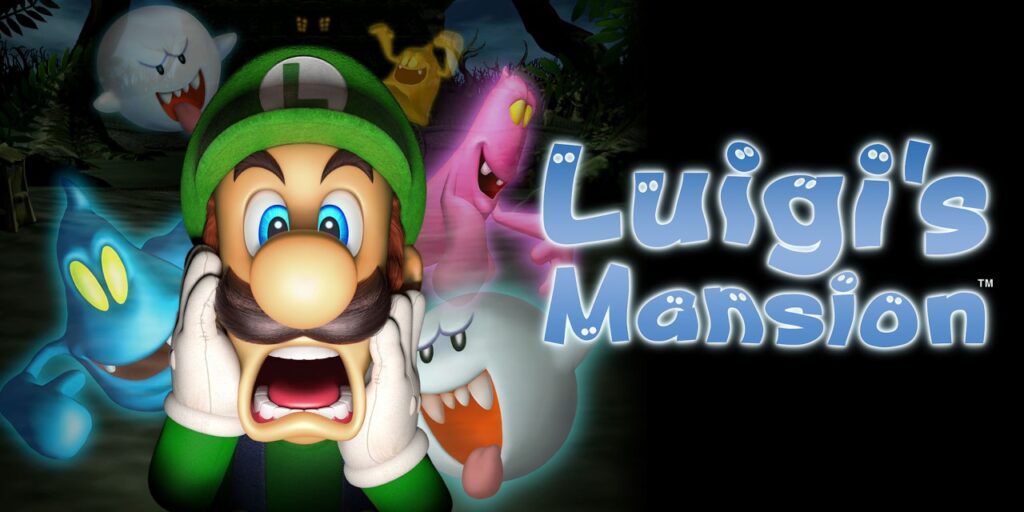
I have played this game so many times, and I have loved it every single time. Some games age because of mechanics, some because of nostalgia, and some because they capture a very specific atmosphere that later sequels never quite reproduce. Luigi’s Mansion belongs firmly in that last category. It still has a kind of charm that Luigi’s Mansion 2 and 3 never fully recreated for me, because the original actually tries to be eerie. It wants the mansion to feel haunted, lonely, and slightly uncomfortable, rather than constantly drowning everything in goofy, over designed ghosts and exaggerated slapstick.
That tone matters more than people sometimes give it credit for. The first game does not just throw Luigi into a ghost catching setup and call it a day. It builds a strange little haunted house identity around him. He is scared, underqualified, and completely out of his depth, and that is exactly why the whole thing works so well. Luigi is finally in the spotlight, but the spotlight is dim, dusty, and full of portraits that may or may not want to murder him.
Playing it again through Nintendo Switch Online on Switch 2 was a wonderful reminder of how sturdy the game still is. The service version benefits from the clearer presentation and convenience of the GameCube classics app on Switch 2, while the core game remains exactly as memorable as ever. Nintendo specifically notes that the GameCube library on Switch 2 offers clearer image quality and higher resolution than the original releases, and that definitely helps when revisiting a game this atmospheric.
Story and setting
Plot overview
Iconic, of course. Luigi finally gets the spotlight, and Nintendo immediately throws him into a haunted mansion nightmare because apparently that is what happens when the poor guy gets his own game. The setup is simple and still brilliant: Luigi wins a mansion in a contest he never entered, arrives expecting something wonderful, and instead finds a ghost-infested house where Mario has gone missing and only Professor E. Gadd seems remotely prepared for what is happening.
That premise does not need to be complicated because it is so immediately effective. It gives Luigi a reason to be there, gives the player a reason to explore, and gives the whole adventure a playful but eerie structure right from the start. It is a ghost story for Nintendo fans, but one that still has enough bite to stand apart from the more openly cartoonish direction the sequels leaned into.
World building and immersion
The mansion itself is one of Nintendo’s great environmental achievements. It is not an open world, not a giant RPG map, and not a sprawling modern horror setting, but it feels memorable in a way many much larger games do not. Every hallway, room, hidden nook, and strange little portrait contributes to a cohesive haunted house identity.
That is the key thing the sequels miss for me. They often feel bigger, busier, and more theatrical, but the original feels more intimate and therefore more believable as a haunted space. The mansion is weird, but it still feels like a place. It feels old, layered, and full of stories that existed before Luigi stepped inside. That is why exploring it remains so satisfying even after multiple playthroughs.
Character development
This is not a giant narrative game full of long arcs, but Luigi is wonderfully characterized throughout. Official Nintendo descriptions of the original release itself framed the game as Luigi finally stepping out from Mario’s shadow into his own starring role, and that still feels exactly right.
He is not heroic in the usual Nintendo sense. He is nervous, reactive, and clearly wishes he were anywhere else. That is exactly what makes him so lovable. His entire character arc is basically this scared brother surviving room after room because no one else is going to do it. It works beautifully.
Emotional impact
There is real emotional (nostalgic) charm here despite how light the premise is. Luigi’s fear is funny, yes, but it is also strangely endearing. His stammering, his hesitation, the way he calls out Mario? into empty rooms, it all gives the game a personality that is far more memorable than if he were just a silent vacuum operator.
There is also a very specific kind of emotional warmth in revisiting a game like this. It is spooky without being cruel, funny without becoming obnoxious, and nostalgic without relying purely on memory to work. It still earns its effect.
Rating for story and setting
I have visited multiple aspects of the story, and after some thought and objective thinking, I rated the story and setting with a 9.7.
Gameplay and mechanics
Core gameplay mechanics
For a GameCube launch era game, Luigi’s Mansion is still surprisingly inventive. The core loop of stunning ghosts with the flashlight, vacuuming them up, tugging against their resistance, and carefully managing room interaction remains distinct even now. Nintendo itself continues to describe the game in terms of Luigi shining his light and sucking up ghosts in his search for Mario, and that simple summary still captures why the game is so satisfying.
The genius of the design is that the ghost catching never feels entirely passive. You are not just pressing a button and watching an animation. You are actively struggling with the ghost, reacting to its movement, and managing the room around you. That makes encounters physical in a way that still holds up. Add in the environmental interactivity, shaking curtains, opening drawers, vacuuming up weird little details, and uncovering hidden money, and the game becomes far richer than its simple premise first suggests.
And yes, if you hear a strange sound, who are you gonna call? Luigi. Because somehow this terrified man with a vacuum is the most qualified person in the building.
Difficulty and balance
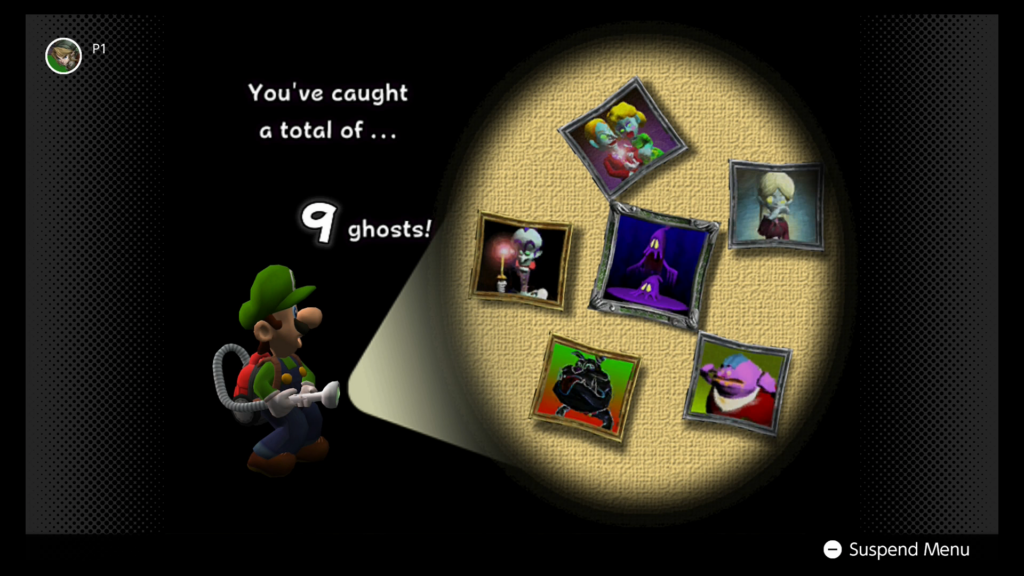
The game strikes a nice balance most of the time. It is not brutally difficult, but it is not mindless either. Portrait Ghosts require observation, regular ghost rooms can punish sloppy movement, and some later moments absolutely expect the player to understand how the vacuum mechanics work properly rather than just mashing through.
That balance becomes even more impressive when you start sequence breaking it, because the game is weirdly resilient. This time around I deliberately broke sequence by falling through the floor after the baby boss and going after ghosts and Boos earlier than intended, and instead of collapsing completely, the game mostly just shrugged and carried on. That kind of flexibility is something a lot of modern games no longer have.
Pacing of the game
The pacing is one of the original game’s best strengths. It is compact, but not rushed. The mansion opens in a satisfying rhythm, each area revealing more without losing the contained haunted house focus. It never becomes bloated, never overstays its welcome, and never feels like it needs to pad itself with a mountain of nonsense just to justify its runtime.
That compactness is part of why replaying it is so enjoyable. You can settle into its structure quickly, remember favorite rooms and ghosts, and appreciate how elegantly it unfolds.
Innovation and uniqueness
At launch, this game was such a weird and wonderful move for Nintendo. Instead of giving Luigi some safe side adventure, they built a gloomy ghost catching mansion crawler with puzzle elements, light horror atmosphere, environmental interaction, and a hero who clearly does not want to be there. It was a bold concept in 2001, and it still feels distinct now.
Even today, there are not many games that quite feel like Luigi’s Mansion. Plenty have copied pieces of it, but the whole package remains unusual.
Controls and user interface
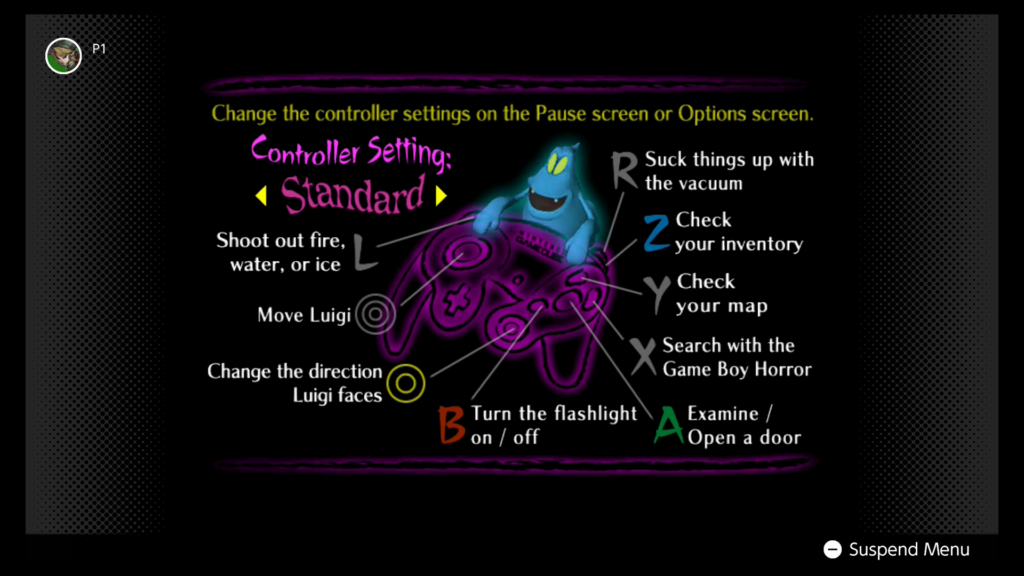
The controls still hold up remarkably well, especially in the context of the original GameCube design. Luigi’s movement, flashlight timing, vacuum control, and environmental interaction all remain readable and satisfying. Playing through the Nintendo Switch Online GameCube app also helps modern convenience, since the platform allows save state style suspension and cleaner access to the game itself. Nintendo’s Switch 2 GameCube service specifically emphasizes playing these classics anytime with modern convenience, and that absolutely benefits games like this.
The UI is simple and clean, which suits the game. It gives you what you need and gets out of the way.
Microtransactions
None. Just a haunted mansion, a cowardly hero, and a vacuum cleaner. Civilization once knew how to live.
Rating
After combing through many of the mechanics, the pacing, and other factors of this game, I rated the gameplay and mechanics with a 10.
Graphics and art style
Quality of graphics and art direction
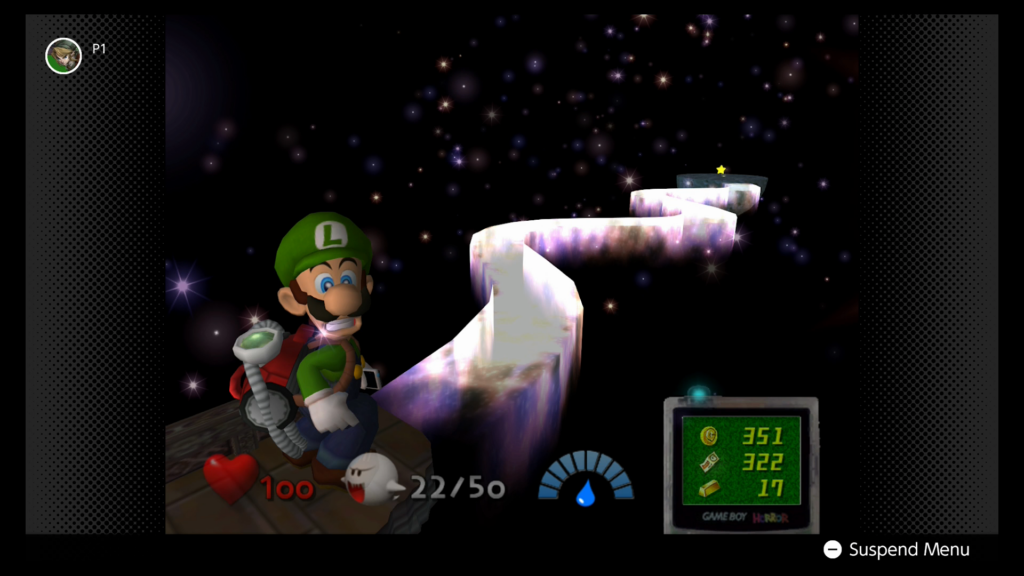
Way better than Luigi’s Mansion 2 and 3 for me, and I mean that sincerely. Those later games are technically more advanced, sure, but the original has stronger artistic discipline. Every room feels designed with purpose. Every corridor, bedroom, parlor, and hidden space contributes to the mansion’s identity. It is detailed in the exact right way, with enough personality to feel memorable and enough restraint to stay eerie.
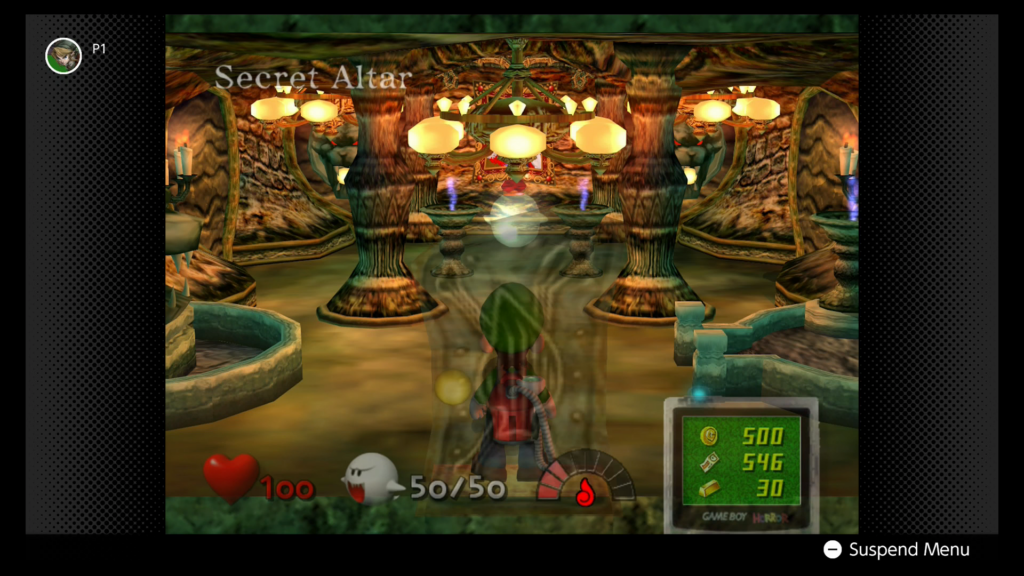
The original game also benefits from Nintendo’s early GameCube obsession with showing off lighting and expressive animation. Luigi’s flashlight beam, the environmental shadows, the ghost transparency, the dust and little visual details, all of it still contributes massively to the atmosphere.
Technical performances
The original GameCube version was already a technical showcase in its time, and the Switch 2 Nintendo Classics version makes it easier to appreciate those strengths again. Nintendo’s own description of the GameCube classics app points to clearer image quality and higher resolution than the original releases, and that helps this game especially because so much of its mood relies on lighting and room detail.
Environment and design uniqueness
This is the real star of the whole package. The mansion is unforgettable. It feels handcrafted, not procedurally expanded, not overstuffed, and not diluted by trying to be too many things. It is one haunted house, and Nintendo squeezed every ounce of personality out of it.
That singular focus is exactly why the game still feels so special.
Rating
It took me some time to give the graphics and art style an objective rating. There are many things to consider, but ultimately, I rated this section with a 10.
Sound and music
Music score and how it contributed to the game
Hmm… maa…rio? That alone is legendary. The soundtrack and ambient audio work hand in hand to create the game’s strange tone. It is not trying to be a giant orchestral horror score. Instead, it uses quiet, playful eeriness to constantly remind you that Luigi is a frightened man whispering into the dark.
The music never overwhelms the mansion. It haunts it just enough.
Sound effects quality
The sound design is excellent. The vacuum hum, the ghost noises, the environmental rattles, the little room interactions, all of it makes the mansion feel alive in the worst possible way. The game understands that atmosphere is not built only through visuals. Sound is a massive part of what makes rooms feel suspicious and memorable.
Voice Acting
There is not traditional dialogue, heavy voice acting, but Luigi’s vocal reactions are perfect. His muttering, humming, startled yelps, and desperate calls for Mario do more for character than many fully voiced scripts manage in longer games. Those tiny vocal touches are one of the reasons the original game remains so lovable.
Rating
After a lot of consideration, I rated the sound and music section with a 9.7
Replayability
Game Length and content volume
The game is not huge, and that is one of its strengths. It is long enough to feel substantial, short enough to replay, and dense enough that every room matters. In a gaming era filled with titles that confuse more with better, Luigi’s Mansion remains wonderfully focused.
Extra Content
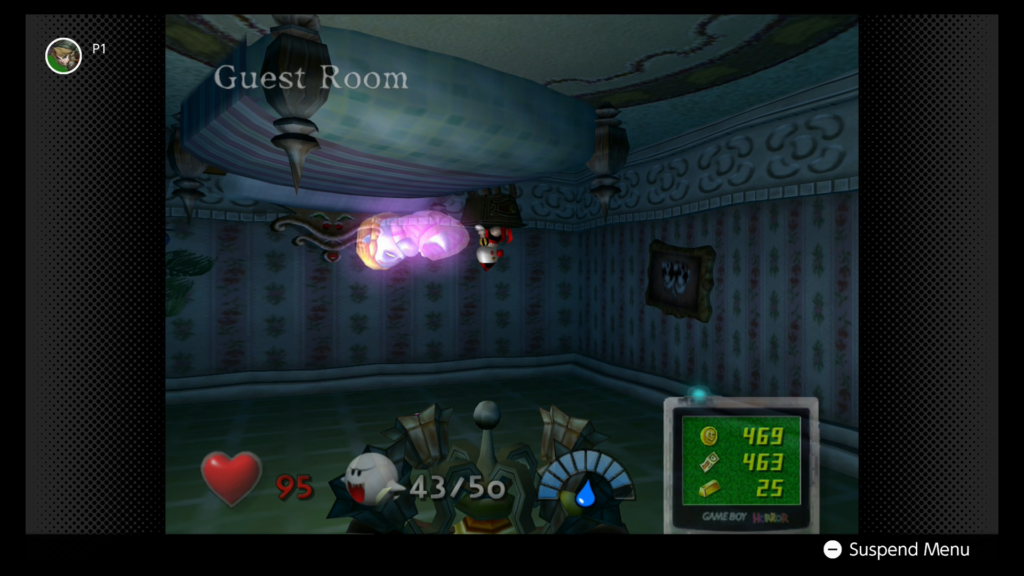
Hidden Mansion is exactly the kind of bonus mode I love: meaningful enough to justify another run, but not so overdesigned that it feels like mandatory postgame homework. The Portrait Ghost ranks, Boos, money totals, and different run goals also help a lot.
Replay value
Replayability is excellent, especially for a game of this size. The mansion is fun to revisit, the ghost catching remains satisfying, and the game’s structure makes multiple runs easy to enjoy rather than intimidating. It is one of those games where knowing the route does not ruin the fun, it enhances it.
And then there is the Hidden Mansion/mirror mode style reward structure after the first run, which gives the game extra replay value without bloating the core experience. Nintendo’s GameCube reissue descriptions and historical materials have always highlighted the game’s hidden unlockables and revisit appeal, and that still holds true.
Rating
After thoughtful consideration, I decided to rate the replayability and game length of Luigi’s Mansion with a 10.
Suggestions and comparisons
Suggestions and feedback
Honestly, the biggest suggestion is simply this: Nintendo should never forget what made the original special. The sequels are larger and more elaborate, but they lose some of the focused haunted house tension that makes the first game unforgettable. If the series ever wants to truly recapture its peak identity, it should look back here first.
Comparisons
Compared to Luigi’s Mansion 2 and 3, the first game is smaller but more atmospheric, more cohesive, and far more committed to actually feeling haunted. The later games are technically bigger and often goofier, but this one has stronger room design, stronger tension, and a much clearer personality. It is not just nostalgia talking. It is design clarity.
Personal experiences and anecdotes
This time around, I decided to do something a bit different. After beating the baby boss, you are normally supposed to continue and clear chapter 1 properly.Instead, I sequence broke it by falling through the floor, grabbing portrait ghosts I should not have had yet, and releasing Boos before doing that the intended way.
And honestly, that was hilarious. I kind of admire how the game gets whacked up by that kind of nonsense and still mostly just shrugs and goes, oh well, we’re doing it this way now. Modern games often softlock, explode, or crash when you dare to breathe in the wrong direction. Luigi’s Mansion just keeps going. There is something deeply charming about that kind of old-school sturdiness.
Rating
Taking in all the personal experiences with Luigi’s Mansion, I give it a personal rating of 10.
Last words
Pros
- Incredible haunted house atmosphere
- Luigi is perfectly characterized
- The mansion is unforgettable
- Ghost catching is still fun
- Great environmental detail
- Strong pacing
- Excellent lighting and presentation
- Fantastic sound design
- Charming vocal performance from Luigi
- Compact and replayable structure
- Hidden Mansion adds value
- Distinct identity even now
- Better atmosphere than the sequels
- Sequence breaking is weirdly fun
- Still one of Nintendo’s most unique games
- Switch 2 Nintendo Classics presentation helps it shine again
Cons
- It is relatively short
- Some players may prefer the broader variety and scale of later entries
Luigi’s Mansion is still a masterpiece of focused design, atmosphere, and character. It does not need to be bigger than its sequels, because it is better at knowing exactly what it wants to be. It is spooky, funny, elegant, and endlessly charming, and revisiting it through Nintendo Switch Online on Switch 2 only reinforces how well the original game has aged.
Luigi finally got the spotlight, and somehow Nintendo accidentally made one of its most distinctive classics in the process.
FINAL RATING

10
Please let me know what you think of Luigi’s Mansion in the comments.
I hope you enjoyed reading this review. I hope to see you in the next review!
If you liked reading this review, maybe you would like to share this review with your friends.
Definitely a high recommend for casual gamers and a amusing good time.
It is indeed a good amusing time!
I like how you highlighted the playful-but-eerie atmosphere and explained why the mansion’s structure makes exploring so satisfying.
It is indeed eerie for a Nintendo game.
No need to call the Ghostbusters anymore .. Luigi is much cheaper 😀
That’s because he robs you blind and sucks up all your money behind your back.
Sounds like Luigi’s Mansion is a great series to get into. Great gameplay, great charm.
It is indeed a very fun game.
I remember that it was a difficult game for me when it first came out.
I totally agree that it’s a great game!
Luigi busters!
Great game to play and having fun with mario is always good
Have fun kidnapping Mario.
Without sufficient knowledge of the franchise, I can only hope that the game is as perfect as you say, but with the perfect score, I can’t help wondering if nostalgia had something to do with it. Or it may be my personal bias because I do think that nothing is perfect and beyond the scope for improvement… However, with a quick Google search, I found low gameplay hours and disappointing boss fights as some criticism for this game.
They did the best they could in that era. It was all experimental.
It seems like not bad game with unique design, but it’s a pity that so short. First part is also little old, maybe remake in HD/4k needed and Steam edition 😊. Fortunately until that time we have Ghostbusters: The Video Game Remastered.
A remake would be awesome!
This game, and the score you gave it, makes it clear that Luigi is as important as Mario. If only he wasn’t so ignored and got the attention he deserves.
I like him, but I wonder, do you like him or Wario more? XD
I think Waluigi is the best, duh!
Finally ten out of ten, I would play it but… On Steam. 😛
Pssst… you can!
Definitely one of Nintendo’s most unique game ideas! It had a lot of charm and funny encounters with the ghosts! It was quite scary as a child but had enough silliness to be able to play! (Though I don’t think I ever finished it)
Maybe you should finish it one day!
That’s a real good old game
It is indeed old and good!
Man, this review really makes me want to try this game… 😅
Great job with the review as always! 😄
I am glad you like the review!
This game is really very good. And I haven’t played it yet…
Time to play it!
The Luigi’s Mansion games look so incredibly cute. Also Luigi isjust an awesome character: true bravery – facing your fears for the ones you love <3
Luigi is indeed amazing!
If there’s somethin’ strange
in your neighborhood
Who you gon’ call? LU-IGI
If there’s somethin’ weird, and it don’t look good
Who you gon’ call? LU-IGI
Luigi busters to your service!
Been meaning to play this classic and would not mind if it is a short experience 🙂
You should really try it!
Another classic, that I never played myself. I think in general that older Nintendo games are very balanced in terms of gameplay. Also back then the scary house setting was a nice twist. =)
It was a lovely twist on games from back then.