
Introduction
Basic information
Developer Name: Nexon Korea / Able Games
Full Name: MapleStory: Idle RPG
Release Date: November 6, 2025
Released on: iOS, Android
Cross Play: Yes, through the shared mobile server structure.
Initial thoughts
I was about to get operated on, which was already shit. My wrist needed surgery, and I was looking for something I could do on my phone with one hand while recovering. That is how I found MapleStory: Idle RPG, or as I ended up calling it in my head after many, many hours: Maple Idle, the endless machine of surely the next level is close lies.
The reason it hooked me at all is simple: my wife and I played a lot of MapleStory back in the day. That nostalgia is powerful. Seeing the Maple style again, seeing familiar classes, hearing that soft echo of the old grind, and being able to play it passively made it feel like the right game at the right time. I could poke at it with one hand, let it idle, check progress, and slowly climb upward.
And then somehow, this became a 1000+ hour thing. That sounds insane, and it is. The worst part is that even after that much time, both my wife and I still did not reach the fourth job. She started a bit later and made a Paladin, while I played a Hero. We kept going far longer than the game deserved because the Maple nostalgia was real, the idle structure was easy to return to, and there were moments of fun. But the EXP curve? Absolutely shit. Legendary shit. Museum grade shit.
Story and setting
Plot overview
You boot up the game. You idle. You close the game. You reopen it. You idle again. Repeat until your soul leaves your body.
There is technically a MapleStory world underneath all of this, but this version barely uses it in a meaningful story driven way. There are no real side quests or narrative threads like you would expect from the original MapleStory. The game leans almost entirely on progression systems, idle rewards, bosses, events, companions, and numbers going up.
That is not automatically bad for an idle game. Idle games often survive on progression rather than plot. But because MapleStory has such a rich background and so much nostalgia attached to it, the absence of meaningful story content feels like a wasted opportunity.
World building and immersion
The game does use the familiar MapleStory look and feel, which helps a lot. The cute character designs, class fantasy, monsters, and broad visual identity are all doing heavy lifting. If this were not wearing the MapleStory skin, I doubt it would have held my attention anywhere near as long.
But immersion is thin. You are not really exploring Maple World. You are watching your character grind through systems while progress bars crawl forward. The original MapleStory made grinding feel like being part of a weird little online world. Maple Idle makes grinding feel like a spreadsheet dressed as a mushroom monster.
Character development
There is almost no meaningful character development. Your Hero becomes stronger, Simone’s Paladin becomes stronger, numbers go up, gear improves, and systems unlock, but there is no narrative arc. The character progression is mechanical only.
That can still work in an idle RPG, but only if the mechanical progression feels satisfying. Here, it eventually becomes so slow that even character growth starts feeling hollow.
Emotional impact
The emotional impact mostly comes from nostalgia and frustration. The early hours feel comfortable because the game brings back memories. It scratches that I remember this itch. It also helped during recovery because I needed something low input and easy to check while dealing with my wrist.
But over time, the emotional tone changed. The game went from this is a nice idle distraction to why am I still doing this when one level takes two weeks? That is not good progression. That is Stockholm syndrome with EXP bars.
Rating for story and setting
I have visited multiple aspects of the story, and after some thought and objective thinking, I rated the story and setting with a 4.
Gameplay and mechanics
Core gameplay mechanics
The core idea is simple: your character battles automatically, gains resources, levels up, clears stages, fights bosses, participates in party quests, handles events, and slowly grows through gear, companions, upgrades, and class progression. Google Play describes the game around auto Battle & auto Growth, with your character continuing to grow even when you are away, and that is absolutely the central promise.
At first, this works. The early progression is fast enough to feel satisfying. You log in, claim rewards, upgrade something, push a bit further, and feel like you made progress. That is the idle game sweet spot.
Then the game slows down. Hard. Around the higher levels, especially once you get near level 95 and start aiming toward level 100 for fourth job advancement, progress becomes absurd. Leveling once can literally take two weeks. That is not idle pacing. That is watching a glacier fill out a job application.
The worst part is that while you are waiting, you are not meaningfully progressing much elsewhere either. So many systems depend on money, resources, event rewards, or limited progression structures that your character can feel stuck everywhere at once.

Difficulty and balance
The game is not difficult in the traditional sense. It is difficult because it is slow, resource starved, and clearly designed to push spending. You do not lose because you played badly. You lose because the game decided your next meaningful upgrade is behind a mountain of resources, time, or paid convenience.
That is a very different kind of difficulty, and it feels much worse. A hard boss can be exciting. A brutal progression wall that takes weeks to climb unless you spend money is not exciting. It is just exhausting.
The event design also creates problems. I even made a second character while waiting, but that did not help much because some events could only be applied to one character. That makes experimentation feel punished. You want to try another class? Too bad, the game’s reward structure does not really support that cleanly.
Pacing of the game
The pacing is the game’s biggest failure. Idle games are supposed to slow down over time, yes, but they still need to provide steady little hits of progress. Maple Idle eventually reaches a point where the next level, next job advancement, next upgrade, and next meaningful milestone all feel too far away.
The server merge was another punch in the face. I was near rank 50 with my Hero, and then bam: merge happens, and there go the rewards. That kind of thing makes long term investment feel unstable. If a game already asks for massive time commitment, it needs to respect that time. This did not feel respectful.
Innovation and uniqueness
As an idle version of MapleStory, the idea is solid. Turning a famously grindy MMO into an idle RPG makes sense. In fact, it almost sounds perfect: keep the charm, reduce the manual grind, and let players progress passively.
But the execution leans too hard into mobile monetization and not enough into meaningful idle satisfaction. The game does not feel innovative so much as inevitable. Of course MapleStory became an idle game. Of course it wants your wallet. Of course the EXP curve becomes a crime scene.
Controls and user interface
The controls are simple enough, and that is one of the reasons I played it during wrist recovery. I could manage it with one hand, check menus, claim rewards, and keep things moving without needing intense input. That accessibility on a basic control level was genuinely useful for me.
The problem is that the UI eventually becomes another layer of routine. Claim this, tap that, check event, upgrade this, fail to afford that, return later. It works, but it does not feel elegant enough to make the grind less painful.
Microtransactions
This is where the game shows its teeth. The monetization is extremely aggressive. I bought a membership pass twice because I do believe in supporting games I spend time with. That is fair. If I play something for hundreds of hours, I do not mind paying something.
But there is a huge difference between supporting a game and emptying your wallet into an endless hole. Maple Idle asks for godly amounts of money if you want to keep up properly. The game is free to play, but the deeper you get, the more obvious it becomes that the slow progress is not just design, it is pressure.
Rating
After combing through many of the mechanics, the pacing, and other factors of this game, I rated the gameplay and mechanics with a 4.5.
Graphics and art style
Quality of graphics and art direction
Maple, I guess?
That sounds dismissive, but it is also one of the game’s strengths. The MapleStory art style is still charming. Cute characters, recognizable class visuals, colorful monsters, and nostalgic environments all help the game feel warmer than its systems deserve.
The problem is that the art style carries too much of the emotional load. It reminds you of a better, richer MapleStory experience while the actual game feeds you idle progression and monetized waiting.
Technical performances
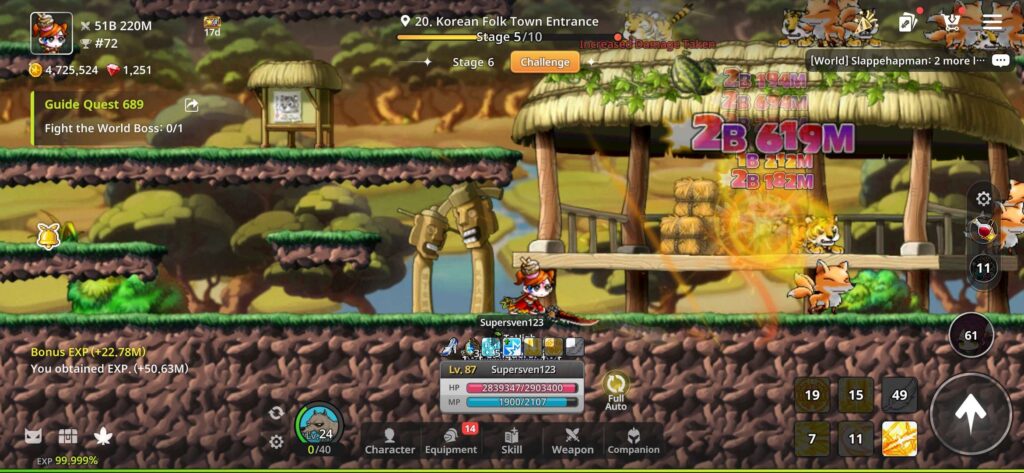
Performance is generally fine for a mobile idle game. It runs, it idles, it loads, and it lets you check progress without too much fuss. There were no huge technical disasters that defined the experience.
The technical issue is more systemic than performance based. It is not that the game crashes constantly. It is that the entire progression machine feels tuned around friction.
Environment and design uniqueness
The environments and designs borrow from the MapleStory identity, which gives the game immediate recognition. But because you are mostly idling through content rather than actively exploring, the environments become background flavor more than meaningful places.
That is one of the saddest parts. MapleStory worlds can be memorable. Here, they feel like wallpaper for an EXP curve.
Rating
It took me some time to give the graphics and art style an objective rating. There are many things to consider, but ultimately, I rated this section with a 6.0.
Sound and music
Music score and how it contributed to the game
The music is fine in theory, but I muted the game most of the time. That is not entirely because the music is bad. It is because idle games are played in the background, checked repeatedly, and left running for long periods. Even decent audio can become annoying when you hear it constantly.
Sound effects quality
The sound effects became more annoying, especially with fast attacks. When your character is constantly hitting enemies, effects can turn into repetitive noise very quickly. Again, that is part of the idle structure problem. Something that sounds fine for five minutes can become unbearable over hundreds of hours.
Voice Acting
There is no meaningful voice acting focus that carried the experience. This is not a story driven mobile RPG with big voiced scenes. It is a progression machine with Maple flavor.
Rating
After a lot of consideration, I rated the sound and music section with a 4.5.
Replayability
Game Length and content volume
The game offers a decent length for a casual title, with plenty of side quests and hidden secrets to discover. However, the main story can be completed relatively quickly if you focus solely on the objectives.
Extra Content
There is a good amount of extra content, including collectibles and side quests, that add replay value to the game. Exploring every nook and cranny of the city is rewarding, especially for completionists.
Replay value
Replayability depends on how much you want to spend and how much patience you have for slow progress. In theory, there is replay value through different classes, alternate characters, party quests, bosses, events, and long term growth.
In practice, the game discourages experimentation because events and rewards can be locked to one character. If you make an alt, you may quickly realize that the game is not built to support that smoothly unless you are prepared to split resources, time, and possibly money. That makes replayability feel worse than it should.
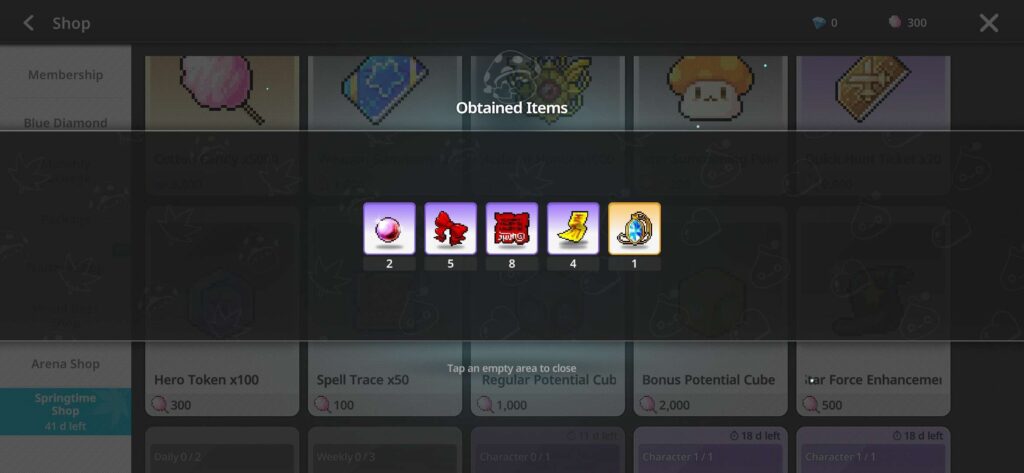
For low spenders or free to play players, replay value drops hard once the walls appear. For whales, there may be more to do, but that is exactly the problem. A good game should not feel like its best pacing is reserved for people willing to pay absurd amounts. And we are talking dollars in the thousands, tens of thousands, and even more.
Rating
After thoughtful consideration, I decided to rate the replayability and game length of this game with a 4.5.
Suggestions and comparisons
Suggestions and feedback
The game desperately needs more meaningful progression for free to play and low spend players. If someone plays for over 1000 hours, they should not still feel locked away from a major milestone like the fourth job advancement. That is ridiculous.
Events should support multiple characters better. Progression should not feel punished if you try an alt. Server merges should not wipe away meaningful ranking reward chances. The game also needs more things to actively do that feel rewarding without requiring huge spending or endless waiting.
The monetization should be less aggressive. Let people support the game without making the whole structure feel like it was designed by someone staring at a whale hunting spreadsheet.
Comparisons
Compared to classic MapleStory, this captures the look but not the soul. Classic Maple was grindy too, absolutely, but it was also social, exploratory, and full of weird little adventures. Maple Idle keeps the grind and pares down too much of the magic.
Compared to other idle RPGs, it offers the advantage of the MapleStory name and style, but it suffers from the same mobile genre sins: slow walls, monetization pressure, event FOMO, and progress that becomes more about waiting than playing.
Personal experiences and anecdotes
The best moments were doing party quests with my wife or running bosses together. Those parts were genuinely enjoyable because they felt like shared progress. She made a Paladin, I played a Hero, and for a while it felt nice to have a low input Maple game we could both check in on.
But the longer we played, the more the grind wore us down. Over 1000 hours should mean something. It should lead to major milestones, new jobs, and satisfying progress. Instead, we were still stuck before fourth job, watching levels take absurd amounts of time while the game kept dangling paid acceleration.
That is why this review sounds so angry despite the fact that I played so much. I did not hate every moment. I hated how much the game wasted the goodwill it had earned.
Rating
Taking in all the personal experiences with Maplestory IdleRPG, I give it a personal rating of 4.
Last words
Pros
- MapleStory art style still has charm
- Easy to play with one hand, which helped during wrist recovery
- Nostalgia is strong for old Maple players
- Party quests with Simone were fun
- Boss runs could be enjoyable
- Idle structure works well in the early game
- Multiple classes give the game some long term appeal
Cons
- EXP curve becomes absolutely awful
- Reaching fourth job takes far too long
- Monetization pressure is extreme
- Progression feels designed around spending
- Events often favor one character and punish alts
- Server merge damaged ranking reward progress
- Resource costs become ridiculous
- Gameplay becomes mostly waiting
- Sound effects get annoying fast
- Story content is basically nonexistent
- The MapleStory world feels underused
- Low spenders and free to play players hit brutal walls
- 1000+ hours without fourth job is absurd
MapleStory: Idle RPG is not complete garbage. That is the annoying part. It has charm, nostalgia, and enough early progression to hook you. It helped me during wrist surgery recovery because I could play it with one hand, and there were genuinely fun moments doing party quests and bosses with Simone.
But after more than 1000 hours, the truth is obvious: the progression curve is terrible, the monetization is too aggressive, and the game asks for far too much money if you want to move at a reasonable pace. It takes the cozy nostalgia of MapleStory and turns it into an idle treadmill that eventually stops feeling rewarding.
I played it a lot. I enjoyed some of it. I also never want another mobile game to treat my time like this again.
FINAL RATING

4.8
Please let me know what you think of Maplestory IdleRPG in the comments!
I hope you enjoyed reading this review. I hope to see you in the next review!
If you liked reading this review, maybe you would like to share this review with your friends.
If an idle game has a monetization system tied into game progression, it usually turns into a pretty miserable, hollow experience.
I like idle games too, but I only play the ones that are either a one-time purchase or don’t require spending money to progress.
One time purchase is indeed better.
For me looks like typical idle mobile game, based on nostalgia… That’s all. Different sprites/graphic but everything same as others.
This one wants a lot of gold from you!
idle game is nice if there is some item to collect and can play without using money to win the game. I like the idle game cuz it’s quite not time consuming just open the game and let it do the job.
Sadly it wants a lot of money.
An idle game with slow progression that pushes into microtransactions? No, thanks!
Way too much microtransactions.
Not an idle game fan and this is not changing my opinion, I prefer being able to control things and use skill or puzzles that make me think but monetisation like that seems criminal in any type of game!
It does seem a bit criminal.
Not for me so much micro transaction
That is indeed bad.
I hope your wrists are and will be okey now! I very much like simulators but i avoid all mobile (smartphone) games i also avoid idle, not enough complex for me. But i imagine that if good and complex simulator would be made for mobile i could maybe try it. I mean something like The Creatures, life simulators, there was once how it was called Tamagouchi on special mobile devices 😉 But would like probably something more complex, even with some scientific data. PS – monatization sucks hard, i wouldnt play it sry.
My wrist is fine now!
I usually don’t play idle games but the idea of progression deterred by monetization pressure is quite rough to hear 🙁
It is indeed rough!
Looks like the kind of game that seems good at first, but gets worse as you advance
That indeed the case.
I think that’s perhaps too much pay to win. I also honestly dunno what’s the point of game if almost all is done automatically , just too simple for me.
Indeed pay to win.
I’ve never really gotten into idle games. They just feel like addictive time sinks, that try and lure you into sinking money into them to speed things up.
That does feel true.
Game look very itneresting but it’s not a game for me.
Neither for me.
Honestly, there’s not much I can say other than this game seems like everything an idle game should NOT be…
Thanks for reviewing it anyways!
A good review so you know what to avoid!
Sometimes we need relax at this type of games and I like art style with magical charm.
It does have charm!
Sounds like nostalgia made you suffer the grind more than you had to, with the progression (almost) gated behind the paywall.
But at least it was fun to play MapleStory once again, huh? 😀
Classic Maplestory is coming soon; sadly, Dutch people are not allowed to play it.
I just don’t get how there are any people out there that spend money on stuff like this in a fashion, that there actually so many games like this out there and seemingly actually making the devs money…. rediculus…
They earn hundreds of millions somehow, lol.
I’m not very much into idle game. And if they have a paywall even less. Sounds more like a cashgrab 😕
But some nostalgia has indeed some serious persuasion powers ^^
NOOOO NOT THE NOSTALGIA!