
Introduction
Basic information
Developer Name: AlphaDream
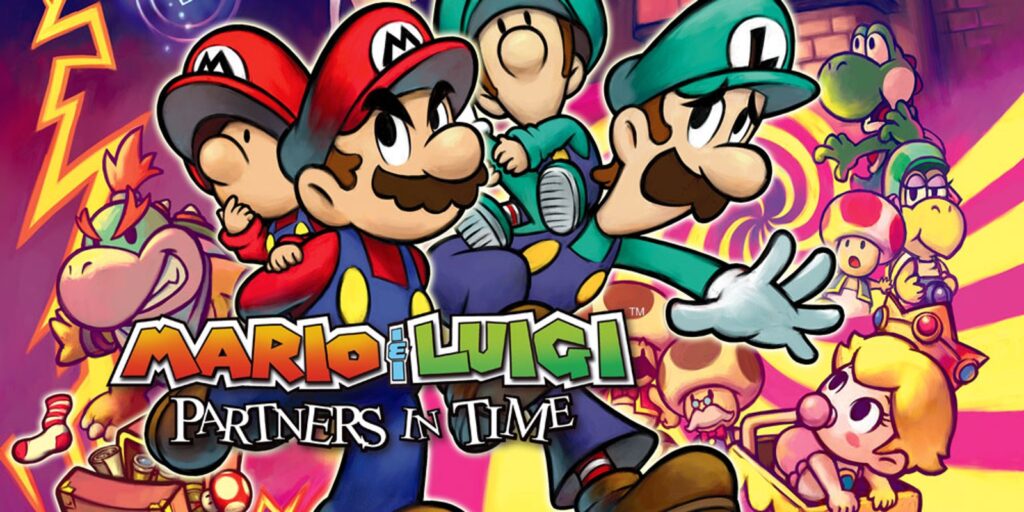
Full Name: Mario & Luigi: Partners in Time
Release Date: January 27, 2006
Released on: Nintendo DS, later also available on Wii U Virtual Console
Cross Play: No
Initial thoughts
I played Mario & Luigi: Partners in Time on my phone with an emulator, and honestly, it was great. This is Nintendo of old at its weirdest and most confident. Aliens, time travel, babies, face hugger energy, dinosaurs eating Mario and Luigi and then pooping them out, creepy Shroobs, hilarious cutscenes, and actual dark story moments. This is the kind of Mario RPG where the game is still funny and colorful, but Nintendo clearly dared to go much wilder than they often do now.
What surprised me most is how bold the game still feels. The Mario universe is usually safe, cheerful, and friendly, but Partners in Time throws the brothers into a Shroob invasion where Toads are captured, drained, and transformed. They are treated more like victims in an alien horror plot than background Mushroom Kingdom decorations. Yes, some characters can be restored later, but what about the Toads that were already extracted into juice? That is dark. Very dark. And somehow this is still a Nintendo DS Mario game.
The babies are also a brilliant addition. Baby Mario and Baby Luigi could have easily become annoying gimmicks, but they actually add a lot to the story and gameplay. The idea of adult Mario and Luigi teaming up with their baby selves is silly, but it works because the game commits to it fully.
Story and setting
Plot overview
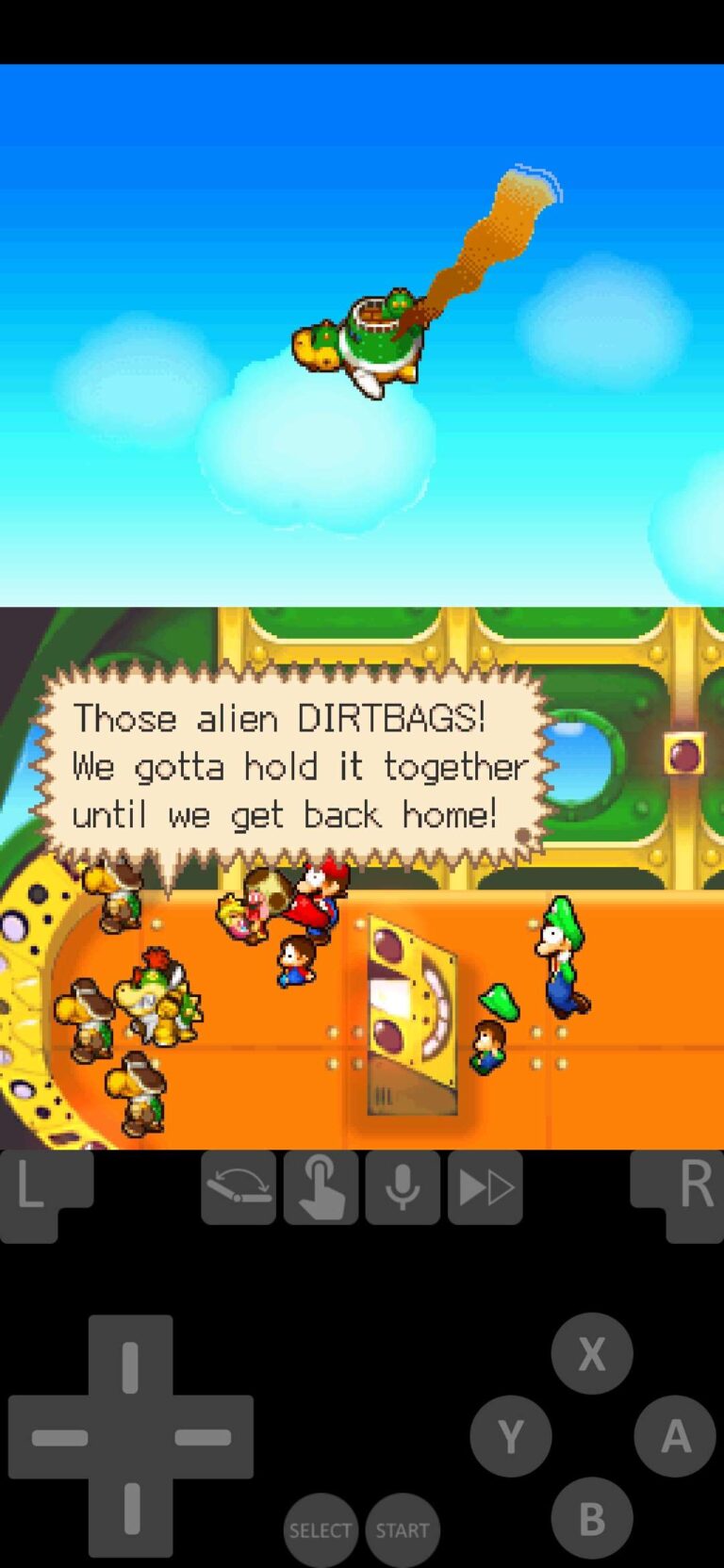
The story begins with Princess Peach traveling into the past using Professor E. Gadd’s time machine, only for everything to go horribly wrong because of the Shroobs. These mushroom like aliens invade the Mushroom Kingdom of the past, and Mario and Luigi eventually end up teaming up with their baby versions to fix the mess.
The setup is already excellent because it gives the game a reason to do something different. This is not just another Bowser kidnapping story. Bowser is around, of course, including Baby Bowser, but the Shroobs are the real threat, and they bring a much darker atmosphere than usual. They are not funny little troublemakers. They are alien invaders who capture people, destroy areas, and turn the Mushroom Kingdom into something far more hostile.
World building and immersion
The world building works because the game uses time travel properly. You are not just visiting a random new land. You are seeing the Mushroom Kingdom in the past, before things became the version we usually know. That immediately makes the setting interesting.
The Shroobs change the feeling of the world completely. Familiar Mario locations become dangerous, invaded, and strange. The game still has comedy, but underneath that comedy is a surprisingly grim alien occupation. That contrast is what makes the setting memorable. It is still Mario, but there is a real sense that something horrible happened here.
The areas also have strong identity. From Yoshi’s Island to alien infested places, dangerous castles, and strange interior sections, the game keeps throwing different situations at the player. It does not feel like one island theme repeated forever. Each major section has its own joke, threat, or mechanical idea.
Character development
Mario and Luigi are still mostly themselves, but Partners in Time gives their dynamic a fresh twist by adding Baby Mario and Baby Luigi. Suddenly, the brothers are not just a duo anymore. They are a four person disaster unit, and that works brilliantly.
The babies are more than cute versions of the main characters. They give the story more comedy, more heart, and more mechanical variety. Baby Mario is brave and energetic, while Baby Luigi brings even more fear and emotional chaos than adult Luigi. Seeing the adults and babies interact gives the game a lot of personality.
The Shroobs also stand out as villains. They are not deeply emotional characters, but they are memorable because they feel so different from the usual Mario threats. They bring alien horror into the Mushroom Kingdom, and that alone makes them unforgettable.
Bowser and Baby Bowser also add comedy because they complicate the situation without fully replacing the Shroobs. The game uses them well as chaotic Mario universe troublemakers caught inside a much bigger alien disaster.
Emotional impact
The emotional impact is stronger than expected because the game hides dark moments inside a silly Mario shell. You laugh at the jokes, then suddenly realize the Shroobs are doing genuinely horrifying things to the Mushroom Kingdom. The game never becomes fully depressing, but it has enough darkness to make the adventure feel bigger than a normal comedy RPG.
The Toads being captured and drained is especially wild. It is presented in a Mario friendly way, but the implication is still nasty. Nintendo really dared to go strange here. It makes the Shroobs feel like proper villains rather than temporary pests.
There is also emotional charm in the four brothers working together. Adult Mario and Luigi protecting and cooperating with their baby selves is both funny and sweet. Baby Luigi especially brings that classic nervous Luigi energy in a smaller, louder form.
Rating for story and setting
I have visited multiple aspects of the story, and after some thought and objective thinking, I rated the story and setting with an 9.
Gameplay and mechanics
Core gameplay mechanics
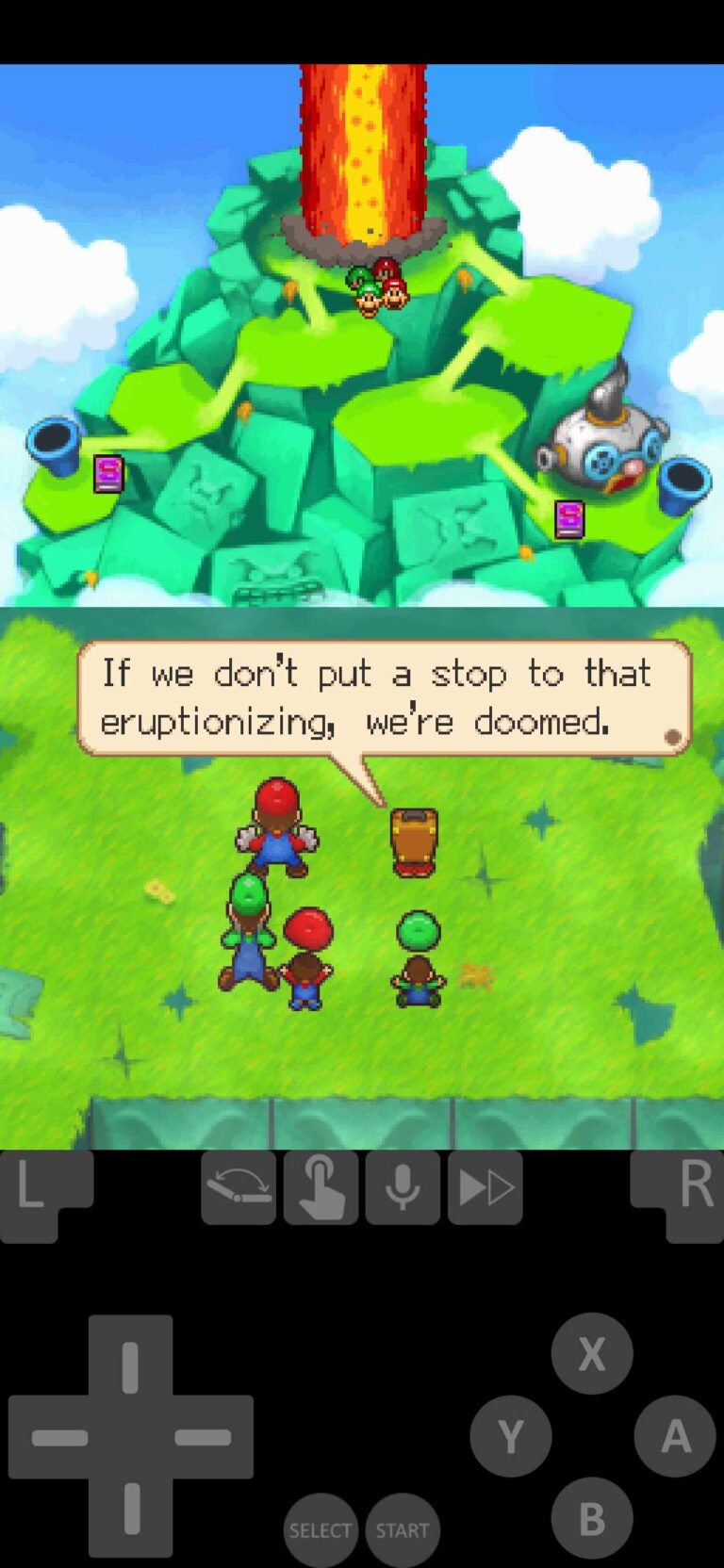
The gameplay rocks. It keeps the timing based RPG combat that makes the Mario & Luigi series so fun but expands it by adding the babies into the mix. That means you are not only controlling Mario and Luigi, but also Baby Mario and Baby Luigi, both in battle and during exploration.
The result is simple enough to understand but active enough to stay engaging. You are not just choosing attacks from a menu and waiting for numbers. You are pressing buttons at the right time, dodging attacks, countering enemies, using items, and coordinating four characters at once.
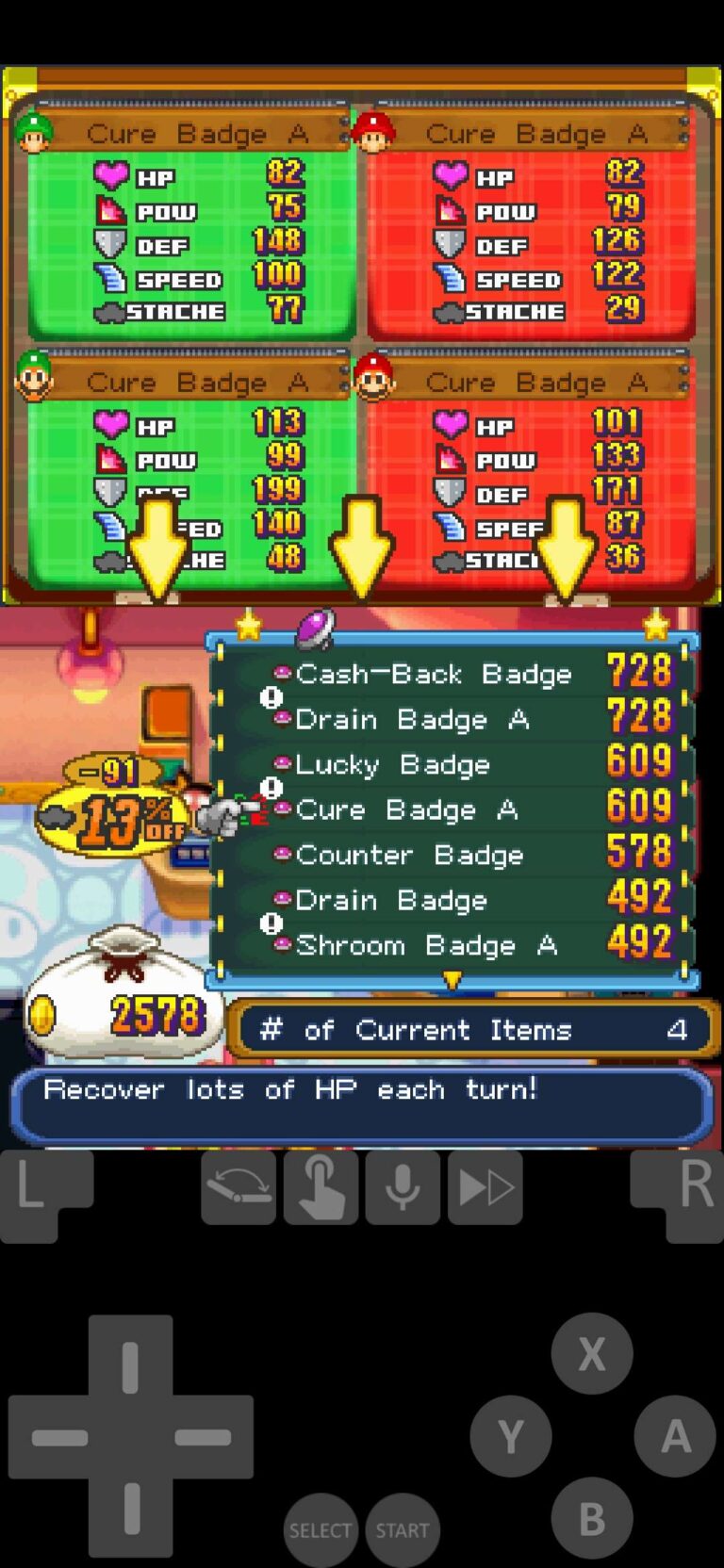
The game does not overload you with gear options, and that is actually fine. Equipment exists, but it does not drown the player in endless stat comparisons. The focus stays on battles, Bros. Items, timing, and positioning. Badges feel a bit underused compared to later games, but it is still awesome to see where some of those ideas began.
Difficulty and balance
The difficulty is strong but fair. Some enemies and bosses can be tough, especially if your timing is sloppy or you do not prepare properly. But the game rarely feels unfair. When you lose health, it usually feels like you missed a dodge, failed a counter, or did not manage items well enough.
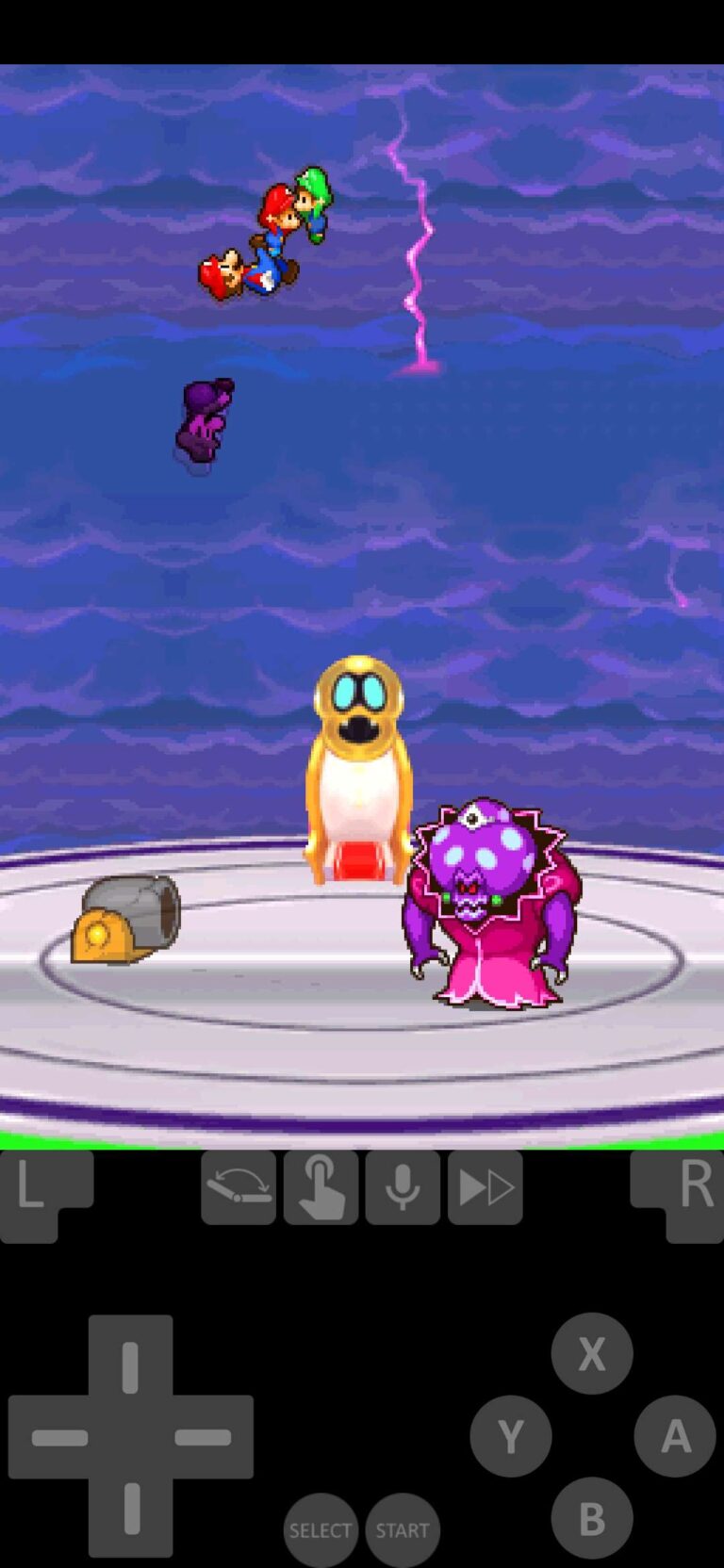
The final boss is the perfect example. It took me nearly 40 minutes, which is long, but it made sense. The fight forced me to use items, pay attention, and think through my options. That is much better than a boss that just suddenly gets six turns in a row and bonks you into dust.
Compared to Brothership, this final battle felt more honest. It was hard because it demanded focus and resources, not because the game randomly decided to throw balance out the window. That makes a huge difference.
Pacing of the game
The pacing is one of the reasons the game still holds up. It is a fairly long RPG, especially for a DS game, but it does not feel like it is wasting your time. The adventure keeps introducing new areas, new situations, and new weird story moments.
The time travel structure helps because each area feels like part of a larger mission. You are not just walking from town to town. You are fixing pieces of a broken past, dealing with Shroob damage, and slowly uncovering the full threat.
There are moments where battles or areas could be a bit shorter, but the overall flow remains strong. The game knows when to be funny, when to be creepy, and when to throw in a boss or set piece.
It is long, but not a slog. That is the key difference.
Innovation and uniqueness
The four character system was a great idea. Controlling adult and baby versions of Mario and Luigi at the same time gives the game a unique identity within the series. It is not just Superstar Saga again. It has its own rhythm.
The Shroobs also make the game stand out. Mario has had many villains, but alien mushroom invaders are still one of the strangest and coolest ideas. They give the game a darker sci-fi flavor without losing the Mario humor.
The game also deserves praise for being willing to go weird. Face hugger style alien horror, dinosaur digestion jokes, Toads being turned into juice, and Peach being eaten by a Piranha Plant are not exactly safe choices. That boldness is part of why the game is still memorable.
Controls and user interface
The controls work well, though playing on a phone emulator naturally changes the experience. On original DS hardware, the button layout fits the four character system nicely. On a phone, it can depend on how comfortable your emulator controls are. MelonDS is very good, and I had no problems.
The interface is clean enough. Items, gear, stats, and abilities are easy to understand. The game does not drown you in menus, which helps keep the adventure moving.
Microtransactions
There are no microtransactions. This is old Nintendo DS gaming, before every game needed stores, currencies, passes, daily login rewards, and piles of nonsense.
You buy the game, or in my case, play it through an emulator because that is how many people revisit DS games now, and you get the full adventure. Beautiful. Simple. Better.
Rating
After combing through many of the mechanics, the pacing, and other factors of this game, I rated the gameplay and mechanics with a 9.
Graphics and art style
Quality of graphics and art direction
For a DS game, Mario & Luigi: Partners in Time looks amazing. The sprites are expressive, the animations are full of personality, and the bosses have great designs. This is one of those games where the limitations of the hardware actually help the style. Everything is readable, colorful, and charming.
The Shroobs are especially good visually. They look alien enough to feel different from normal Mario enemies, but still silly enough to belong in this world. That balance is important. If they were too serious, they would not feel like Mario. If they were too goofy, they would not feel threatening. The game gets it right.
Technical performances
On original DS hardware, the game was built well around the system’s strengths. On a phone emulator, it also played well for me. The two screen layout can be a little different on a phone, but the game remains very playable if the emulator setup is comfortable.
The performance held up nicely. Battles, cutscenes, exploration, and animations all felt smooth enough. That matters a lot because timing based combat needs good responsiveness. If button timing feels off, the whole system falls apart.
Thankfully, that was not a major problem for me. The game felt good to play.
Environment and design uniqueness
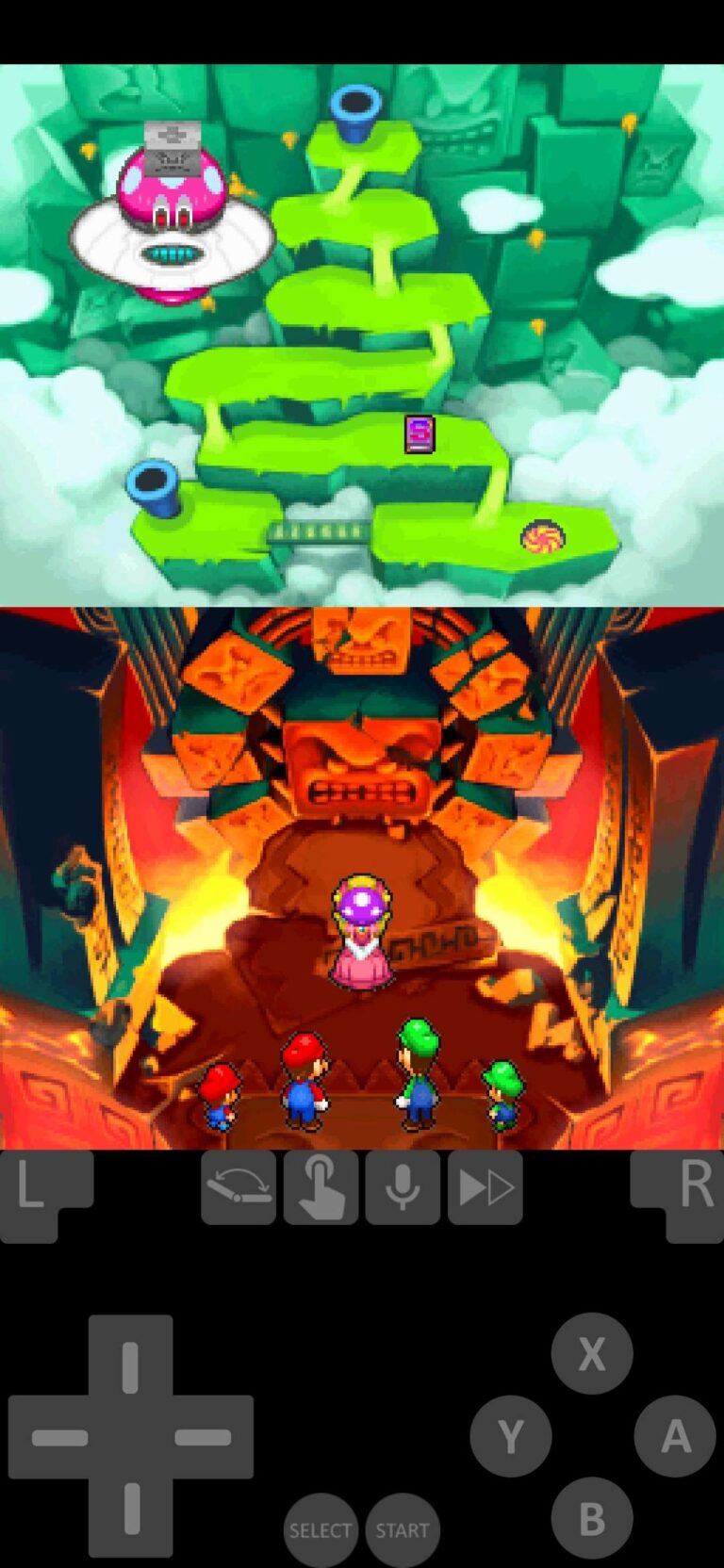
The environments are creative and memorable. The game uses the past version of the Mushroom Kingdom to create areas that feel familiar but twisted. This is not just normal Mario scenery. It is Mario scenery under alien invasion.
Yoshi’s Island, Shroob occupied areas, dangerous interiors, castles, and strange set pieces all give the game variety. The dinosaur section especially stands out because it is hilarious and disgusting in a way only this game could pull off.
The world feels designed around both the story and the four character mechanics. That makes the areas feel purposeful instead of random.
Rating
It took me some time to give the graphics and art style an objective rating. There are many things to consider, but ultimately, I rated this section with a 9.
Sound and music
Music score and how it contributed to the game
The music has that classic Nintendo charm, but with a slightly darker and stranger edge because of the Shroob invasion. The soundtrack supports both the comedy and the danger. It can sound adventurous, silly, tense, or dramatic depending on the moment.
The battle music keeps the energy moving, and the boss themes help sell the bigger fights. The final boss especially benefits from strong audio because the fight is long and intense. If the music were weak, that fight would drag much harder. Instead, it helps carry the tension.
Sound effects quality
The sound effects are great. Jumping, hammer attacks, Bros. Items, enemy attacks, menu sounds, and cutscene effects all have that familiar Mario clarity. Everything sounds snappy and readable, which is important in a timing based RPG.
The babies also add a lot through sound. Their little reactions, cries, and noises help make them funny and charming rather than just smaller versions of the main brothers.
The Shroob sounds also help them feel weird and alien. They are not just regular enemies with purple paint.
Voice Acting
There is no full voice acting, but the classic Mario vocal sounds are here and work well. Mario, Luigi, Baby Mario, and Baby Luigi all express a lot through short noises, reactions, and animations.
Full voice acting is not needed. The game gets plenty of personality from its writing, sound effects, and expressive animation.
Rating
After a lot of consideration, I rated the sound and music section with a 8.5.
Replayability
Game Length and content volume
The game is long enough to feel substantial without becoming exhausting. A typical playthrough sits around the 20 hour range, with some players taking more depending on pace, exploration, and boss trouble. That feels right for this kind of RPG.
It is not as bloated as Brothership, and that helps a lot. The game has length, but it does not keep dragging itself past the point of enjoyment.
The final boss alone took me nearly 40 minutes, which made the ending feel intense. But again, it felt fair because the fight asked me to manage items and pay attention instead of just punishing me randomly.
Extra Content
Extra content is limited. There are beans, optional items, gear, and things to collect, but the game is mostly focused on its main story. If you are looking for huge post game systems, this is not the strongest entry.
Still, the content that is there supports the adventure well. The game does not feel empty. It simply belongs to an older style of RPG where finishing the story was the main goal.
Replay value
Replay value is decent because the campaign itself is strong. The humor, cutscenes, bosses, and Shroob story are worth experiencing again, especially if it has been years since you last played it.
Rating
After thoughtful consideration, I decided to rate the replayability and game length of Mario and Luigi: Partners in Time with a 7.
Suggestions and comparisons
Suggestions and feedback
Nintendo should make more games like this again. Not necessarily another game with the exact same plot, but games with this kind of confidence. Partners in Time is weird, funny, dark, and mechanically sharp. It does not feel scared of being strange.
A modern remake would be amazing, especially if it improved badges, added some optional post game content, and cleaned up a few longer battles. But the core should stay intact. Do not sand away the Shroob horror. Do not remove the weird dinosaur digestion nonsense. Do not make it too safe.
Comparisons
Compared to Mario & Luigi: Brothership, Partners in Time is much better paced and much more memorable. Brothership felt too long, too padded, and too repetitive. Partners in Time is also a long game, but it has a stronger identity and better momentum.
Compared to Superstar Saga, this game feels darker and stranger. Superstar Saga has more playful kingdom hopping energy, while Partners in Time has alien invasion chaos.
Compared to Bowser’s Inside Story, it may not reach the same overall peak for everyone, but it absolutely deserves respect as one of the boldest entries in the series. The Shroobs alone make it unforgettable.
Personal experiences and anecdotes
I loved the plot twist at the end. Of course, I saw it coming, but it was still hilarious that the characters did not. It is one of those classic RPG moments where the player is already yelling at the screen while the cast is still slowly catching up.
Then the true final boss fight begins, and woah, that fight was serious. It took me nearly 40 minutes to beat. But unlike Brothership, it felt sensible. The boss was tough, but it forced me to use items, manage resources, react properly, and think. That is what a final boss should do.
The game also kept surprising me with how wild old Nintendo could be. Toads getting drained into juice, Peach getting eaten, dinosaurs digesting the brothers, aliens invading the Mushroom Kingdom, people basically dying but sometimes being restored later. It is funny, but it is also insane.
This is the kind of Nintendo weirdness I miss. It had teeth. Purple alien mushroom teeth, apparently.
Rating
Taking in all the personal experiences with Mario and Luigi: Partners in Time, I give it a personal rating of 9.
Last words
Pros
- The Shroobs are fantastic and memorable villains.
- The baby versions of Mario and Luigi are funny, charming, and useful.
- The combat system is active, fair, and satisfying.
- The story is much darker and weirder than expected.
- Boss designs and DS visuals are excellent.
- The pacing is strong compared to later, more bloated entries.
Cons
- There is not much post game content after finishing the story.
- Badges feel a bit underused.
- Some battles can run a little long.
- Managing four characters can take adjustment.
- Playing on a phone emulator may not feel as natural as original DS hardware.
- Some darker story implications, like the Toad juice situation, are left weirdly unresolved. (Is this a pro?)
Mario & Luigi: Partners in Time is a fantastic Nintendo DS RPG and one of the boldest Mario adventures from old Nintendo. It is funny, dark, strange, and packed with ideas that feel far less safe than what Nintendo often does now. The Shroobs are excellent villains, the babies are a great mechanic, and the time travel setup gives the game a unique identity.
The gameplay still rocks. Battles are active, timing matters, items matter, and the final boss is a real test without feeling like nonsense. It took me nearly 40 minutes to beat that final fight, but it felt earned. That is the good kind of difficulty.
It does not have much post game content, and badges could have been used more deeply, but the main adventure is strong enough to carry the whole experience. The DS had some amazing games, and this is absolutely one of them.
Whoop, I love this game. I miss the Shroobs, and I really hope they come back someday. Nintendo used to dare to go wild like this, and I miss that energy.
FINAL RATING

9
Please let me know what you think of Mario and Luigi: Partners in Time in the comments!
I hope you enjoyed reading this review. I hope to see you in the next review!
If you liked reading this review, maybe you would like to share this review with your friends.